
A straight roof edge that holds its line
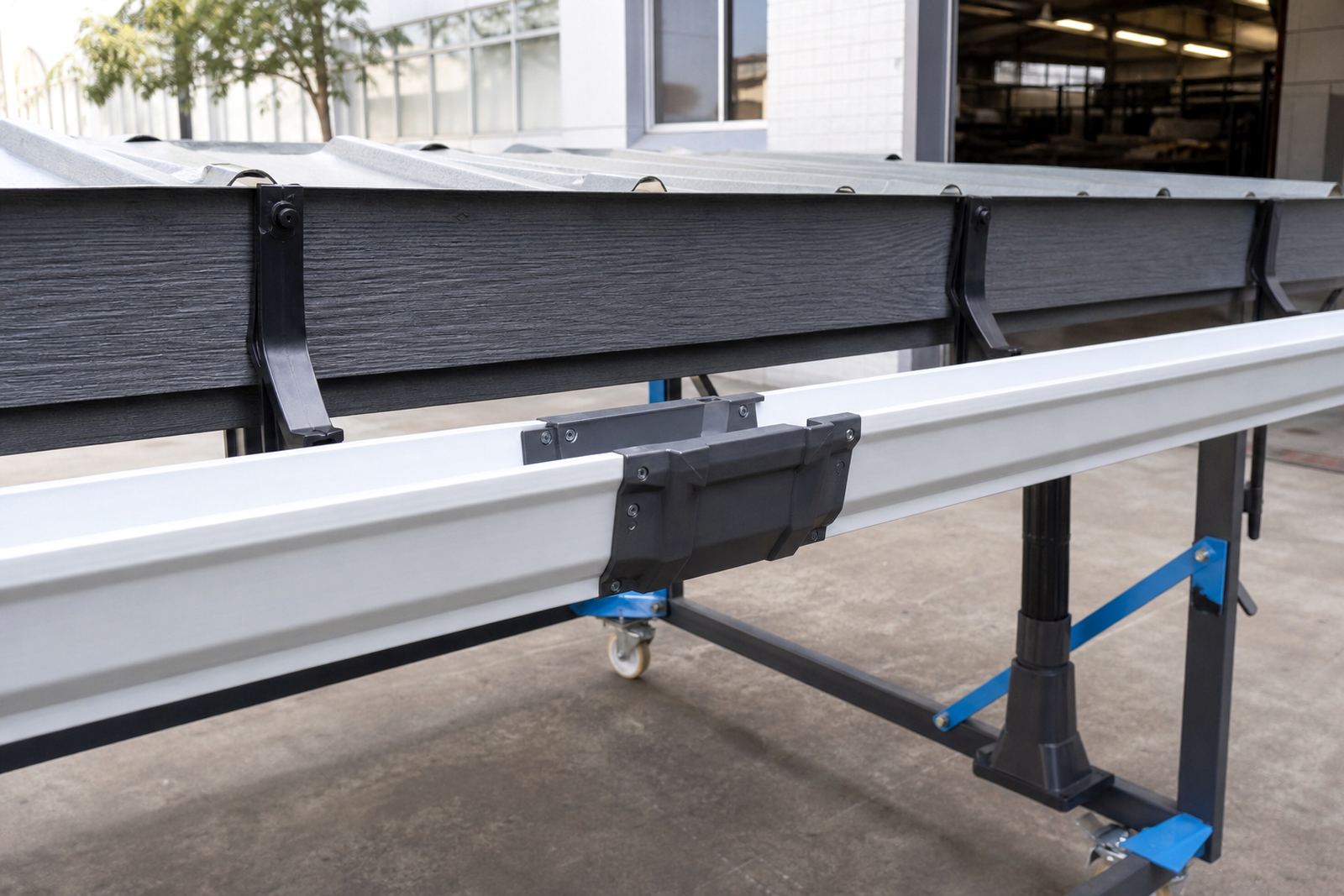
A fascia board closes off the roof edge and gives the guttering a firm line to sit against. On a good installation it tidies the eaves, supports the front edge of the roof detail, and gives gutter brackets a sound fixing point. In South African weather that matters, from coastal humidity in Durban to dry heat in Polokwane and summer storms in Gauteng.
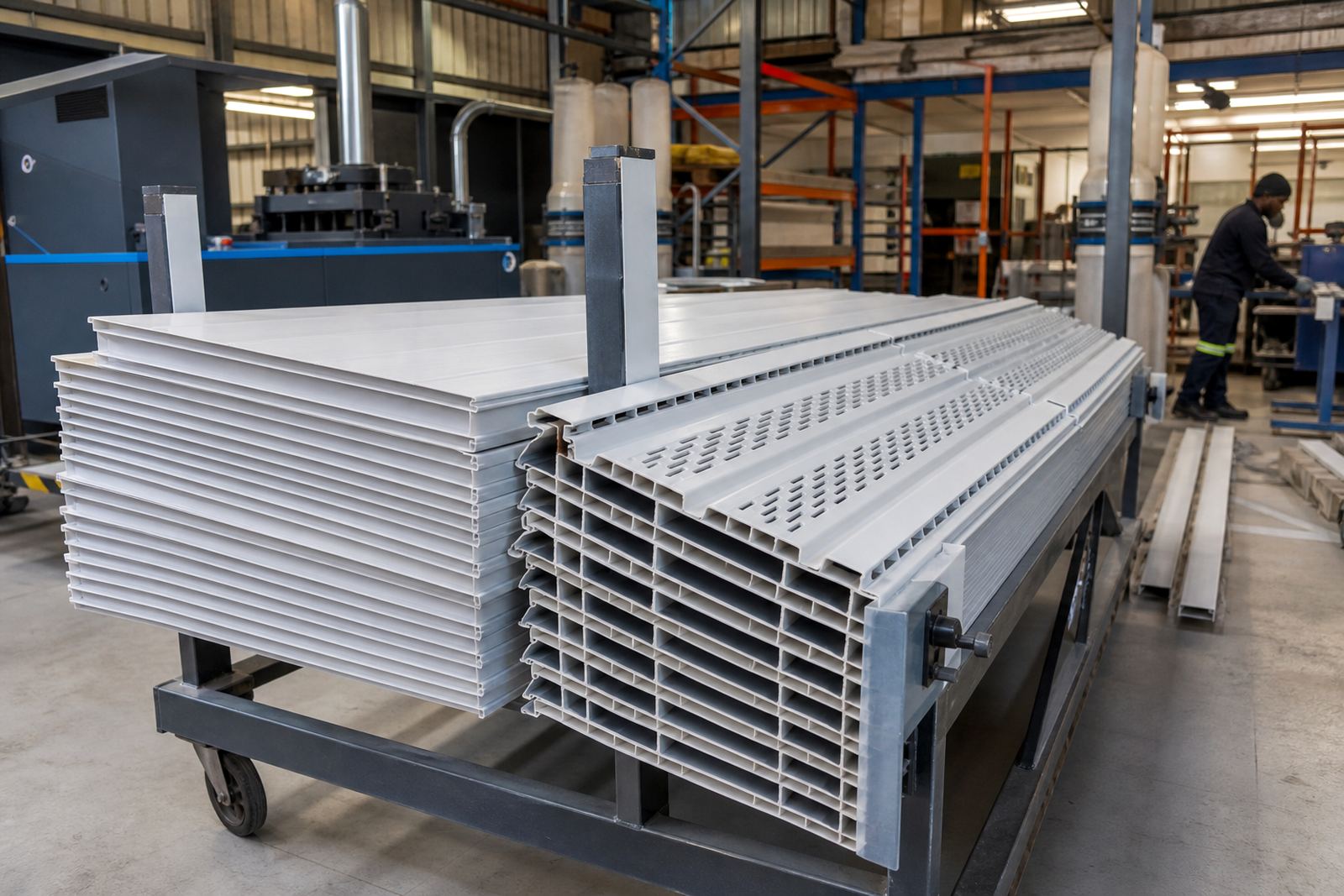
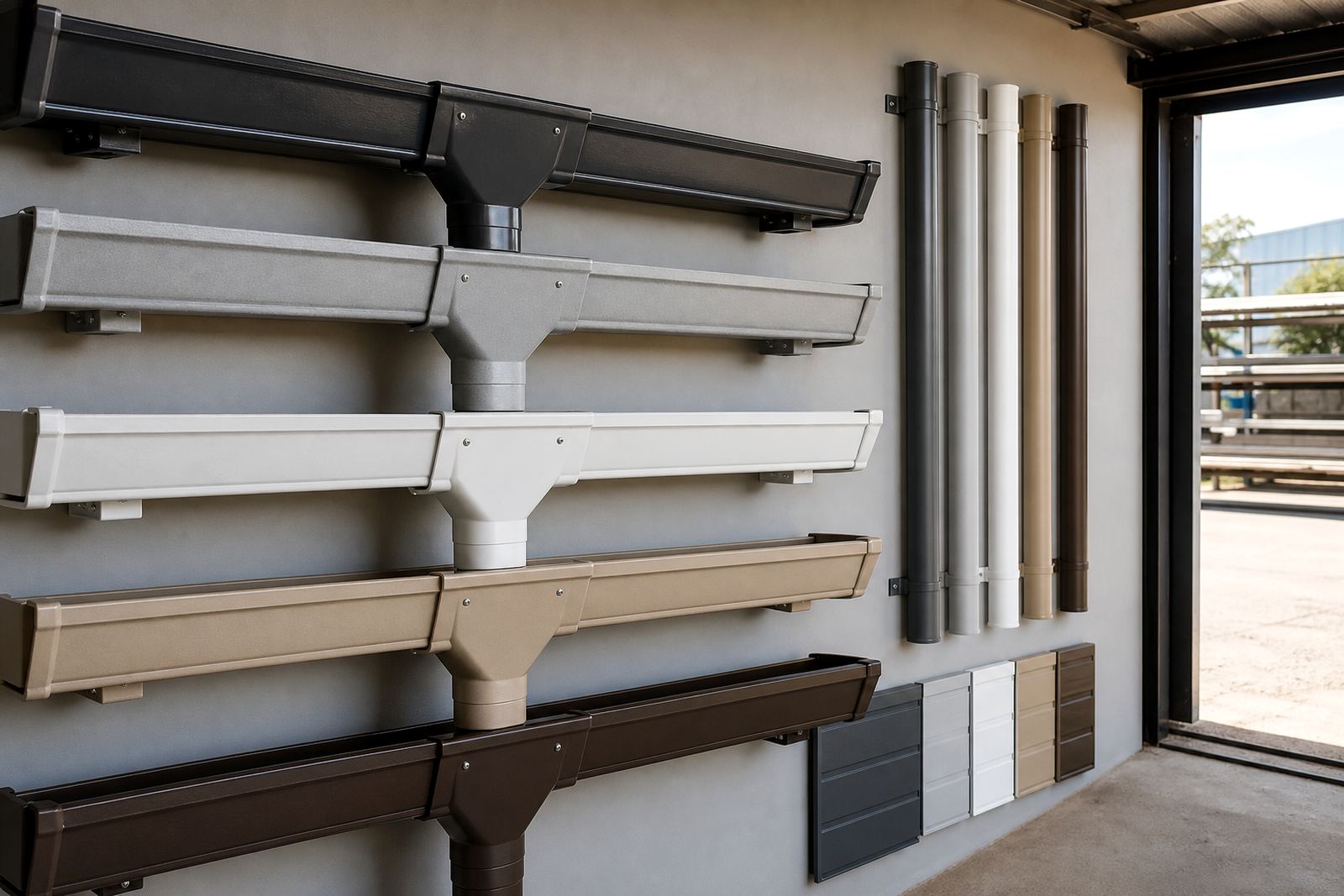
Plasteel composite fascia boards are made for that duty. The material is shaped for practical roofline work, with a clean face that finishes well against roof sheets, tiles or barge detailing. It suits new builds, roofline replacements and repairs where old timber has moved, split or started to take in water.
- Used as the visible trim at the roof edge
- Provides a fixing line for gutter brackets and joiners
- Helps neaten exposed roof timbers and damaged eaves
- Suitable for residential and commercial rooflines
Sizes and profiles that suit real roof work
Fascia boards are usually chosen by depth, thickness and board length. The right size depends on the roof pitch, the rafter tails, the gutter size and the finished look the builder wants at the eaves. Wider boards give better coverage where the roof structure sits proud, while slimmer sections suit lighter edge details.
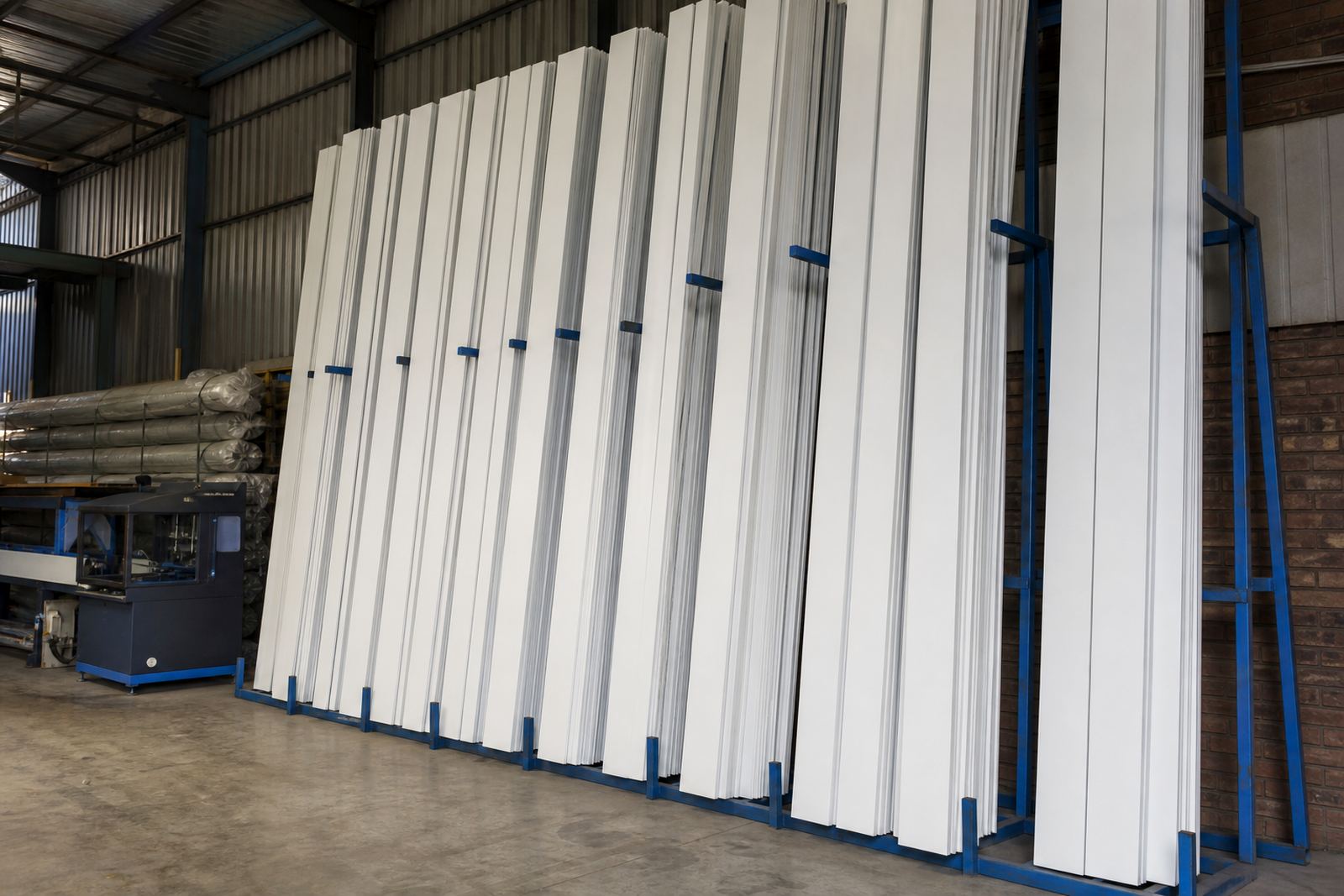
Typical fascia work in the trade calls for straight lengths with consistent faces, because twist and bow make gutter setting difficult. Composite boards are useful where a consistent edge is needed on a long run, especially on homes with repeated roof lines or on small commercial buildings where the front elevation must look tidy from the street.
- Common board lengths are supplied for easier handling on site
- Widths are selected to match the roof edge and gutter line
- Thickness should suit the fixing pattern and span between supports
- Matching corner cuts and joint positions help keep the line neat
Where fascia boards work best
This product suits most roofline jobs where a neat edge and dependable fixing face are needed. Builders use fascia boards on face brick homes, plastered houses, offices, workshops, townhouses and sectional title properties. Homeowners often need them when old timber has weathered, or when a roofline is being refreshed before new gutters go up.
Composite fascia boards are especially useful in areas with regular rain and strong sun, because the roof edge takes a beating year after year. They are also practical on coastal properties where salt and moisture can make untreated materials troublesome. Where the roof line is uneven, proper packing and careful setting out matter, so the board sits straight before the gutter brackets are fixed.
- New roofline installations
- Roof edge replacement on older buildings
- Projects exposed to coastal moisture and salt air
- Buildings where the gutter line must be visually straight
Fitting needs and roofline detail
Fascia boards need correct measuring, fixing spacing and joint planning. The board must be aligned before the gutter is installed, because the gutter brackets depend on a true line. On longer runs, the fixing points should be spaced evenly and aligned to the roof structure. Corners, joins and ends must be cut cleanly so the finish looks deliberate, not patched together.
Roofline work at height must be done safely by competent people with the right access equipment and fall protection. A neat fascia job is not only about appearance, it also helps the gutter sit at the right level and fall. If the fascia line is out, the gutter can hold water or move under load when heavy rain and debris build up.
- Measure the full run before ordering
- Check rafter spacing, corner returns and barge intersections
- Confirm the bracket pattern before the gutter is fixed
- Use proper access and safe working methods on roofs
Care, cleaning and common maintenance points
Composite fascia boards need basic care to stay looking good. Dirt, roof dust and leaf stain should be washed off with clean water and a mild detergent. Keep gutters clear so overflow does not mark the board face or soak the roof edge. On properties near the coast, it helps to rinse salt deposits off now and then, especially where wind drives spray onto the eaves.
If a section is struck by ladders, loose roof tiles or poor maintenance, check the board, the fixings and the gutter brackets together. A damaged fascia can still look acceptable from below while the fixing line has moved. That is why maintenance visits often include both the roof edge and the first section of guttering.
- Wash off dust, bird mess and leaf stains
- Inspect joints after heavy rain or strong wind
- Keep gutters clear to protect the board face
- Check for loose fixings where brackets carry weight
What to confirm before you order
To supply the right fascia boards, it helps to confirm the roof type, the total linear metres, the board size needed, and whether the work is a replacement or a new installation. It also helps to know if the fascia must match existing roofline details, because the visible finish matters on both private homes and commercial buildings.
For projects in Kya Sand, Randburg and surrounding areas such as Midrand, Roodepoort and Johannesburg, we can help with site measuring, material takeoff, product supply and delivery coordination. Builders often need quantities split by elevation, while homeowners usually want clear advice on board size, fixing line and what will suit the roof edge best.
- Total metres and any return corners
- Board width, thickness and profile style
- Whether gutters will be fixed to the new fascia
- Delivery point and access on site
Key facts
| Product | Plastic-steel composite fascia boards |
|---|---|
| Use | Roof edge finishing and gutter fixing face |
| Typical supply format | Straight lengths for roofline installation |
| Suitable projects | Homes, townhouses, offices and light commercial buildings |
| Service area | Kya Sand, Randburg and delivery across South Africa |
| Related services | Site measuring, material takeoff, supply, installation and maintenance |