How the outlet sits on the roofline
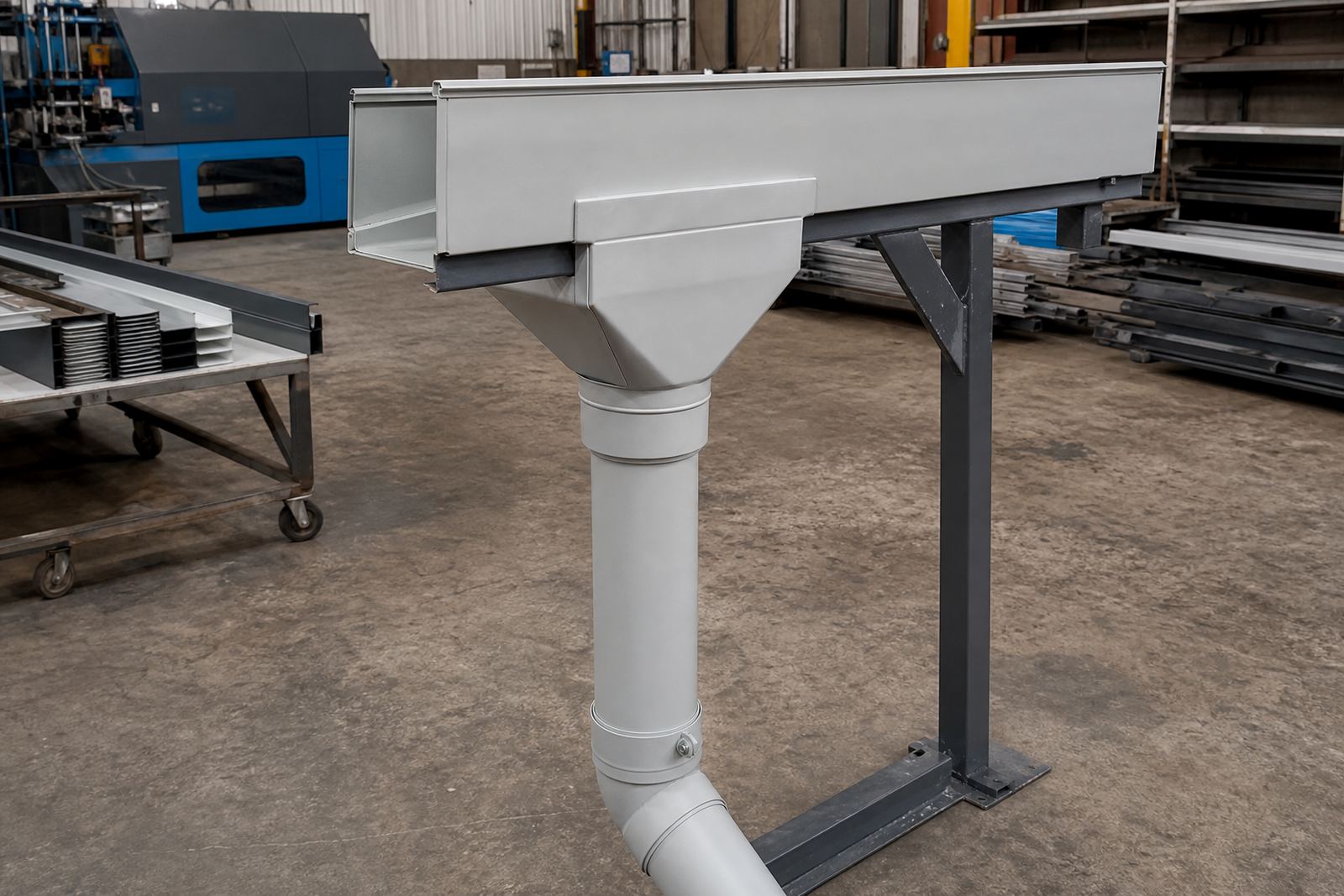
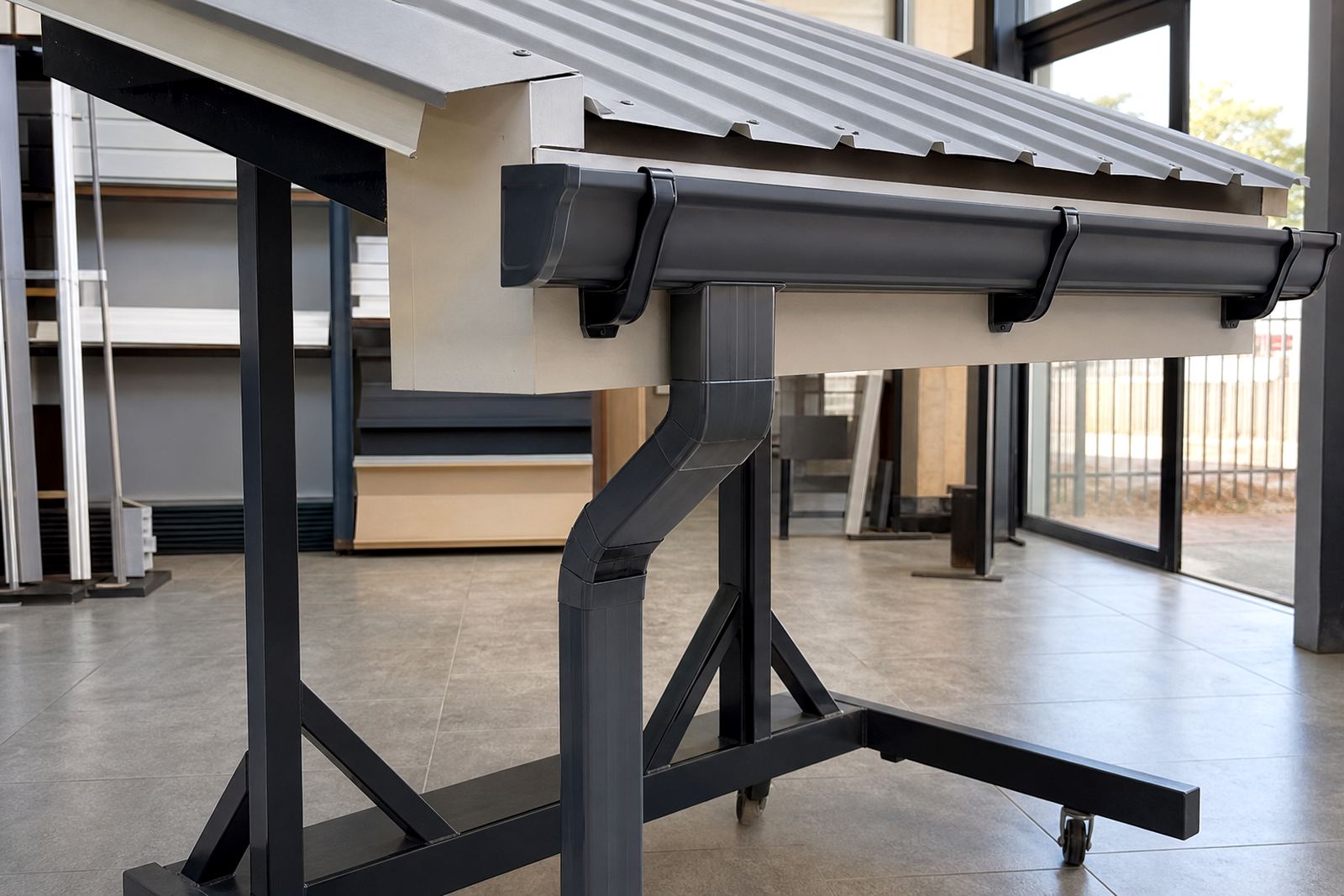
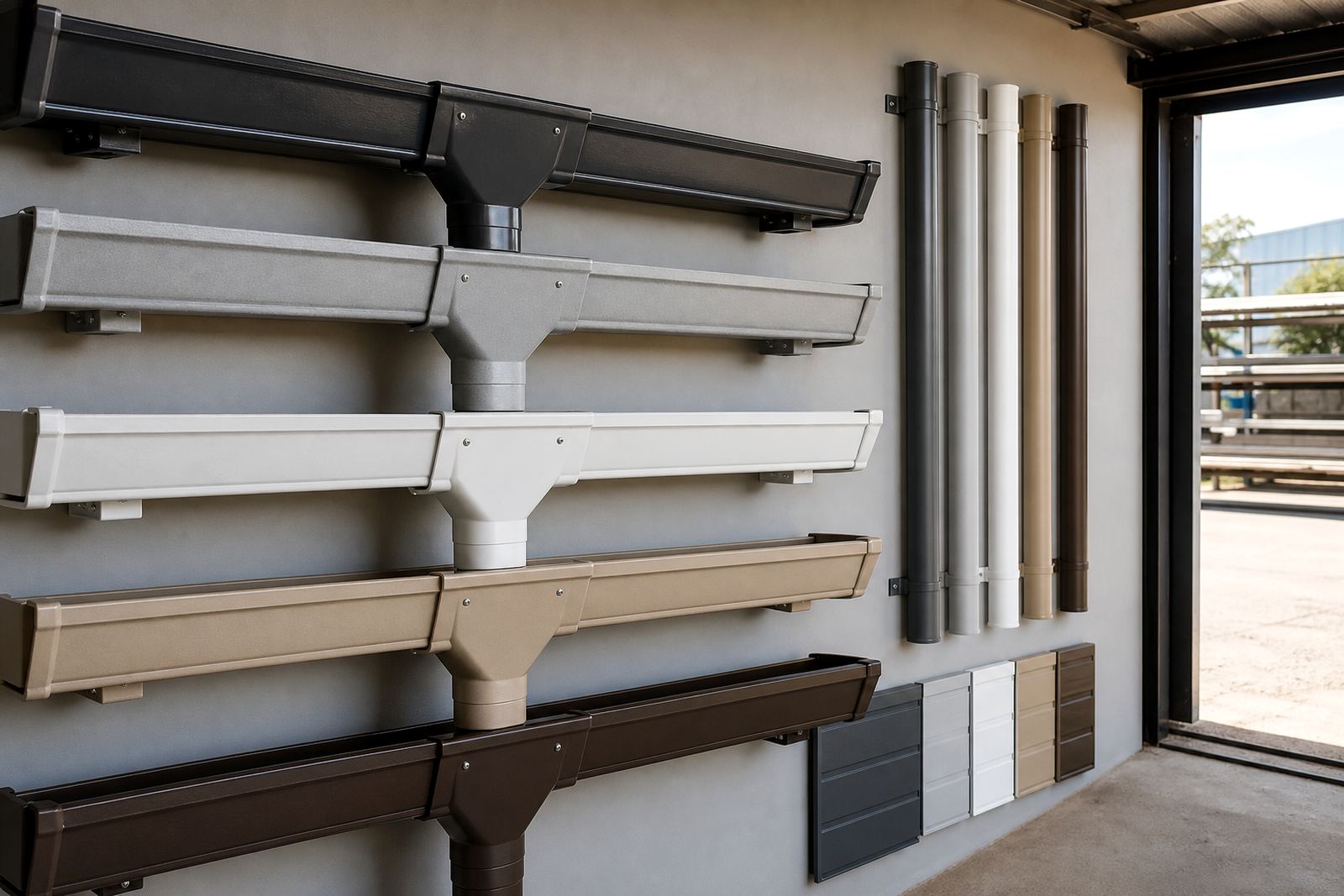
An external outlet is the shaped connection piece that opens out through the front face of the gutter so the downpipe can pick up water at the edge of the roof. In practical terms, it forms the discharge point where the gutter run is cut and the outlet is fixed in place, with the downpipe aligned below it on the wall or column. On most jobs the outlet is matched to the gutter profile first, then matched to the downpipe size second, because the two have to work together properly.
For builders, this fitting is useful where the gutter line runs along a fascia board and the downpipe needs to stay visible and accessible for maintenance. For homeowners, it helps keep the roof edge neat and makes inspection easier after heavy rain, especially in coastal areas where leaves, salt, and dust can build up at the first point of discharge.
Sizes, profiles and outlet combinations
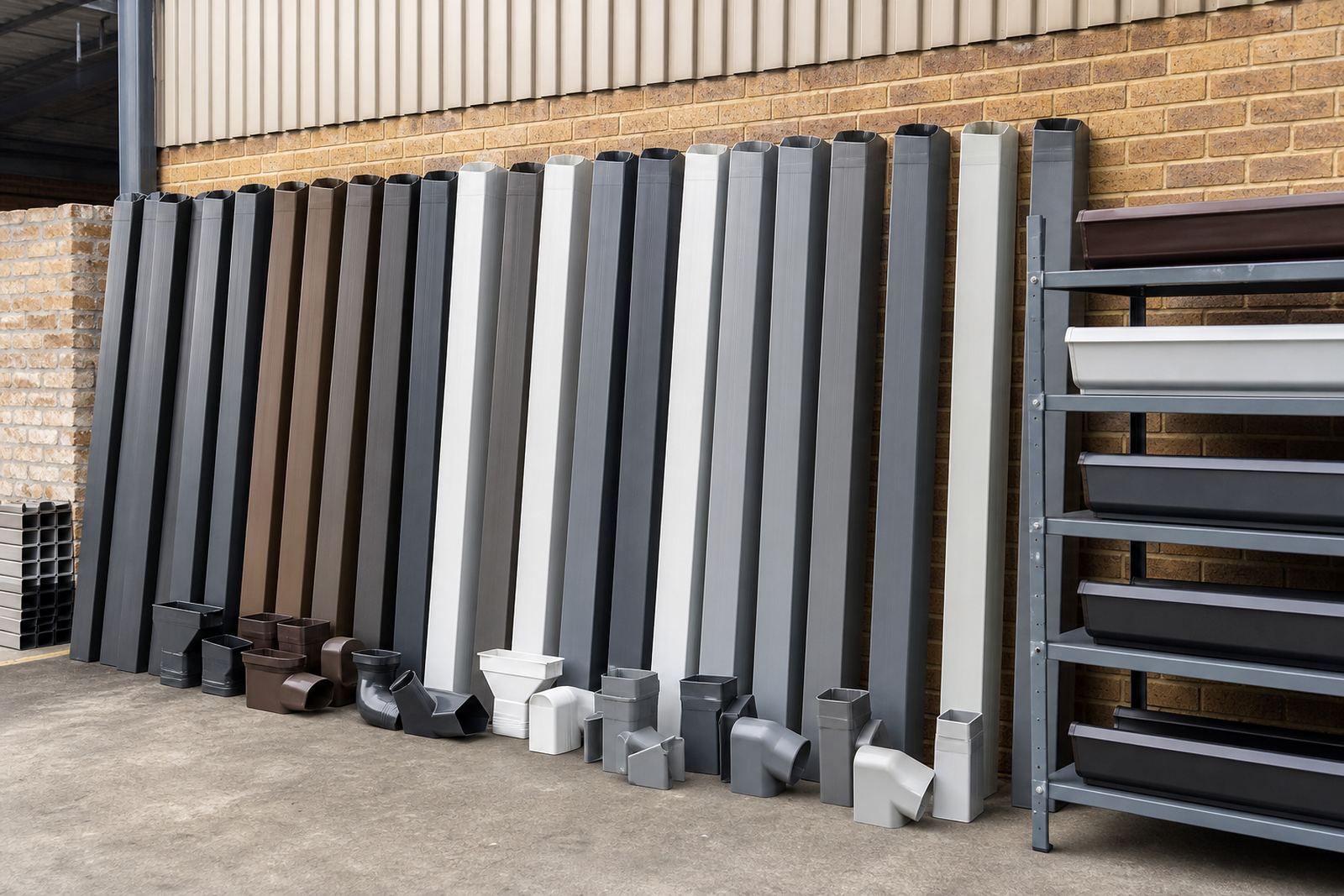
External outlets are normally supplied to suit the gutter profile being used, and the opening is selected to match the outlet area needed for the roof size and rainfall pattern. In local work, the most common combinations are chosen for standard domestic rooflines, light commercial roofs and larger runs that need a broader discharge point. The outlet must not be too small for the gutter length or water will back up near the front edge.
- Outlet opening matched to the gutter profile and flow demand
- Common downpipe sizes used with these fittings: 75 mm, 90 mm and 110 mm round or equivalent rectangular profiles where specified
- Suitable for short runs on cottages, larger spans on estates, and low to medium roof pitches with normal rainwater collection requirements
- Can be positioned at corners or along straight runs depending on the roof plan and outlet spacing
When ordering, confirm whether the outlet is required as a left-hand or right-hand version where the profile uses directional shaping. Also check if the system needs a standard round take-off or a wider mouth for higher flow, especially on longer roof sections in Gauteng, Durban coastal conditions or other areas where summer storms can be sharp and heavy.
Where it suits on homes and sites
External outlets suit new-build rooflines, replacement work, sectional repairs and maintenance upgrades where the gutter has to feed a downpipe on the outside face of the building. They are common on houses, small complexes, workshops, garden cottages, office blocks and boundary walls with roofed sections. The fitting works well where access is needed for cleaning, because the connection point is visible and easy to inspect from ground level or from safe access equipment.
On commercial sites, the outlet is often chosen where a clean front-face drop is preferred instead of passing through a soffit or concealed route. On homes in places like Randburg, Pretoria East, Durban North, Cape Town suburbs and Polokwane, the choice often depends on roof size, fascia line height and whether the wall finish allows a direct vertical drop without awkward offsets.
- Best for exposed roof edges with accessible fascia lines
- Useful where the downpipe must clear windows, walkways or entrance areas
- Works on concrete tile, sheeted and lightweight roof structures when the gutter profile is matched correctly
- Allows direct connection for maintenance checks and periodic cleaning
Fitting details that matter on site
Correct fitting starts with proper setting out, because the outlet position must follow the gutter fall and the planned downpipe location. The gutter should carry a consistent slope toward the outlet, and the outlet itself must be fixed securely so the edge remains sealed and supported. If the roofline is long or has several water intake points, the installer must work out the flow path before cutting the opening.
Gutter work at height must be done safely by competent people using suitable access equipment and fall protection where required. The outlet area also needs brackets or hangers close enough to prevent sagging, because movement at the gutter line can open joints and let water track behind the fascia board. Careful alignment matters in wind-prone or coastal zones where expansion and contraction can be more noticeable.
- Set the gutter fall before fixing the outlet cut-out
- Keep the outlet opening clean, square and free from burrs
- Support the gutter properly on both sides of the outlet
- Seal and secure the joint points according to the system used
- Check that the downpipe line clears obstacles and drains to the correct point
Materials, corrosion behaviour and upkeep
In a plastic-steel composite rainwater system, the external outlet is selected for strength at the front edge and reliable service in changing weather. The material choice matters where there is strong sun, wind-driven rain, or salt-laden air close to the coast. Good maintenance is straightforward: remove leaf build-up, check that the outlet mouth is clear, and inspect the joint after storms so water does not sit in the gutter for too long.
Because the outlet is a working fitting rather than a decorative piece, it should be checked together with the rest of the rainwater line. If brackets have loosened, the outlet can shift out of line and reduce flow. On older roofs, small cracks around the cut-out area or rust marks near fasteners should be dealt with early, before overflow starts staining the fascia or wall face.
- Rinse the outlet area during seasonal cleaning
- Remove leaves, seed pods and roof grit from the mouth of the fitting
- Check fasteners and brackets for movement after heavy rain
- Inspect seals and joints where the gutter meets the outlet
- Replace damaged fittings before overflow begins to affect wall finishes
Ordering notes for builders and homeowners
When confirming an external outlet, the important details are the gutter profile, outlet size, discharge direction and the downpipe size it must feed. It also helps to note the roof type, gutter length, fascia height and whether the site needs a straight drop or an offset route. If the building has multiple roof planes, each outlet position should be identified separately so the supply line matches the plan on site.
For a smooth supply or installation programme, builders often provide a simple takeoff showing how many outlets are needed per elevation. Homeowners usually need help with matching the outlet to the existing gutter line and checking whether any sections of the fascia board need attention at the same time. For larger properties, a maintenance visit can be useful when the gutter system is due for cleaning or when a leak check is required after a hard storm season.
External outlets are a practical detail, but they have to be chosen carefully. A correct fit protects flow, supports the gutter line and keeps the rainwater path predictable from the first rainfall to the last summer storm.
Key facts
| Product type | Front-face gutter outlet for connection to a downpipe |
|---|---|
| Typical compatibility | Matched to the gutter profile and outlet shape used on site |
| Common downpipe sizes | 75 mm, 90 mm and 110 mm, plus equivalent profile-matched options |
| Material format | Plastic-steel composite rainwater fitting |
| Use areas | Residential roofs, commercial roofs, replacement work and maintenance repairs |
| Key site checks | Gutter fall, outlet direction, fascia height, bracket spacing and discharge route |