
Gutter lines made for the eaves
An eaves gutter runs along the lower edge of the roof and collects rainwater before it spills off the tiles or sheeting. On a house in Randburg, a retail strip in Pretoria or a coastal unit in Durban, the gutter profile must hold its line, sit level where required, and carry water to the downpipe without pooling at the low points.
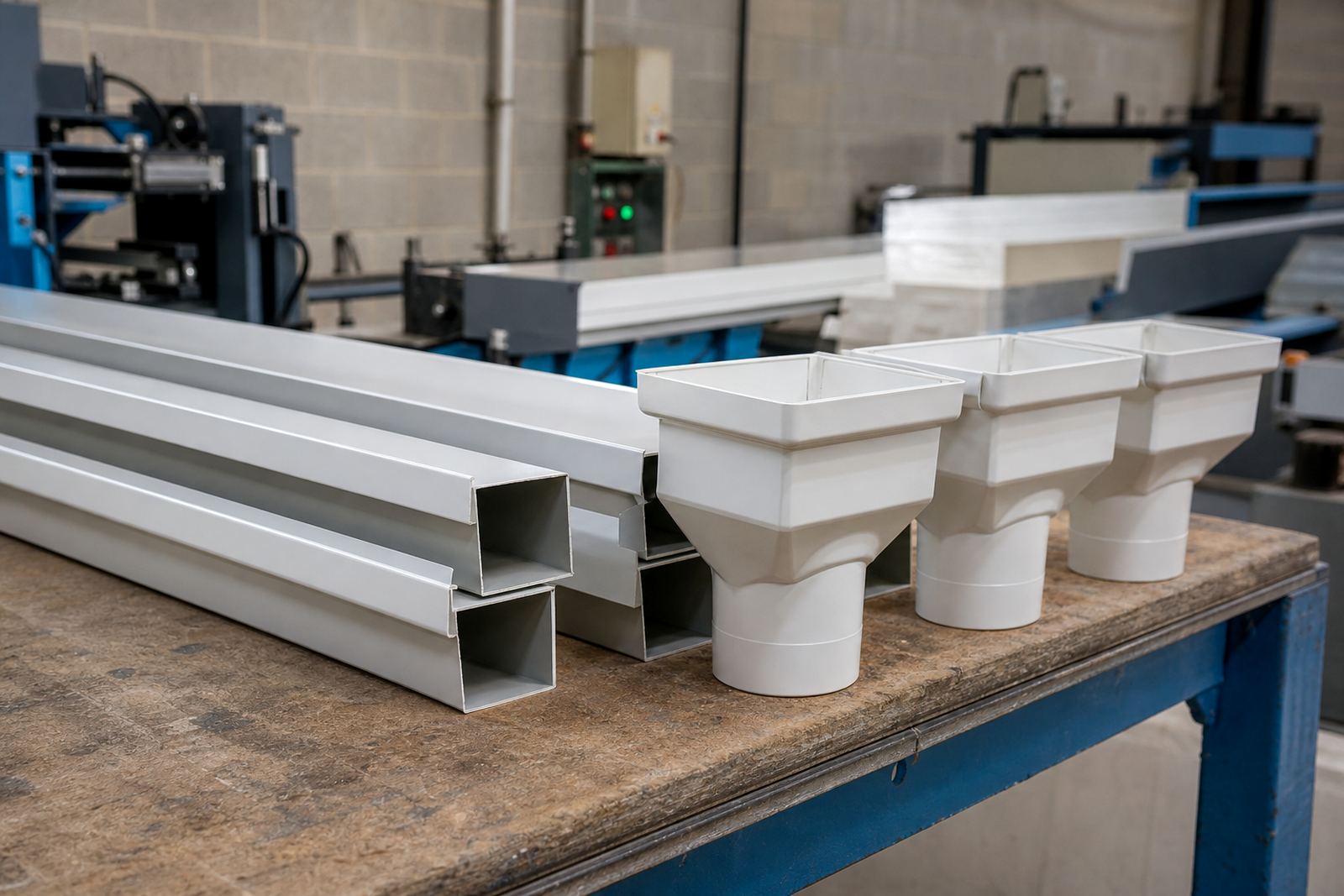
Plasteel's plastic-steel composite eaves gutters are suited to residential and light commercial roof edges where a neat finish matters. The material combines a formed outer profile with steel support, giving the gutter body shape while keeping the weight manageable for fixing to standard fascia boards and roof edges.
- Profile selected to suit roof edge depth and water flow
- Used with matching fascia boards and downpipes for a full roofline system
- Suitable for new work, roofline replacement and sectional repairs
- Works on pitched roofs where proper fall and outlet positions are set out
Sizes and profile options that match the roof
Choosing the right gutter size is about rainfall, roof area and the number of outlets. A small patio roof in Midrand will not need the same capacity as a long warehouse edge in Johannesburg or a wide residential roof in Cape Town. The common checks are the gutter width, depth, wall thickness and whether the profile clears the roof covering cleanly.
For most eaves applications, the installer also checks the outlet size and downpipe diameter so the system drains properly during heavy summer storms. If the gutter is undersized or the falls are too flat, water can sit in the channel and mark the fascia or overflow at the corners.
- Width and depth selected to suit roof catchment area
- Outlet size matched to expected flow and downpipe run
- Lengths planned to reduce joints where practical
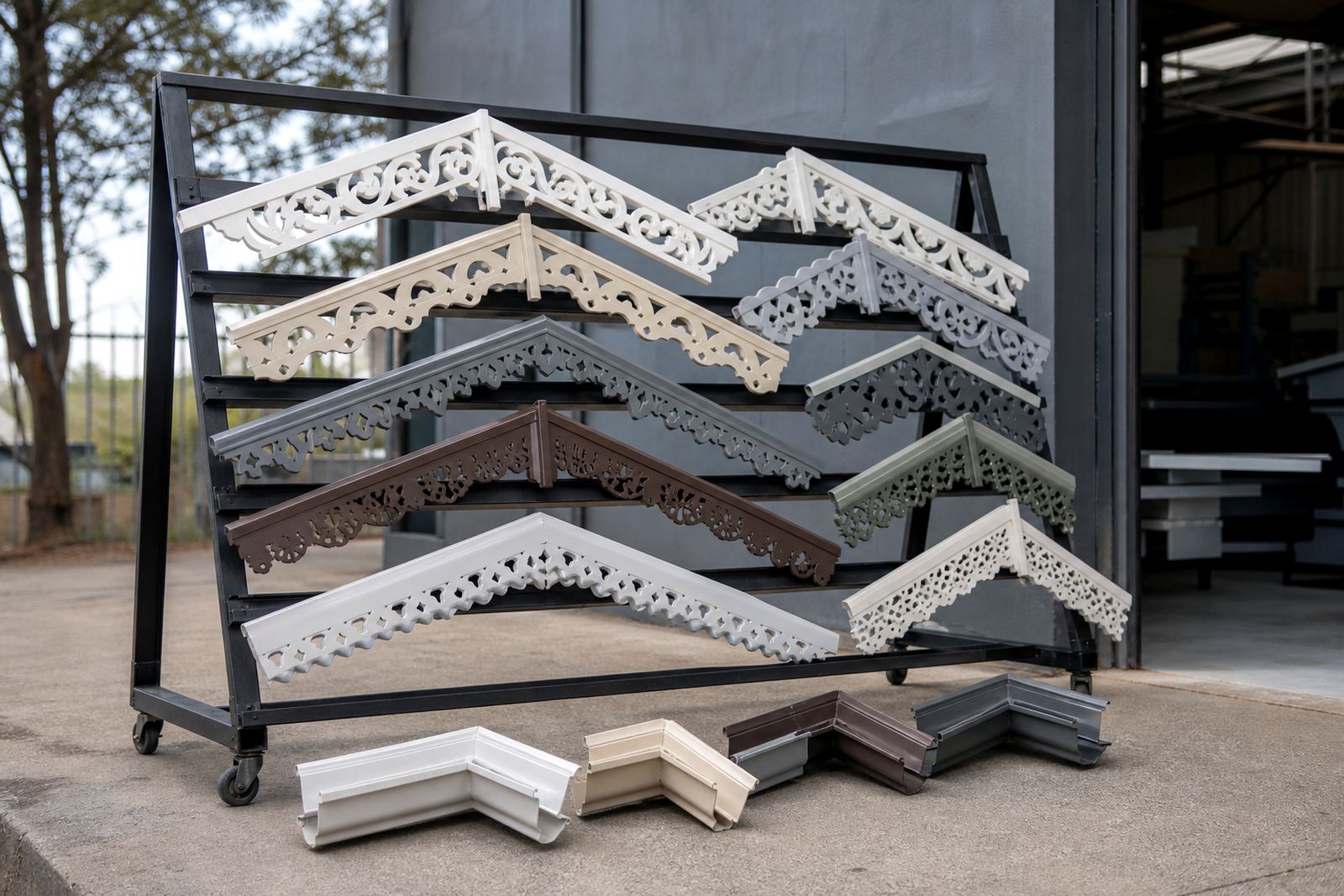
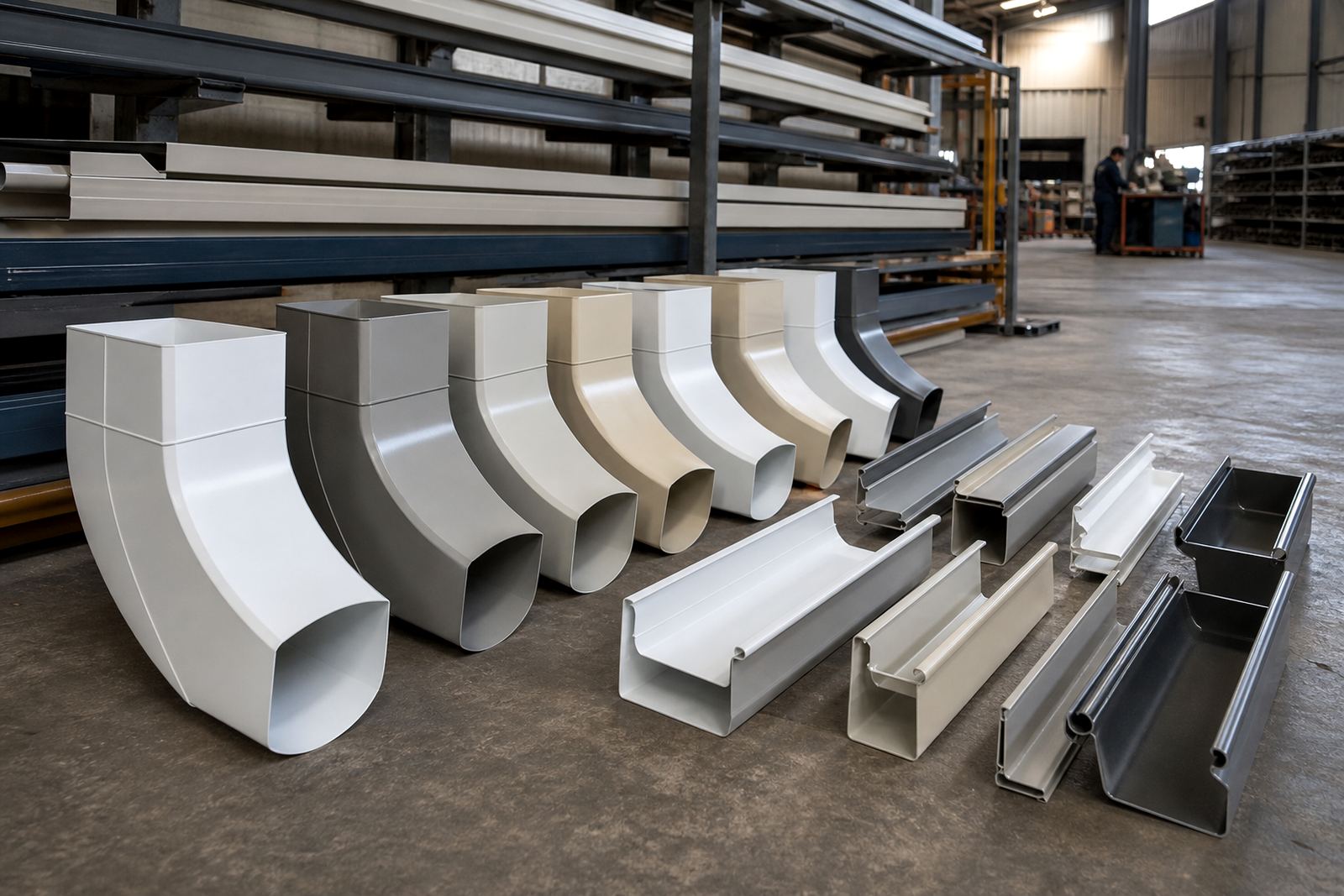
- Colour and finish chosen to suit the roof and wall palette
Where eaves gutters suit best
These gutters are used on homes, small blocks, workshops and commercial façades where the roof edge is exposed and water must be directed away from walls, paving and doors. In coastal areas such as Durban and Cape Town, the roofline also has to cope with salt air and regular wetting, so the fixing pattern and maintenance access matter as much as the gutter itself.
They are a practical choice where a straight roof edge needs a neat finish and where the fascia board is doing more than just looking tidy. The gutter helps protect timber, plaster and painted finishes from constant splashback, which is useful on sites with narrow setbacks or limited drainage space.
- Residential roofs with visible eaves
- Commercial units with perimeter drainage points
- Roofline replacement where old gutters have rusted or warped
- Buildings where a clean fascia and even water line are important
Fitting details that keep the water moving
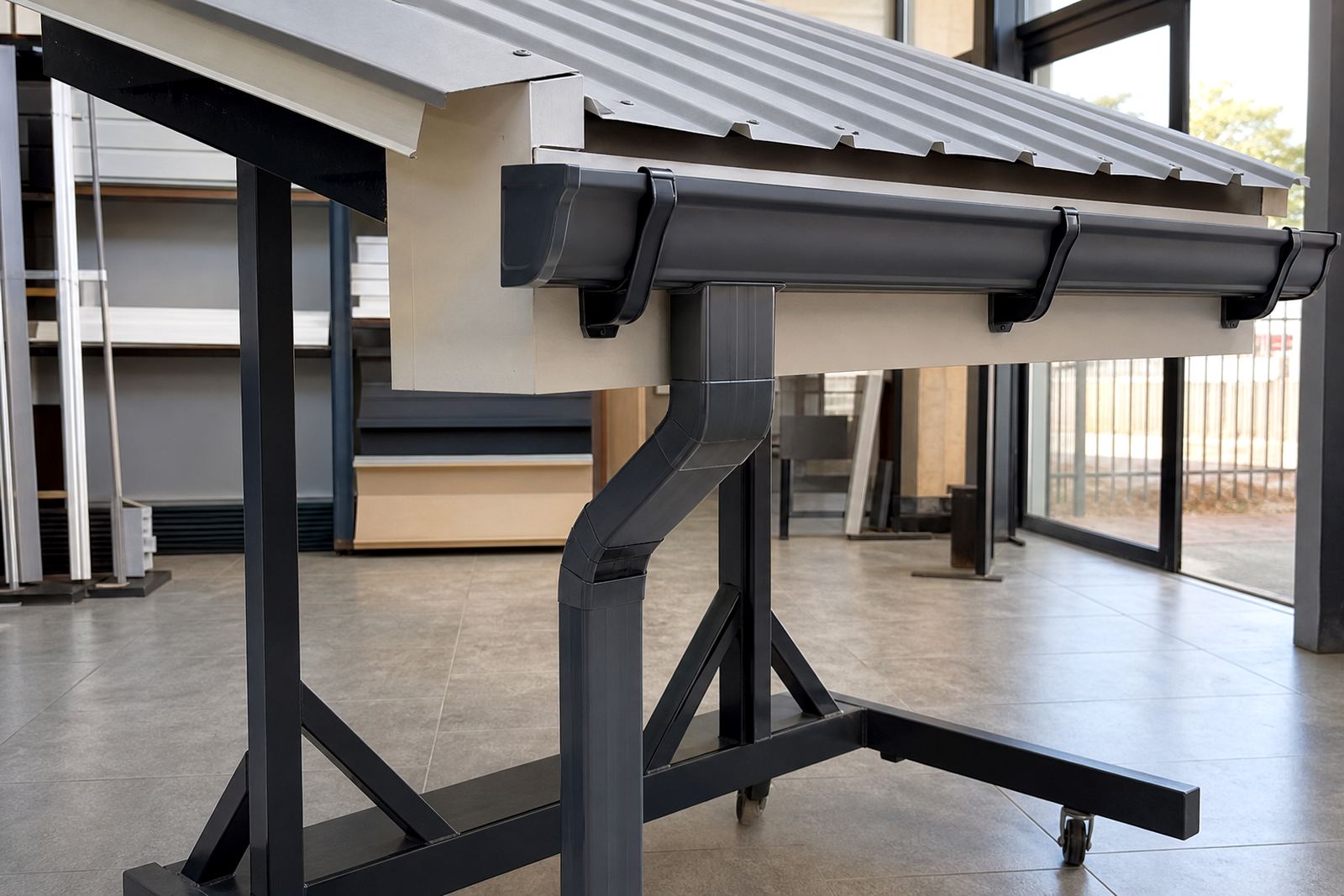
Correct installation starts with the fall. Eaves gutters are usually set with a slight slope towards the outlet so water does not stand along the length. The brackets, hangers or fixing points must be spaced to support the loaded gutter and keep the front edge straight. On long runs, the fitter also allows for expansion and movement so the line does not buckle in hot weather.
Roofing work at height must be done safely by competent people using the right access equipment, fall protection and site controls. Where the gutter is fixed to a fascia board, the board must be sound, straight and securely attached before the gutter goes up. Poorly fixed fascia boards lead to sagging gutters, loose joints and leaks at the corners.
- Falls set towards each outlet, not to random low spots
- Fixings spaced to suit gutter size and expected water load
- Joints sealed and aligned so water does not track behind the gutter
- Downpipes positioned to discharge where runoff will not damage walls or paving
Downpipes, fascia and the rest of the roof edge
An eaves gutter works best as part of a full roof edge system. The fascia board supports the gutter line and gives the roof perimeter a clean finish, while the downpipe carries water away to ground level or into the drainage point provided on site. If one part is out of line, the rest of the system suffers.
Plasteel supplies matching materials for gutters, downpipes and fascia boards so builders can keep the colour and profile consistent across the job. That matters on sectional repairs too, where only one side of a house may be replaced and the new work needs to sit neatly against the existing roofline.
- Fascia board size must suit the roof edge and fixing pattern
- Downpipe diameter depends on gutter length and outlet count
- Elbows, clips and offsets are chosen to suit the wall line
- Matching parts help the finished line look orderly from street level
Care in wet weather and coastal air
Eaves gutters need regular clearing because leaves, roof grit and nesting debris can slow the flow. In wooded suburbs or along coastal zones, a quick inspection after heavy rain often shows where the system needs attention. If water sits in the gutter, stains appear on the fascia and the wall below can start taking splash damage.
Maintenance usually includes checking brackets, joints, outlets and downpipe elbows, plus looking for movement after strong wind or hail. A simple washdown can help remove grime and salt build-up. If a section has lifted, cracked or started to sag, it is better to deal with it early before the roof edge starts taking water.
- Clear debris from the channel and outlets
- Check that joints remain tight after storms
- Inspect fascia boards for soft spots or rot where timber is used
- Wash salt and dust from exposed roofline areas
What to confirm before you order
To supply the right eaves gutter, Plasteel needs the gutter profile, lengths, colour, outlet positions and the related downpipe details. It also helps to know whether the work is on a new build, a replacement run or a partial repair where the old system must be matched. On homes in Pretoria, Johannesburg or Polokwane, small differences in roof pitch and eaves depth can change the parts needed.
Start with the roof edge length, map the discharge points, and check whether the fascia boards or brackets are being changed at the same time. That avoids delays on site and reduces the chance of mismatched sections at the corners.
- Roof edge length, outlet count and roof pitch
- Required gutter profile and approximate capacity
- Downpipe diameter and discharge point
- Colour, finish and whether fascia boards are included
- Site location for delivery or collection coordination
Key facts
| Product type | Plastic-steel composite eaves gutter system |
|---|---|
| Typical use | Residential and light commercial roof edges |
| Compatible parts | Downpipes, fascia boards, brackets, elbows and outlets |
| Common sizing checks | Gutter width, depth, outlet size, downpipe diameter, run length |
| Installation note | Set with correct falls and securely fixed to sound fascia or support |
| Service areas | Kya Sand, Randburg, Johannesburg, Pretoria, Durban, Cape Town, Polokwane |