
A square profile for clean roof lines
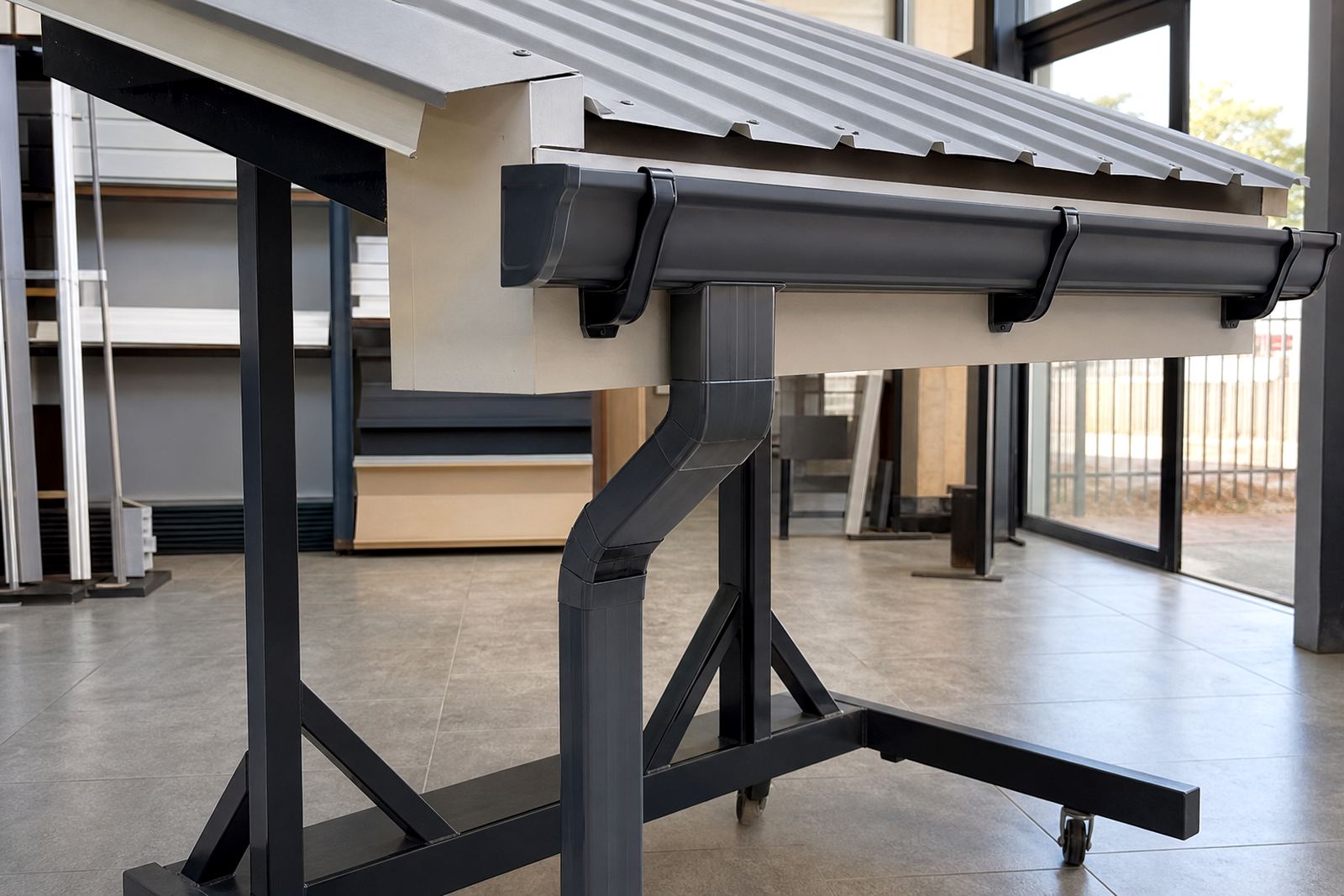
Square gutters have a straight profile with a flatter face than half-round guttering, so they sit neatly along modern eaves and parapets. They are commonly used where the roof edge calls for a sharper look and a more architectural finish, especially on new builds, townhouse blocks, office units and renovated homes where the fascia line is meant to stay crisp and tidy.
For correct performance, the gutter must be set to a suitable fall towards each outlet so water moves steadily without pooling. In South African weather that matters a lot, from heavy summer storms in Gauteng to coastal wind and salt air in Durban and Cape Town. Good support spacing, sound brackets and correct outlet placement all help the line stay true over time.
- Clean, squared appearance along straight roof edges
- Suitable for residential, sectional title and light commercial work
- Works with matching fascia and downpipe components
- Needs proper falls, outlets and bracket support for reliable drainage
Sizes, thicknesses and the parts that matter
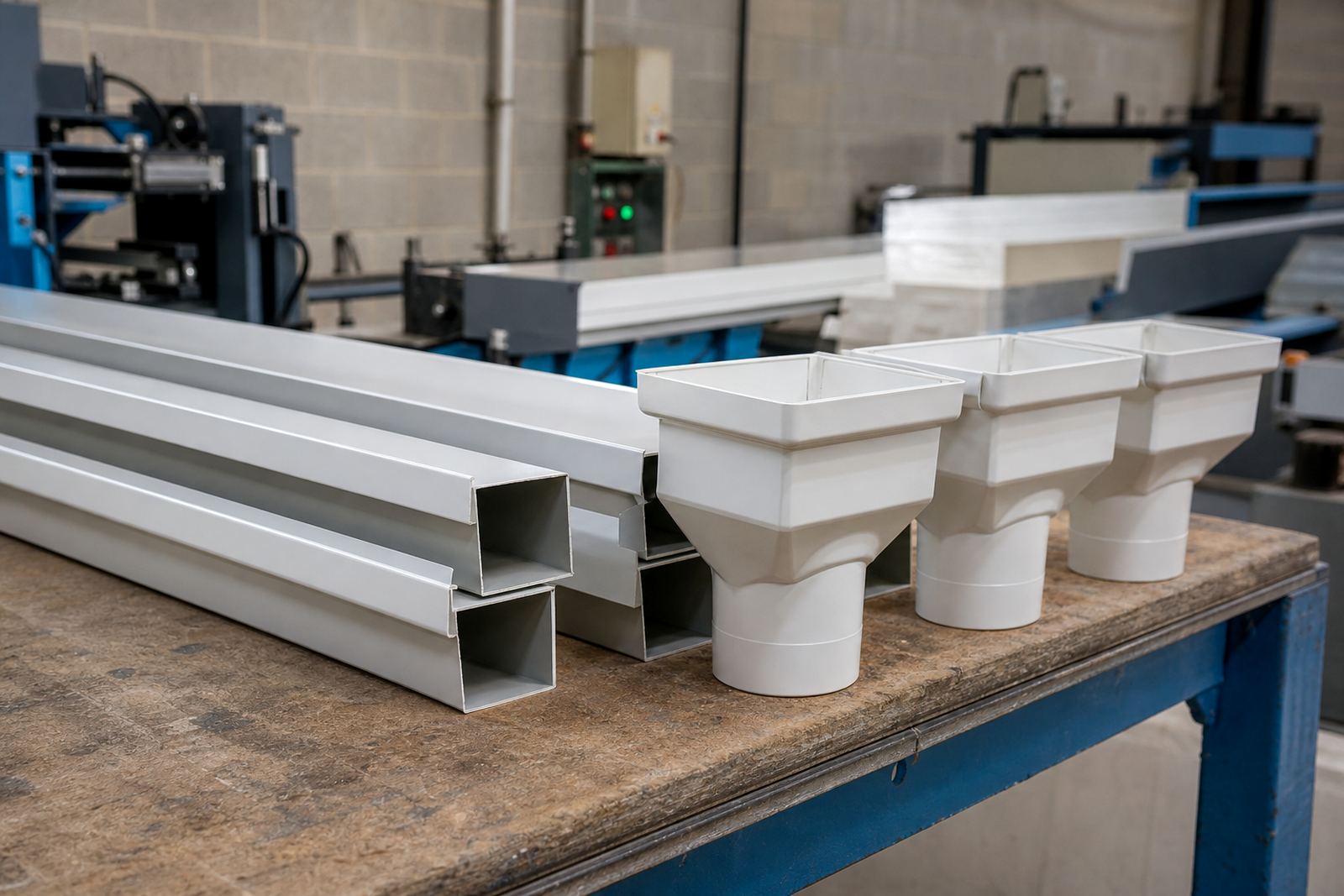
Square gutters are usually selected by width, depth and wall thickness, with matching corners, stop ends, outlets and brackets. Common building work often uses profiles around 125 mm to 150 mm wide, with downpipes sized to suit the roof area and rainfall pattern. On larger roof spans or where there is a lot of runoff, the installer may choose wider sections or additional outlets to reduce overflow risk.
The fascia board forms the fixing line and should be straight, stable and correctly packed so the gutter sits at the right angle. Brackets must be spaced to suit the profile and the local conditions, with closer fixing where there is strong wind or long runs. In coastal towns, material selection and fastening details are important because humidity and salt exposure can shorten the life of poor fittings.
- Profile widths commonly supplied around 125 mm and 150 mm
- Matching downpipe sizes selected to suit roof catchment area
- Fascia boards, corners, outlets, brackets and stop ends available as part of the roofline set-up
- Spacing and support must suit the run length and site conditions
Where square gutters fit best
This profile suits contemporary homes, carports, boundary walls, patio roofs, retail units and developments where straight lines matter. It also works well on fascia-heavy roof edges where the gutter is part of the visible finish, not just a water-carrying component. Builders often prefer it where the roof detail needs to look deliberate and tidy from the street.
On homes in Johannesburg and Pretoria, square gutters are often fitted where the roof geometry is simple and the eaves run straight for long distances. In Durban and Cape Town, the same profile is used, but the fittings and fixings need careful attention because wind driven rain, coastal air and debris from nearby trees can all affect drainage. On a steep or complex roof, the outlet position and downpipe route must be planned before the work starts.
Fitting work and safe roof access
Gutter installation should be done by competent people who understand working at height, safe access and correct fastening on the roofline. The gutter must be set to the right slope, fixed level enough to look straight but not dead flat, and joined neatly so water does not leak through the seams or end caps. Fascia replacement should happen before the new line is hung if the existing timber or backing is soft, warped or not holding fasteners properly.
For a clean result, installers normally check the roof edge, measure the runs, mark outlet positions and confirm where the downpipes will discharge. Where ladders, scaffold or roof access equipment is needed, the crew must use it properly and work safely. No amount of neat material can make up for poor setting out, weak fixings or an outlet that is too small for the roof area.
- Confirm fall direction before fixing starts
- Check fascia straightness and sound fixing points
- Match outlets and downpipes to the roof catchment area
- Plan safe roof access and safe working methods
Care, cleaning and coastal wear
Square gutters need regular clearing of leaves, seed pods, silt and roof grit, especially after heavy rain or seasonal wind. In areas with jacarandas, gum trees or nearby gardens, debris can build up faster than people expect and block the outlet first. A blocked outlet will show up as overflow, staining on the fascia or water running behind the gutter line.
For maintenance visits, the usual checks are the bracket spacing, joint condition, signs of movement, leaks at corners, and the state of the downpipes at ground level. In coastal places, any metal fixings and support points should be checked for corrosion. Small issues caught early are cheaper to deal with than a damaged roof edge or rotten fascia board later on.
- Clear debris before the first hard rain of the season
- Inspect corners, outlets and end caps for leaks
- Check bracket movement and sagging after storms
- Watch for corrosion in coastal air and salt exposure
Square Gutters: roof measurements to confirm
To supply the correct square gutter set, confirm the run lengths, roof pitch, outlet positions and whether the job needs new fascia boards or only replacement gutters. It also helps to know the building type, roof sheet or tile profile, the number of corners, and whether the site is in Johannesburg, Pretoria, Durban, Cape Town, Polokwane or a surrounding area with strong weather exposure.
For builders, the material takeoff should note every straight run, every corner, end cap, joiner, bracket and downpipe drop. For homeowners, a site measure is often the safest way to avoid short lengths or mismatched fittings. Plasteel coordinates supply, delivery and roofline materials from Kya Sand, Randburg to sites across South Africa, including Randburg Supply, Midrand Supply, Roodepoort Supply and delivery areas in Johannesburg, Pretoria, Durban, Cape Town and Polokwane.
- Measure each gutter run and note outlet locations
- Confirm whether fascia boards need replacement
- List corners, joins, brackets and downpipe drops
- State the site town and access conditions for delivery and offloading
Key facts
| Profile | Square gutter line for modern roof edges |
|---|---|
| Typical widths | 125 mm and 150 mm, subject to site requirements |
| Associated parts | Corners, stop ends, outlets, brackets and downpipes |
| Common applications | Homes, townhouses, carports, shops and light commercial roofs |
| Fitting notes | Set to fall, fixed to sound fascia and installed safely at height |
| Service areas | Kya Sand, Randburg, Johannesburg, Pretoria, Durban, Cape Town and Polokwane |