Outer-face support for a cleaner roof edge
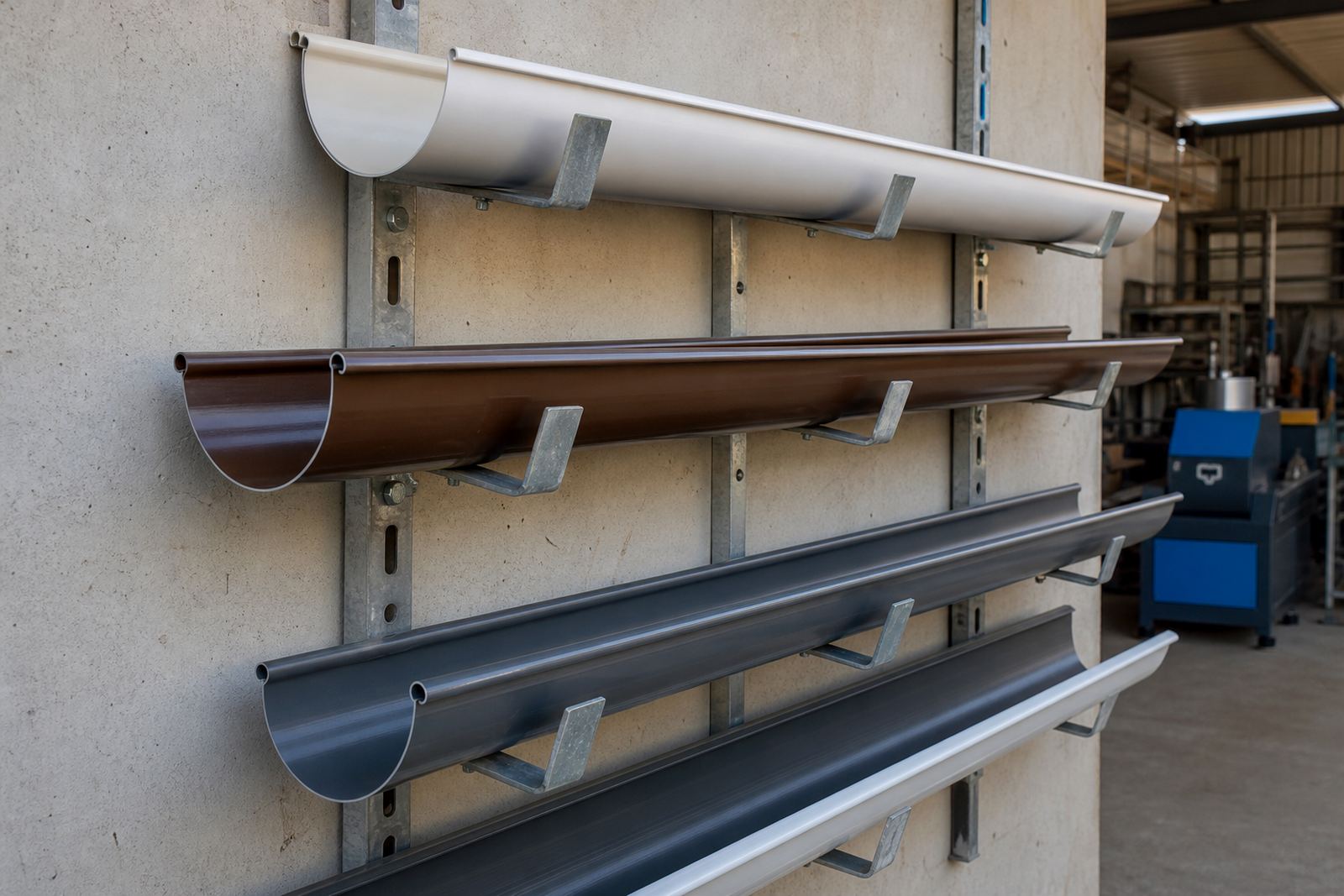
External brackets are the fixing point that carries the gutter from the outside face rather than from inside the gutter profile. In practice, that means the gutter is supported along the fascia or a compatible roof edge detail, with the bracket shaping the line and helping the run stay true over long lengths. On South African roofs, where heat, wind and heavy rain can all appear in the same season, a bracket that sits correctly and grips properly makes a real difference to how the gutter performs.
These brackets are used on domestic houses, townhouses, light commercial buildings and boundary structures where the roof edge needs a tidy finish. They are especially useful where the fascia line is visible from the ground, because the bracket spacing and alignment affect both drainage and appearance. Small errors at the fixing stage can lead to sag, ponding or a gutter that sits proud at one end, so the bracket layout needs proper care.
Sizes, profiles and fixing choices
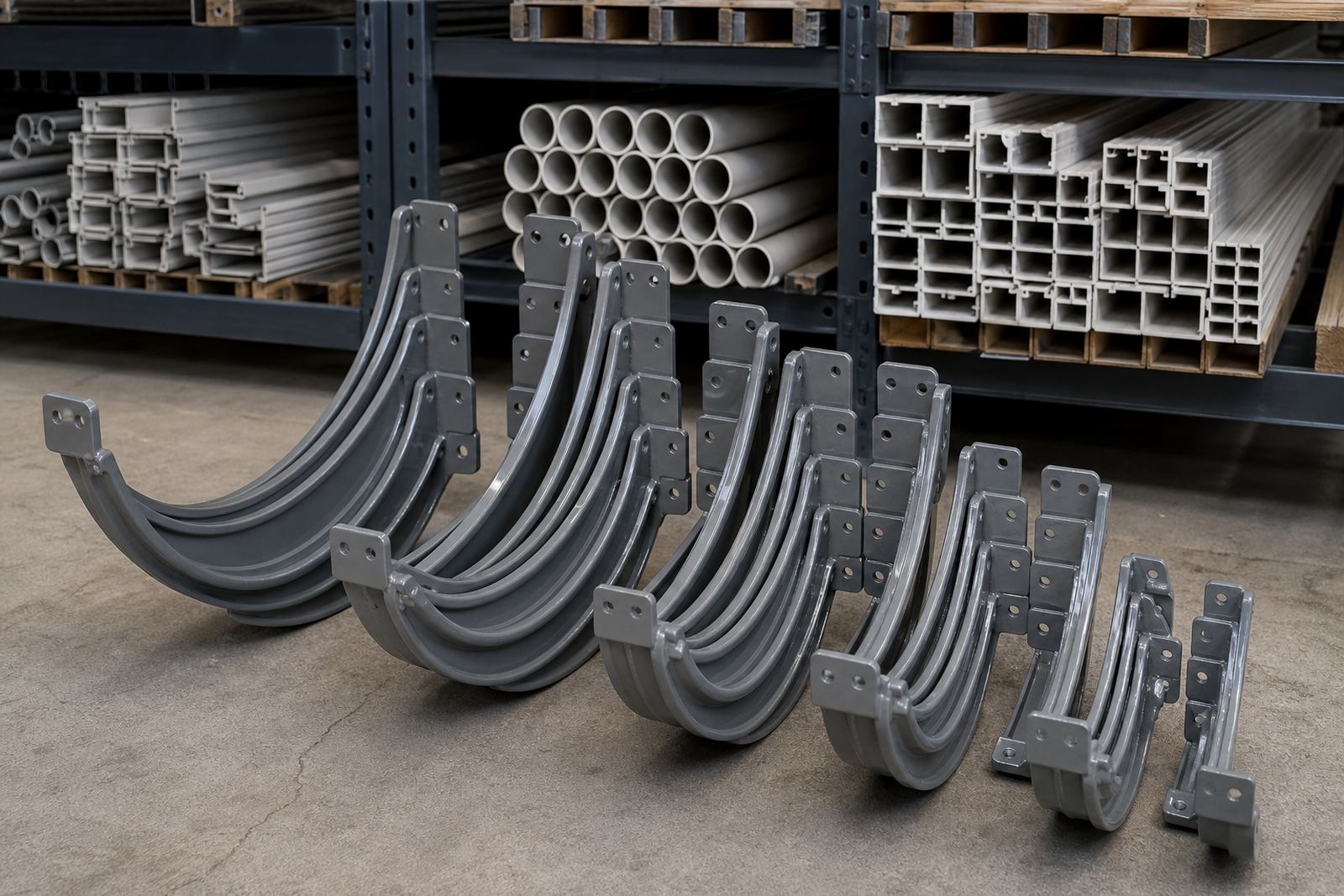
External brackets are matched to the gutter profile and the fascia or support detail, so the first step is always to check the shape and depth of the gutter. Common options include brackets for standard domestic gutter sections, deeper profiles for higher rain flow areas, and heavier support pieces for longer runs or exposed roof edges. The fixing method also matters. Some brackets are arranged for screw fixing into timber fascia, while others suit steel or composite support members where the fixing point is more rigid.
When the bracket and gutter match correctly, the finished line is easier to set out and maintain. A bracket that is too shallow may pinch the gutter, while one that is too open can leave the profile loose and noisy in windy weather. For coastal work in places like Durban or port-side areas, fixing quality matters even more because salty air can work on poor fasteners and lead to early stainng or corrosion.
- Match the bracket to the gutter profile and depth
- Check the fixing surface: timber, steel or composite support
- Confirm spacing for the expected span and water load
- Use compatible fixings for the local environment
Where this bracket suits best
External brackets suit roof edges where the fascia is sound and the installer wants support from the outer face. They are a practical choice on replacement work, new roofline work and repairs where the existing gutter line has started to pull away or lose shape. On long runs, brackets help keep the gutter at the right fall so water can move to the outlet instead of sitting in low spots.
They are also useful where access is limited and the bracket needs to be placed in a clean, repeatable line along the edge. In many cases the gutter can be installed with a regular bracket pattern and then adjusted slightly to suit the actual roof line, which is common on older buildings where the fascia is not perfectly straight. For builders and homeowners alike, that extra control helps keep the finish neat without overcomplicating the job.
- New roofline installations
- Fascia replacement work
- Leak repairs and partial gutter replacement
- Homes, units, small industrial buildings and retail units
Setting the bracket line and gutter fall
Gutter performance depends on more than the bracket itself. The installer has to set the run with a proper fall towards the outlet, usually from the high end to the downpipe position, so water can move steadily and not sit in the gutter after rain. The bracket line needs to follow that fall exactly, otherwise the gutter will look level from a distance but hold water in the middle or at the wrong end.
For most rooflines, the fall is subtle, not dramatic. Too much slope can look untidy and place stress on the joints, while too little can let debris settle and increase overflow risk. Competent people working at height should handle the fitting, because gutters are often installed at roof edge level where safe access, ladders, scaffolding or a suitable platform are part of the job. A careful set-out also helps with corner pieces, stop ends and outlets, which all need to sit square for the system to work properly.
Care, cleaning and long-term use
External brackets do not need complicated maintenance, but they do benefit from regular inspection. After heavy rain or seasonal wind, check that the gutter still sits firmly in the bracket line and that no fasteners have loosened. Debris build-up around the gutter edge can hold moisture against the fixing points, so clearing leaves and grit helps the whole roofline last longer.
In coastal towns and high-humidity areas, look out for staining, rust on mixed metal parts, or any sign that a bracket has moved out of line. If a section has been damaged by ladder impact, a roof repair or building movement, replace the bracket before the gutter starts to sag. A small fault at one fixing can spread into a longer section if it is left too long.
- Inspect after strong wind and heavy rain
- Clear leaf litter from the gutter edge
- Check for loose screws, pulled fixings or misalignment
- Replace damaged brackets before the gutter line drops
External Brackets: roof measurements to confirm
To supply the correct external brackets, it helps to know the gutter profile, the fascia material, the fixing surface and the site location. A roofline in Polokwane can face different heat and rain movement than one in Cape Town, so the support choice and fixing detail should suit the conditions at the actual property. If the job is for a builder, the takeoff should also show the run lengths, corners, outlets and any special sections where spacing may change.
Please confirm the size of the gutter, the approximate bracket spacing, whether the fascia is timber or another support material, and if the work is new installation or a replacement section. Where the roofline has uneven spans or older repairs, a site measure helps avoid under-ordering or ending up with a bracket type that does not sit right. That saves time on site and helps the install go in cleaner first time.
- Gutter profile and width
- Fascia or support material
- Run lengths, corners and outlet positions
- Colour and finish match
- Site location and exposure to weather
- Quantity needed for the full run plus any spare pieces
Key facts
| Product type | External gutter support bracket |
|---|---|
| Function | Fixes to fascia or structure and supports the gutter from the outside face |
| Typical use | Residential, commercial and light industrial rooflines |
| Compatibility | Matched to gutter profile, fascia material and fixing method |
| Installation note | Fit by competent people with safe access at height |
| Maintenance | Periodic inspection, cleaning and refastening where needed |