What a downpipe shoe does at ground level
A downpipe shoe is the angled fitting fixed to the bottom of a downpipe so rainwater leaves the pipe in a controlled direction. On homes, factories, schools and small commercial buildings, it is used where water should not drop straight onto a slab, against a wall, or onto loose soil that can wash away. In practical roof drainage work, the shoe is a small piece but it makes a clear difference to how water is carried away after a storm.
For plastic-steel composite gutter systems, the shoe should match the downpipe profile and the outlet size so the flow is not restricted at the base. A well matched shoe also helps keep the line neat along boundary walls, verandas and service yards, especially where space is tight and the discharge point sits close to paving or a planted strip.
Sizes, profiles and matching details
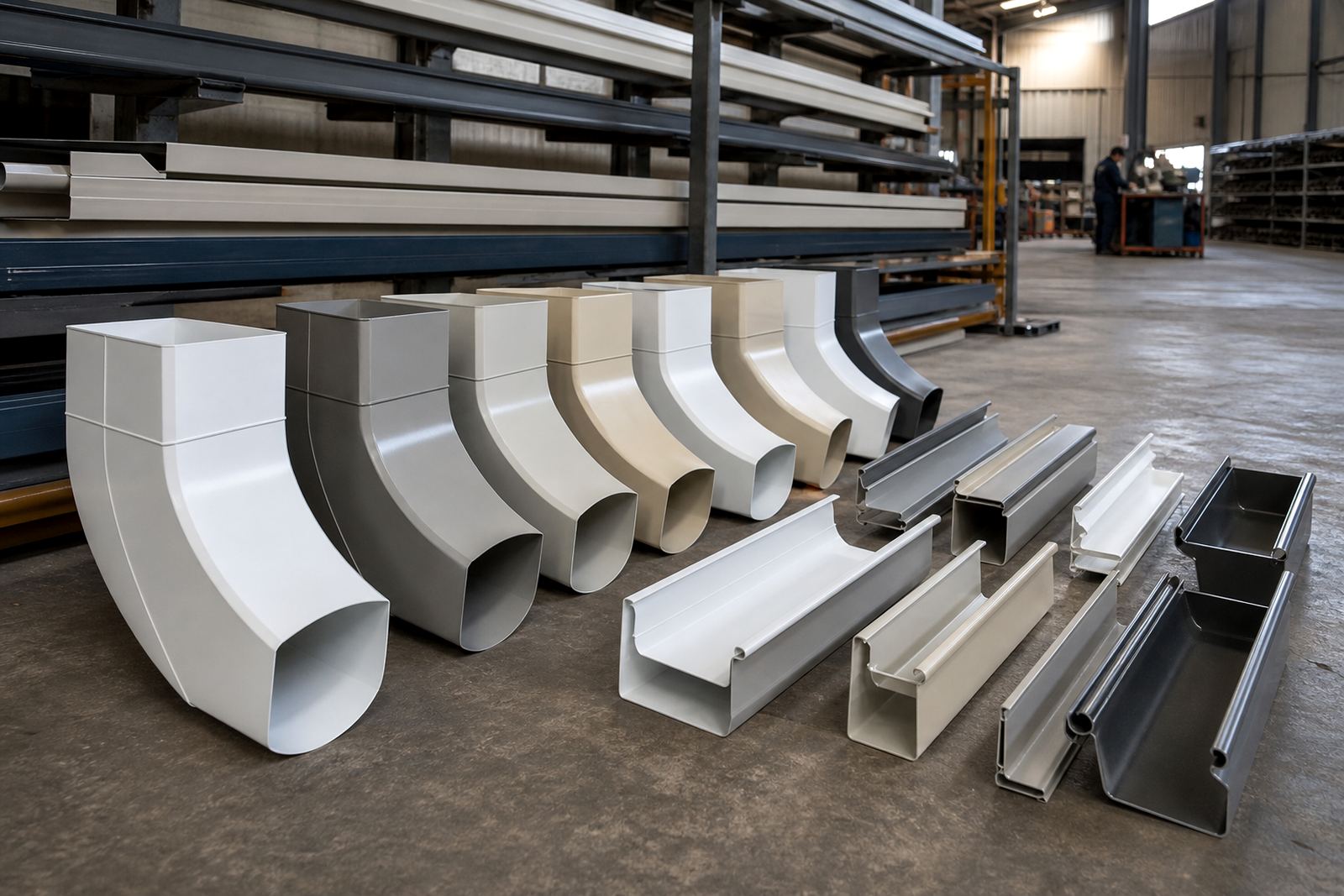
Downpipe shoes are normally selected to suit the same profile as the downpipe, with common round and rectangular options used in South African building work. The key is not only the shape, but the outlet size and the angle needed to guide water away without splash-back. Where gutters feed a larger roof area, the shoe should be chosen to suit the downpipe capacity and the expected runoff from the roof catchment.
- Round or rectangular profile to match the downpipe run
- Outlet opening sized to suit the pipe and discharge path
- Angled discharge to direct water into a drain or splash area
- Compatible fixing points for secure attachment to wall or pipe
- Colour matched options for visible roofline work
In coastal towns like Durban and Cape Town, fittings are often exposed to salt air, so a neat, tight fit matters as much as appearance. In inland areas such as Johannesburg, Pretoria and Polokwane, summer storms can move a lot of water in a short time, so the shoe needs to suit both roof size and the chosen drainage path.
Where downpipe shoes are most useful
These fittings suit any place where water needs to be carried away from the bottom of a downpipe in a controlled way. They are common on homes, cluster developments, warehouses, workshops and retail buildings, especially where there is paving, garden beds, boundary walls or a stormwater channel nearby. They also help when the downpipe ends close to a driveway or pedestrian area and the discharge must be directed safely.
A shoe is often used with a short run to a soakaway, gully, splash pad or stormwater point. On sloped sites, the fitment can help prevent runoff from undermining the soil at the base of the wall. On flat sites, it is useful where the installer wants a clear outlet away from foot traffic. In every case, the path for the water should be planned before the fitting is fixed in place.
- Domestic roofs with limited ground clearance
- Commercial buildings with controlled stormwater routes
- Boundary walls where runoff must be directed away from foundations
- Carports, walkways and service yards with paving below
- Sites with landscaped edges that need less splash and erosion
Fitting work that keeps the outlet steady
Downpipe shoes are normally fitted at the base of the pipe after the downpipe has been measured and cut to the correct height. The shoe should sit square to the wall and point toward the discharge point, with enough clearance to avoid water hitting the wall or a corner. For roofline work at height, the installer should use safe access methods and competent roof workers, especially on steep roofs, multi storey buildings or slippery sites after rain.
Fixing method depends on the pipe system and the wall surface. A good installation keeps the shoe aligned so water does not back up or spray at the joint. Where a shoe feeds into a short horizontal run, the installer should avoid unnecessary bends that can slow flow or trap leaves and grit. If the roof drainage plan includes a soakaway or gully, the final position should be checked against the site fall and the available drainage point.
- Confirm pipe height before cutting the downpipe
- Check wall line, outlet direction and discharge point
- Use suitable fixings for brick, plaster or cladding surfaces
- Keep the shoe clear of paving lips and garden edging
- Test the flow after fitting during a hose or rain check
Care, cleaning and practical upkeep
Like the rest of the roof drainage line, a downpipe shoe works best when kept clear of leaves, roof grit and nesting debris. In areas with jacaranda leaves, nearby trees or dusty construction sites, the outlet can collect material faster than expected. A quick visual check after heavy rain helps spot splash-back, loose fixings or soil wash around the discharge area.
For composite gutter and downpipe systems, maintenance is usually straightforward. Keep the outlet clear, check that the shoe has not shifted, and look for signs that water is escaping at the joint rather than flowing out of the opening. If the ground at the discharge point has started to erode, the shoe position may need adjusting or the outlet may need a better splash area. Small faults at the base often point to a bigger issue higher up the line, such as blockage or poor fall in the gutter.
Ordering the right shoe for the job
When ordering downpipe shoes, it helps to confirm the pipe shape, size and the way the water must leave the building. A shoe that looks close is not always the right fit if the outlet size, angle or profile differs. For builders and homeowners, the most useful details are the downpipe dimensions, the intended discharge point and the colour or finish needed to match the roofline.
- Downpipe profile and size, round or rectangular
- Required outlet direction and discharge point
- Roof level and approximate downpipe length
- Matching colour for visible fascia and gutter lines
- Site type, for example home, warehouse, complex or shopfront
- Any nearby paving, walls, drains or landscaped areas
Plasteel supplies roof drainage materials from Kya Sand, Randburg for projects across Johannesburg, Pretoria, Durban, Cape Town, Polokwane and surrounding areas. The enquiry form on our contact page is used for product requests, delivery coordination, builder support and homeowner advice. For larger roofline jobs, it also helps to include site measuring or a material takeoff so the shoe and the rest of the drainage line arrive correctly matched to the installation.
Key facts
| Product type | Downpipe shoe for roof drainage |
|---|---|
| Typical profiles | Round and rectangular |
| Common use | Directs runoff away from the wall base |
| Compatible systems | Plastic-steel composite gutters and downpipes |
| Installation setting | Residential and commercial roofline drainage |
| Key selection factors | Profile, outlet size, angle, colour and discharge point |