
How a bend keeps the downpipe line in step
A downpipe bend is a formed section that changes the direction of a vertical pipe without rough joints or awkward packing. In roof drainage work it is used to step the pipe away from the fascia, pass around a string course, clear a brick projection, or bring the water line into a stormwater outlet with better alignment.
On most homes and light commercial roofs, the bend is fitted as part of a run that starts at the outlet, drops through one or two bends, then continues to the ground or into a drain connection. The angle used must suit the layout on site, because too many tight turns slow the flow and too few turns can leave the pipe out from the wall. Roofing work at height must be handled by competent people with the right access equipment and safe fixing practice.
Sizes, angles and matching parts
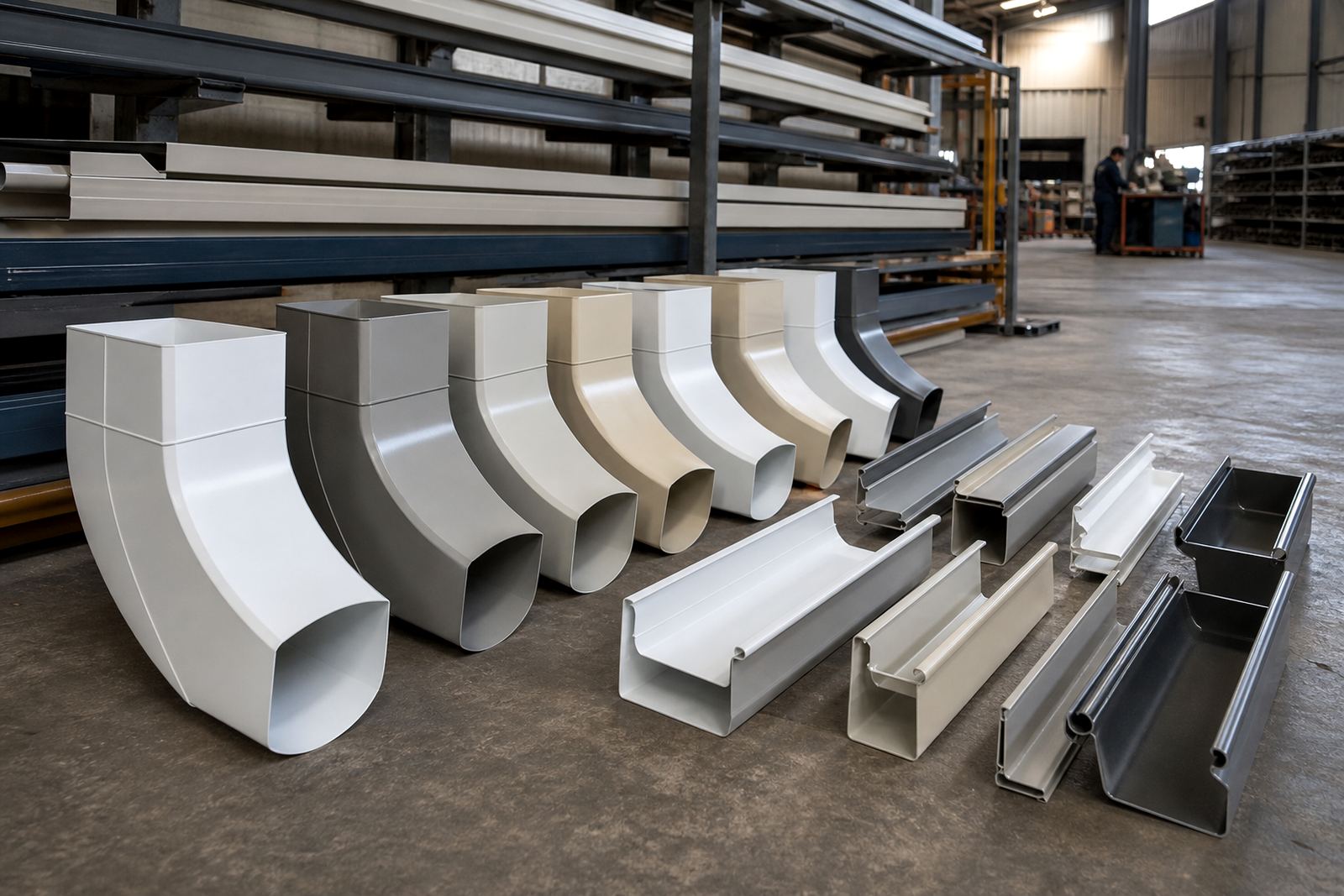
Downpipe bends are normally selected to match the pipe size and the rest of the system. For residential work, common sizes include 75 mm, 80 mm and 100 mm nominal downpipe lines, while larger commercial runs may need a bigger profile or a formed offset with matched fittings. The bend angle is usually chosen to suit the setback on the wall, with paired bends used to create an offset and return to the vertical line.
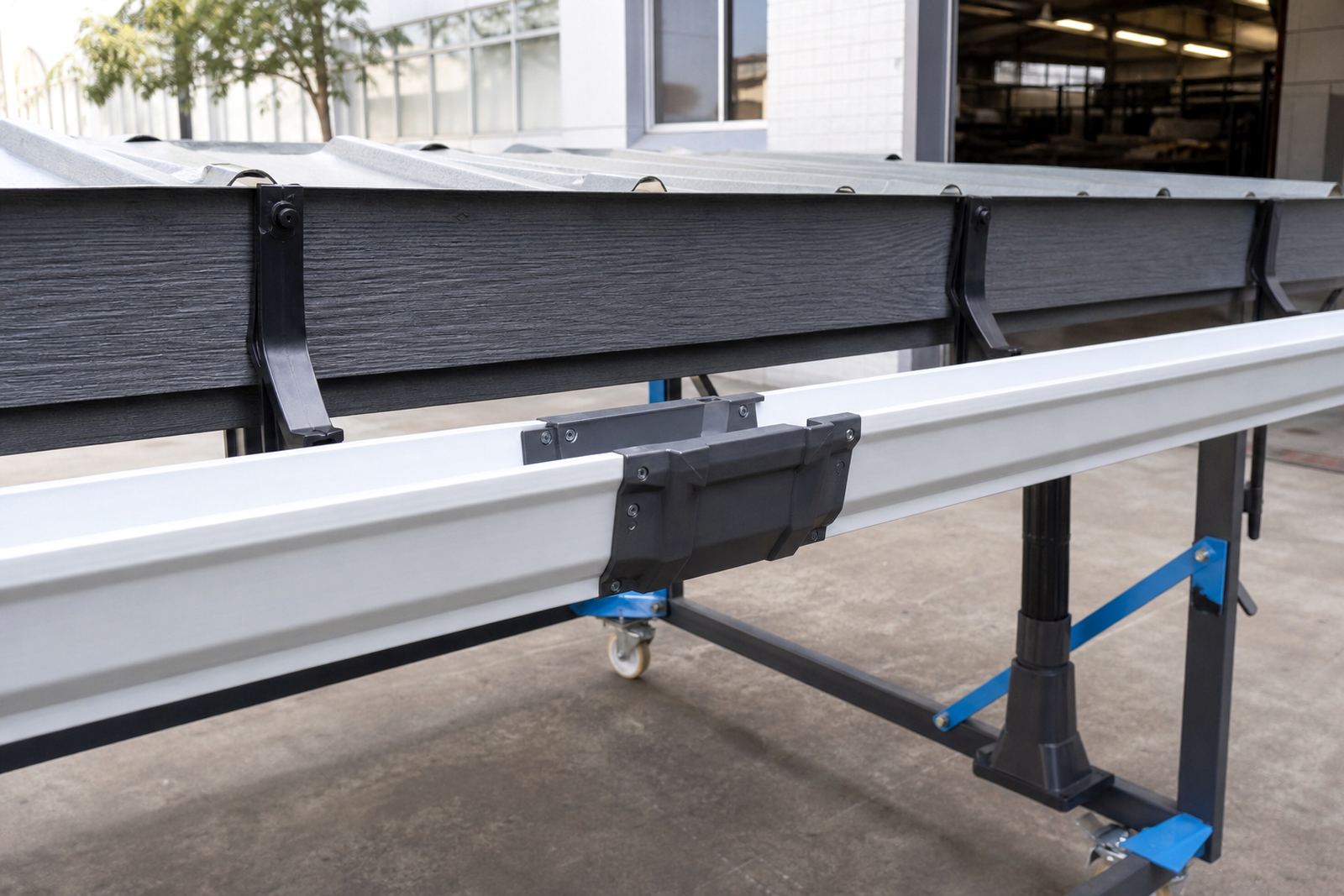
For a proper match, the bend should work with the same material profile as the pipe, brackets and sockets in use. A neat fit matters because misaligned parts can leave the pipe under stress, which shows up later as loosened joints or rubbing at the wall.
- Nominal sizes: 75 mm, 80 mm, 100 mm and other matched system sizes
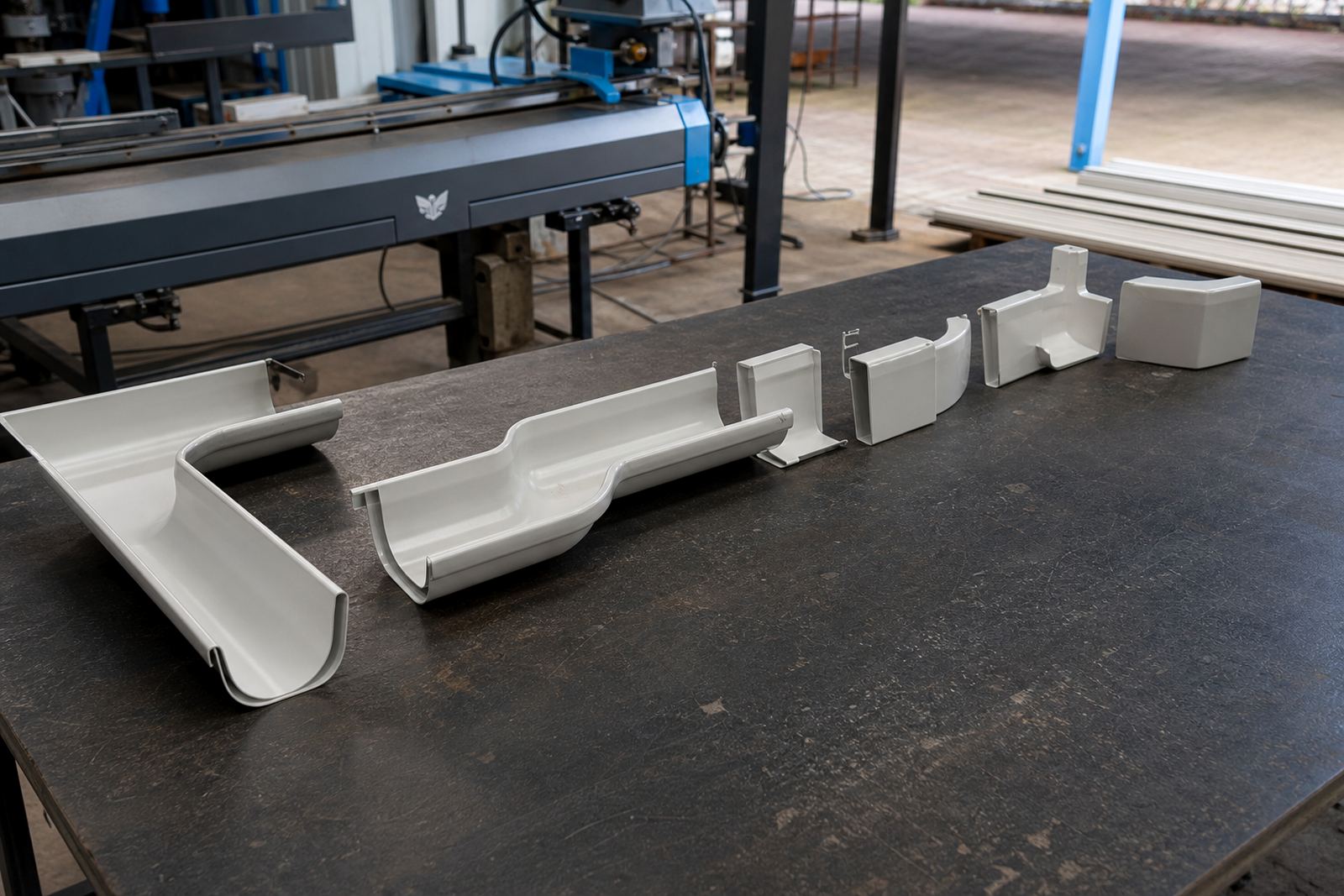
- Typical bend forms: single bend, offset pair and return bend
- Profile match: use the same system profile for pipe, bends and fittings
- Wall clearance: allow space for brackets and safe drainage access
Where these bends suit the roofline
These fittings suit houses, townhouse complexes, shops, warehouses and light industrial buildings where the downpipe cannot run straight to ground level. They are useful where eaves overhang widely, where the wall face is stepped, or where a boundary wall, sill or parapet interrupts the vertical line. In coastal towns such as Durban and Cape Town, and in hot inland areas like Pretoria and Polokwane, a neat bend arrangement also helps reduce twisting and strain when the installation expands and contracts with changing weather.
Builders often use bends on side walls, corner returns and sections above paving where a straight pipe would be in the way. Homeowners use them when replacing a damaged roofline part or when a previous pipe line was fixed too close to windows, gateways or a planted area. The same fitting can be used on new work or repair work, provided the rest of the run is matched correctly.
- Useful for offsets around eaves, brick projections and window heads
- Suitable for domestic and commercial roof drainage runs
- Helpful where the discharge point is not directly below the gutter outlet
- Matches well with replacement work on older rooflines
Fitting practice that keeps the run tidy
Correct installation starts with measuring the offset between the outlet and the wall line, then choosing bends that place the pipe on a clean vertical path. The joint faces should be fully engaged and the pipe supported with brackets at sensible spacing so the weight of water and the pipe itself does not pull on the bend. On higher walls or exposed positions, additional support is often needed near each bend because wind and movement can work a loose joint over time.
It helps to keep the number of direction changes as low as possible. Two bends used together can form a clear offset, but they must be set square and aligned so the pipe does not twist. Where a bend feeds into a shoe or into a stormwater entry, the outlet path should be checked for free discharge and for any backfall that could trap debris.
- Measure the offset before cutting or fixing pipe sections
- Use brackets close to bends for support and alignment
- Keep the pipe plumb after the bend sequence is set
- Check discharge into drains, soakaway points or ground outlets
Material care in South African weather
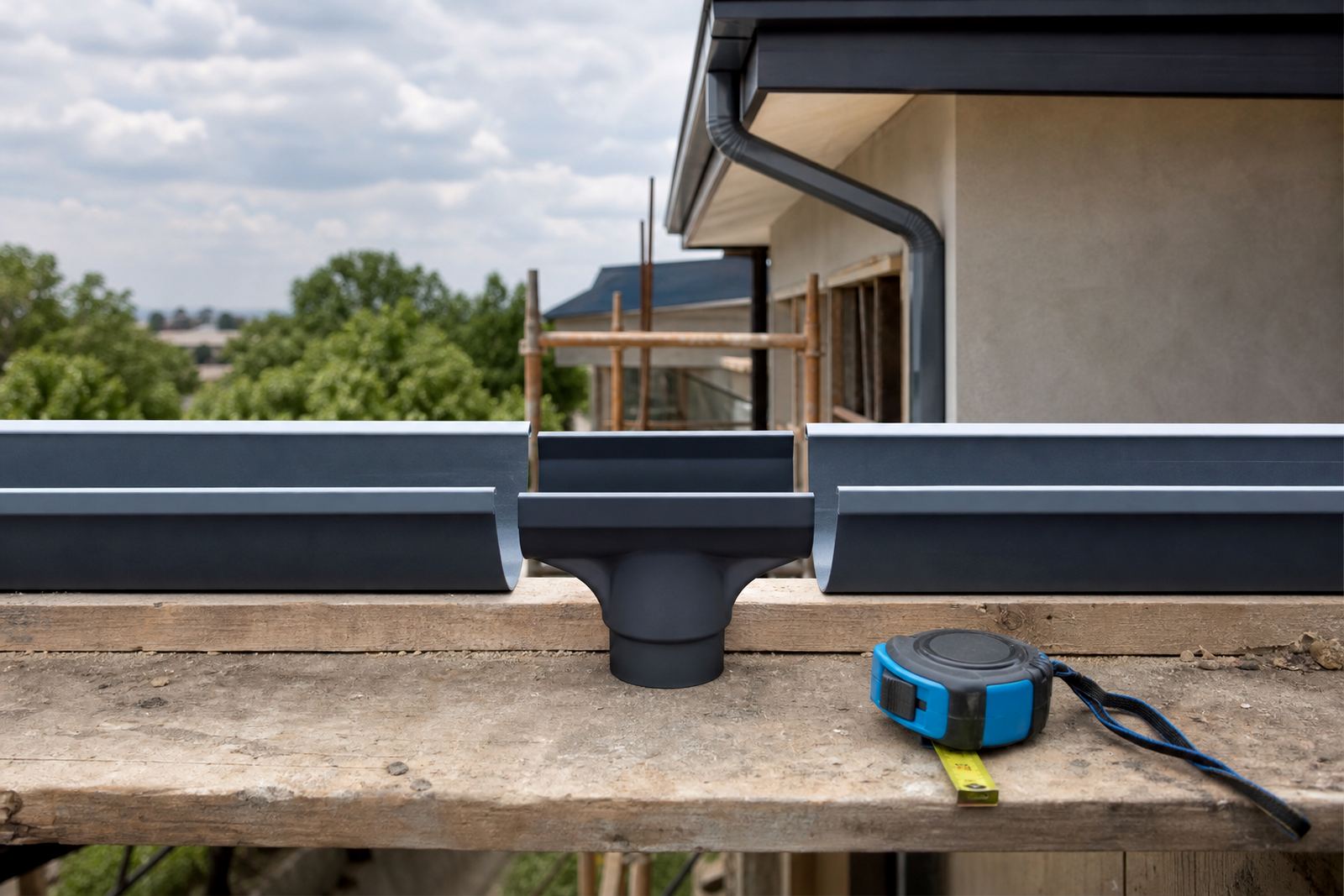
Plasteel composite gutter components are selected for the kind of weather South African rooflines face, from strong summer sun to coastal damp and windborne dust. Bends should be checked from time to time for loose clips, cracked joints, impact marks and dirt build-up inside the curve. A small blockage in a bend can slow the run and push water back toward the gutter outlet during heavy rain.
Cleaning is usually straightforward. Wash the exterior with water and a mild cleaner, then remove leaves and grit from the inside if access allows. Avoid harsh scraping at the formed curve, since a damaged bend can leak at the joint or deform under load. In seaside areas, regular visual checks are worth doing because salt air and moving grit can work into fixings and exposed junctions.
Details to confirm before you order
Downpipe bends need the right profile first, then the right angle and colour match. Before ordering, confirm the nominal downpipe size, the wall offset to be covered, whether a single bend or paired offset is needed, and the direction of the turn. It also helps to confirm the roofline layout, because a bend that clears a fascia or eave on one side may not suit the opposite side of the building.
For supply and delivery into Johannesburg, Pretoria, Durban, Cape Town, Polokwane, Midrand and Roodepoort, the team can help match the bend to the rest of the gutter line and the material quantities needed for the job. If the work is part of a larger replacement, it is worth checking brackets, outlets, downpipe lengths and fascia sections at the same time so the installation is consistent from top to bottom.
- Downpipe size and profile
- Bend angle and turn direction
- Colour or finish match with the rest of the system
- Wall offset, bracket positions and outlet location
- Whether the bend is for new work or a replacement run
Practical support for builders and homeowners
Plasteel works from Kya Sand, Randburg and supports builders, roofers and homeowners with material supply, takeoffs and delivery coordination. For this product, the useful part of the conversation is usually the roofline itself: the gutter outlet position, the wall set-back, the fall on the gutter and the point where water must exit safely. That is the information that helps select bends that fit the job properly rather than forcing a line that sits awkwardly on the wall.
Good roof drainage depends on clean alignment, sound brackets and a pipe line that is not fighting the building. When the bend is matched to the rest of the system, the run looks neater and is easier to maintain later, especially on longer walls and exposed corners.
Key facts
| Product type | Downpipe bend for roof drainage runs |
|---|---|
| Typical sizes | 75 mm, 80 mm, 100 mm and matched system sizes |
| Common forms | Single bend, offset pair, return bend |
| Material | Plastic-steel composite system component |
| Use areas | Homes, complexes, shops and light commercial roofs |
| Supply areas | Kya Sand, Randburg, Johannesburg, Pretoria, Durban, Cape Town, Polokwane, Midrand and Roodepoort |