What soffit boards do on a roofline
Soffit boards are fixed to the underside of the eaves, bridging the gap between the wall line and the roof edge. They give the roofline a finished appearance and help cover open timber, joints and uneven edges that can show after roof work or fascia replacement. On homes in Randburg, Pretoria or along the coast in Durban and Cape Town, a properly fitted soffit also helps reduce the direct exposure of the roof edge to dust, wind driven rain and insect entry points.
In building work, soffit boards are used with fascia boards and gutters to complete the perimeter detail under the roof. The board choice needs to suit the roof pitch, the eaves depth and the fixing method. On longer runs, installers allow for straight lines, controlled expansion and enough support so the board does not sag where it spans between battens or framing members.
- Used to close the underside of open eaves
- Matches fascia and gutter lines for a tidy roof edge
- Suitable for residential and commercial roofline work
- Helps protect exposed timber and edge details
Sizes, profiles and finish choices
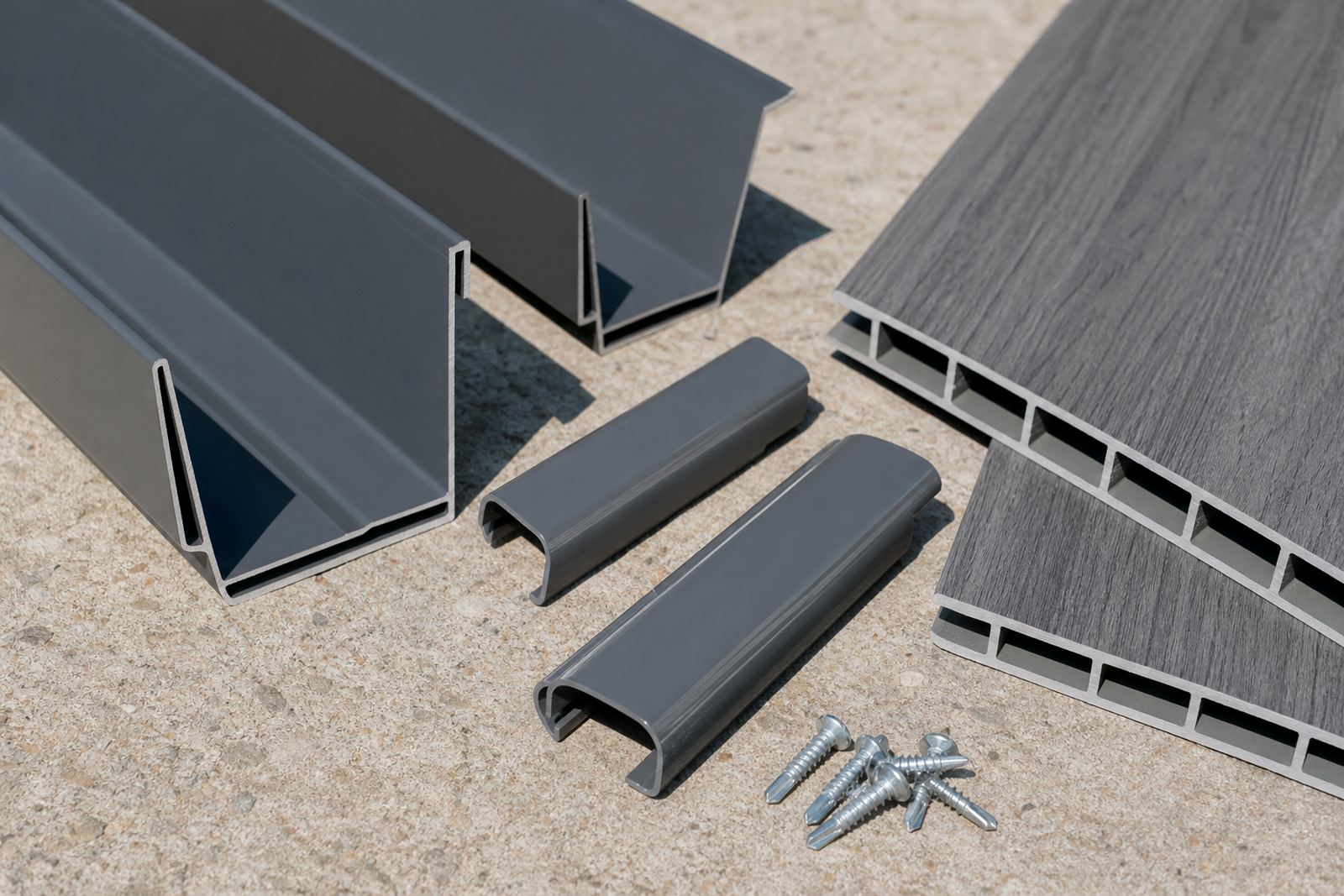
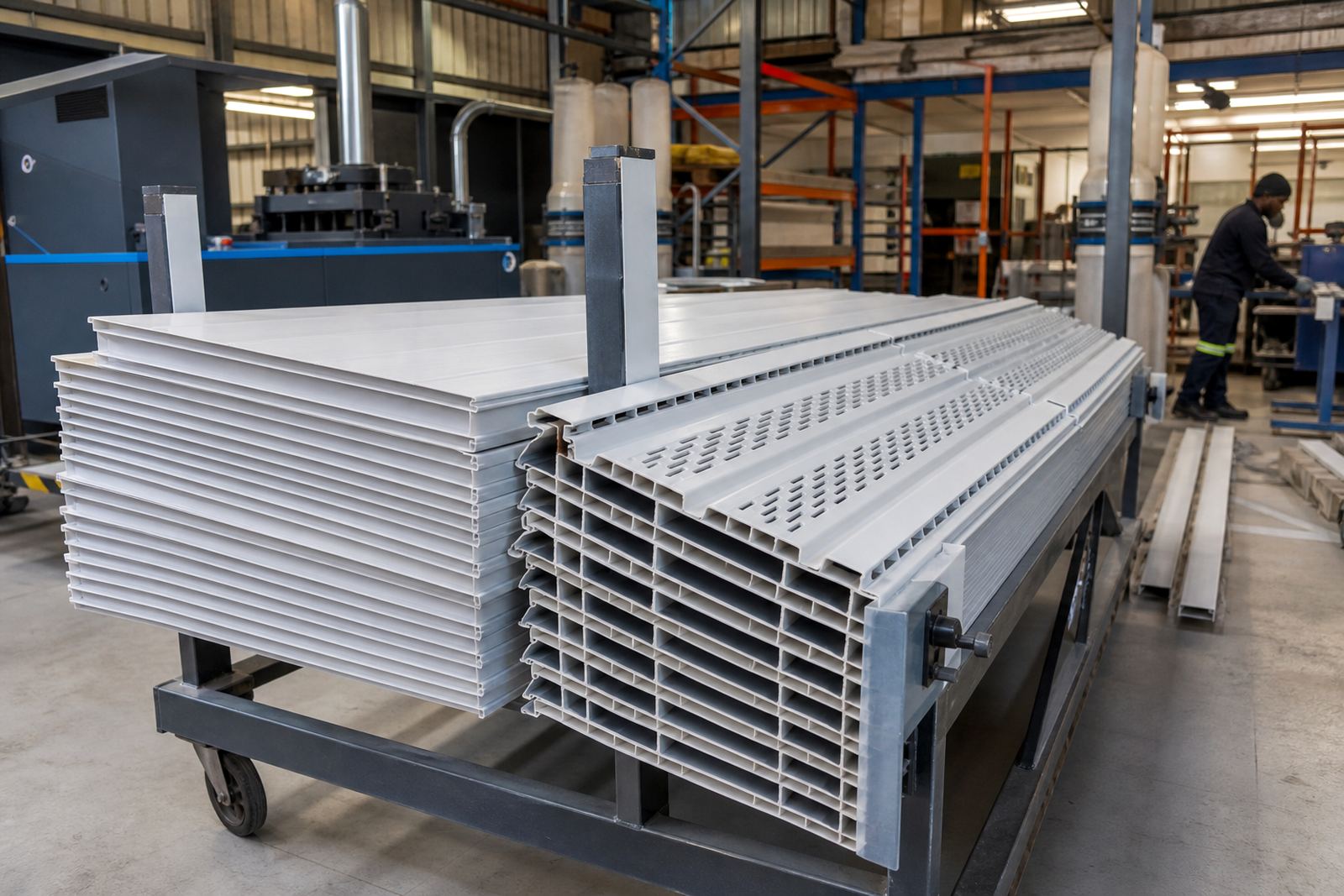
Plasteel soffit boards are selected to suit typical South African roofline details, with widths that work for narrow and wider eaves. Common board lengths and widths need to be checked against the actual site measure, because roof overhangs, wall setbacks and the fascia build-up can change the final cut size. For builders, the best result comes from measuring the actual line rather than relying on a rough count of sheets.
Finishes are usually chosen to coordinate with the fascia and gutter colour on the property. Where the soffit is visible from the street, a clean, even finish matters. On coastal properties, it is also sensible to check the fixing points and ventilation detail around the eaves, because salty air and high humidity can highlight poor joins and loose fasteners over time.
- Board widths to suit narrow and deep eaves
- Length selection based on site measure and cut layout
- Smooth face options for neat visible rooflines
- Colour matching with fascia and gutter elements where required
Where soffit boards suit best
Soffit boards suit houses, sectional buildings, offices, retail units and small industrial structures where the roof edge is visible or exposed. They are often used where a builder wants a cleaner finish at the eaves, especially on renovation work where old timber has been repaired or replaced. In Johannesburg and Pretoria, they are common on domestic roof upgrades and new roofline installs. In Cape Town and Durban, they are often specified where weather exposure makes a clean, enclosed eaves detail worthwhile.
They also work well where the roof line changes direction, or where the eaves meet gables and corners. In those spots, the board layout needs proper cutting and support so the corners remain square and the fixings are hidden or neatly aligned. A careful takeoff before ordering helps reduce waste and avoids short offcuts on site.
- Residential eaves and patio roof edges
- Commercial roofline finishes on offices and shops
- Renovation projects with exposed or ageing timber edges
- Gable ends, corners and short return sections
Fitting details that matter on site
Good fitting starts with a straight fixing line and sound support behind the board. The installer must check the rafter ends, wall plate line and fascia position before fixing so the soffit sits flat and does not twist. In practical roofline work, this is done by competent people working safely at height, with proper access equipment and fall protection where required. That matters on multi storey work and on steep roofs where the edge is awkward to reach.
Fixings need to suit the substrate and the board thickness. At corners, around downpipe positions, and where roof brackets or other roofline pieces meet the soffit, the detailing should allow for a neat finish and easy maintenance later. On timber backed sections, the board should not be forced tight against damp or uneven material, because movement in the frame can show through the finish.
- Check rafter ends, fascia line and wall straightness before fixing
- Use suitable fixings for timber, metal or composite backing
- Allow clean corner cuts and neat joint lines
- Plan access safely for work at height
Care in humid, dusty and coastal conditions
Soffit boards do not need complicated care, but roofline checks should still be part of regular building maintenance. In dusty inland areas, a wipe down with mild soapy water is usually enough. In coastal towns such as Durban and Cape Town, extra attention should be given to salt build-up around fixings and joins. Where gutters overflow, the underside of the eaves can show staining, so leak checks and gutter cleaning should happen before the problem spreads.
If the board surface is scratched or a joint has opened, it is better to repair the section early than leave it until moisture gets into the edge detail. A maintenance visit can also pick up loose fascia joints, gutter fall problems or blocked downpipes that are affecting the soffit line. Regular checks help keep the roof edge neat and reduce the chance of water marks returning.
- Wash off dust and salt residue as needed
- Inspect joints, fixings and corner sections after heavy rain
- Check for gutter overflow marks above the eaves
- Treat roofline repairs early to avoid larger replacement work
Ordering the right board for your roofline
Before ordering, confirm the board width, length, colour, quantity and the exact areas where the soffit will be installed. It helps to have the eaves depth, roof pitch, wall height and corner count from site measure. Builders often need a material takeoff that includes offcuts, returns and any extra board for repairs around damaged sections.
It is also worth confirming whether the soffit will tie into new fascia boards, existing timber, or a full roofline replacement. If gutters and downpipes are being changed at the same time, the edge detail should be planned as one set of work so the lines stay true. For supply into Randburg, Johannesburg, Pretoria, Midrand, Roodepoort, Durban, Cape Town and Polokwane, delivery coordination can be arranged with the rest of the roofline materials.
- Confirm board width and length from the actual site measure
- List colour, quantity and corner pieces required
- Note whether it is a repair, new build or full roofline replacement
- Include fascia and gutter tie in points on the order
Key facts
| Product type | Plastic-steel composite soffit boards for roof eaves |
|---|---|
| Typical use | Underside of eaves on houses, offices, shops and light commercial buildings |
| Common sizing | Widths and lengths confirmed to site measure, with cut-to-fit installation |
| Finish options | Plain or colour matched roofline finish |
| Fixing method | Installed to a straight support line with suitable fixings and corner trims where required |
| Care level | Low maintenance with periodic cleaning and roofline checks |