
A small fitting that keeps the roof edge straight
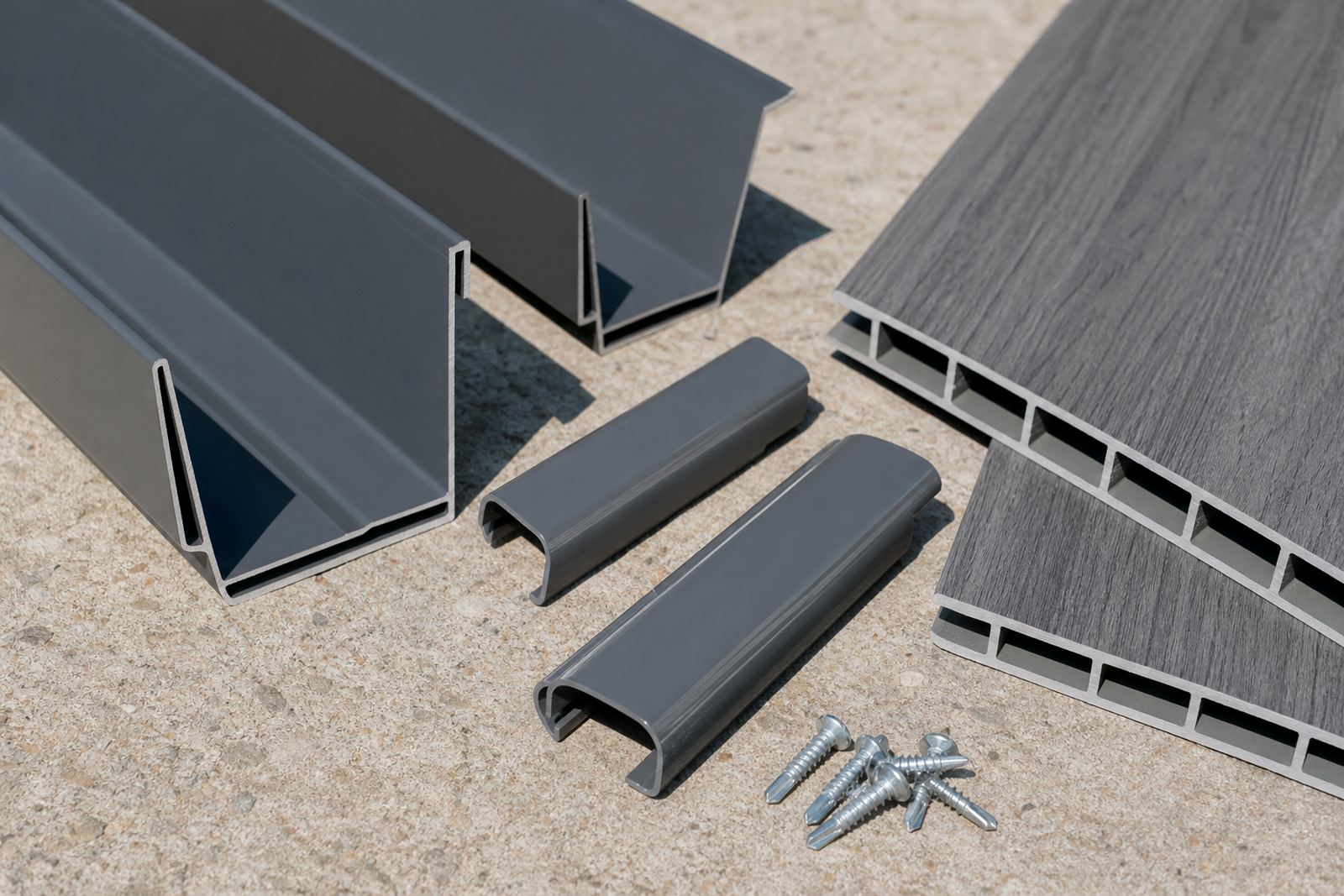
A fascia joiner links two lengths of fascia board so the joint sits neatly and the run stays visually even along the eaves. In practical roofline work, that matters where board lengths change between roof sections, corners, returns and long wall lines. A good joiner helps the fascia line read as one continuous finish instead of a patchwork of short pieces.
Plasteel fascia joiners are used with plastic-steel composite fascia boards on residential and commercial jobs. They are suited to roof edges in Johannesburg, Pretoria, Durban, Cape Town and inland towns such as Polokwane, where heat, wind and coastal moisture can put strain on the roofline. Where fascia boards carry gutters, the fixing layout should still follow correct spacing and sound support, with competent people handling work at height.
Sizes and matching details to check
Joiners are selected to match the fascia profile in use. Before ordering, confirm the board width, thickness and profile shape so the joint piece aligns properly and does not leave a step or open edge. Typical fascia board work in the trade is based on standard lengths such as 3,0 m or 6,0 m sections, but the joiner must suit the exact section being installed.
- Board width and face depth
- Board thickness and overlap detail
- Profile shape, flat or shaped edge
- Colour match for the roofline finish
- Joint position on long runs and corners
- Whether the joiner is for straight runs only or a special return detail
For tidy results, the joiner should be paired with straight, accurately cut board ends. A square cut helps the joint close evenly and reduces visible gaps at the face.
Where fascia joiners suit best
Fascia joiners are useful on long boundary walls, extended eaves and multi-section roofs where a single board length will not span the full run. They are also practical when replacing damaged sections only, rather than removing an entire fascia line. On homes, they help maintain a neat front edge where gutters, barge boards and roof sheets meet. On commercial buildings, they are handy where long straight roof edges need a consistent finish across multiple bays.
In coastal areas such as Durban and parts of Cape Town, material choice matters because humidity and salt in the air can affect roofline components over time. Inland heat can also move materials slightly, so the joint should be fixed with care and the line kept straight. The joiner is part of the visible finish, so it should sit flush without twisting the board face.
- New build roof edges
- Partial fascia replacement jobs
- Long straight eaves on homes and warehouses
- Roofline repairs after storm damage
- Projects where a clean colour-matched finish matters
Fitting points that matter on site
Fascia joiners are fitted as part of a roofline package, normally with board cuts prepared first and the run checked for line and level. The join piece should be positioned so both board ends are fully supported and the joint is not hanging in mid-air. Where gutters are fixed to the fascia, the fixing line must remain true so downpipe drops and gutter falls are not disturbed.
For safe work, installation should be handled by competent people using proper access equipment, especially on double-storey homes and commercial roofs. Roofline work at height carries real risk, and a careful setup is more important than rushing a joint. If a board run has hidden rot, loose battens or movement in the supporting timber, those faults should be corrected before the joiner is fitted.
- Use square, clean cuts on board ends
- Check the run for straightness before fixing
- Keep the joint aligned with the fascia face
- Allow for fixing points without over-tightening
- Confirm gutter brackets do not clash with the joiner position
Care, inspection and long-term appearance
Fascia joiners need very little routine attention, but the full roof edge should be inspected after strong winds, heavy rain or hail. Look for movement at the joint, lifted fixings, cracked sealant where it has been used, or a board end that has started to separate. A quick visual check from the ground can often show whether the line is still straight and whether a section needs attention.
Cleaning is usually straightforward. Mild soap and water with a soft cloth or brush will remove dust, cobwebs and general grime from the face. Avoid harsh scraping tools that can mark the finish. On coastal sites, more regular washing helps reduce salt build-up, and on busy industrial edges a simple maintenance visit can keep the roofline looking tidy for longer.
Ordering the right joiner for the job
To make sure the fascia joiner matches the job, confirm the board profile, colour, required quantity and the section lengths being joined. It also helps to note whether the work is a straight replacement, a new roofline or a mixed repair where old boards and new boards meet. For builders and homeowners, the board run layout should be checked before materials are sent out so the joiners and fascia pieces land on the site in the right sequence.
Plasteel supplies fascia joiners for roofline work from Kya Sand, Randburg, with delivery and supply support across Johannesburg, Pretoria, Durban, Cape Town and Polokwane. For enquiry and coordination, clients use the form on the contact page. If the project includes gutter installation, downpipes or fascia replacement, the same roof edge measurements should be shared so the full set of materials can be matched properly.
- Fascia board width and thickness
- Colour and finish required
- Lengths to be joined
- Project suburb or town
- Whether gutter brackets are already in place
- Any repair, replacement or new build context
Key facts
| Product type | Fascia joiner for roofline board joints |
|---|---|
| Material family | Plastic-steel composite system |
| Use | Joins fascia board lengths on straight roof edges |
| Common board lengths | 3,0 m and 6,0 m fascia runs, depending on project |
| Finish | Colour matched to the fascia board line |
| Application | Residential and commercial roofline work |