
Built for rooflines that catch a lot of debris
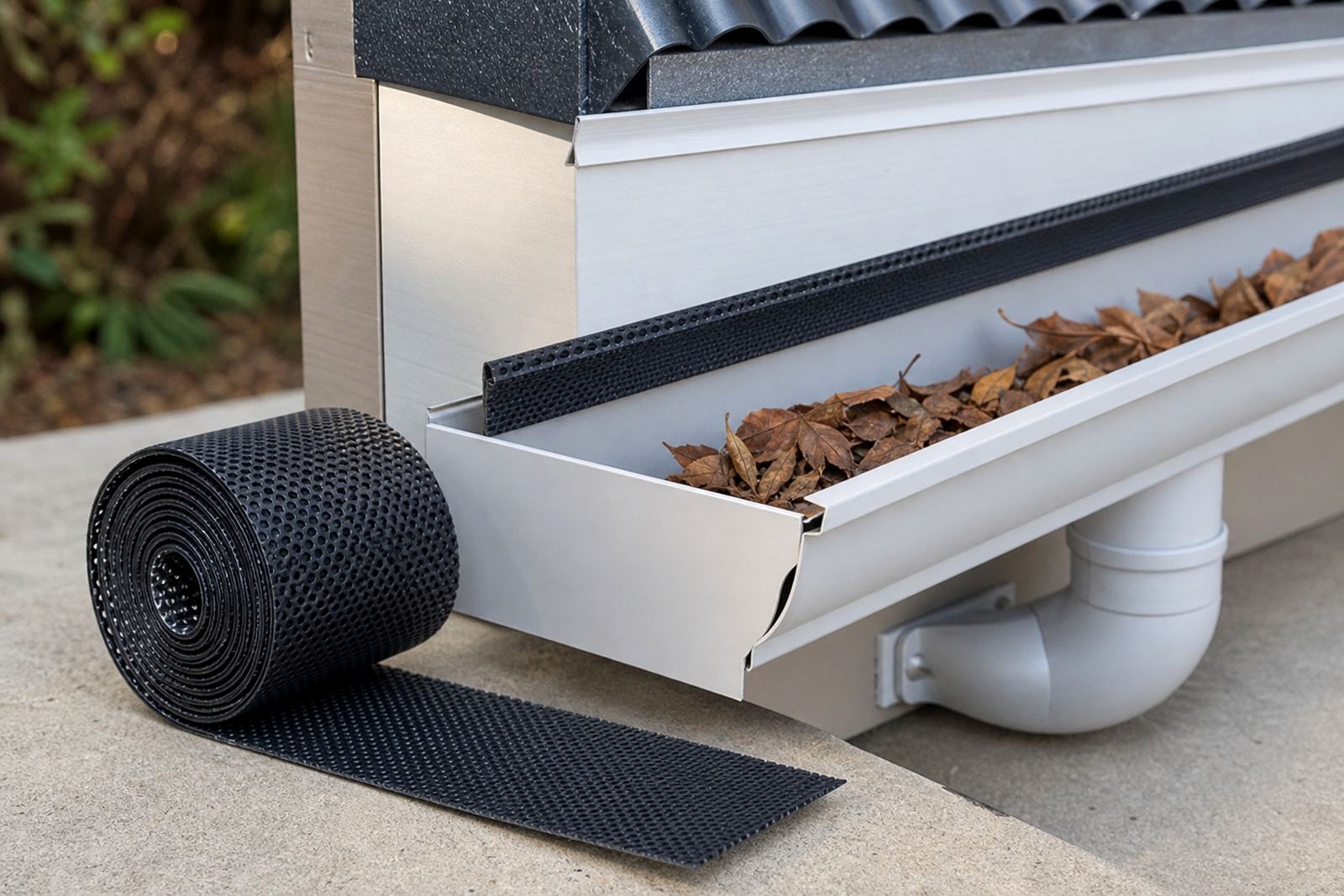
Leaf guards sit over the gutter opening and let rain water pass through while stopping larger debris from settling in the channel. On homes near jacarandas, gums, pine trees and dense garden planting, they reduce the amount of muck that turns into blocked outlets and overflow at the eaves. The idea is practical: keep the gutter working for longer between cleans, and make it easier for the water to move toward the downpipe.
For plastic-steel composite gutter systems, the guard needs to sit neatly on the front and back edges, with a profile that suits the gutter shape and the roof pitch. A guard that is too narrow leaves gaps at the top edge, while one that is too stiff can sit proud and catch wind. Correct fit matters on both residential houses and light commercial buildings, especially where the roofline is long and the fall must carry water steadily to the outlets.
- Helps reduce leaves, twigs and roof grit entering the gutter
- Supports cleaner flow toward the outlets and downpipes
- Useful where trees overhang the roof or sit close to boundary walls
- Can reduce the frequency of manual gutter cleaning
Profiles, opening sizes and colour matching
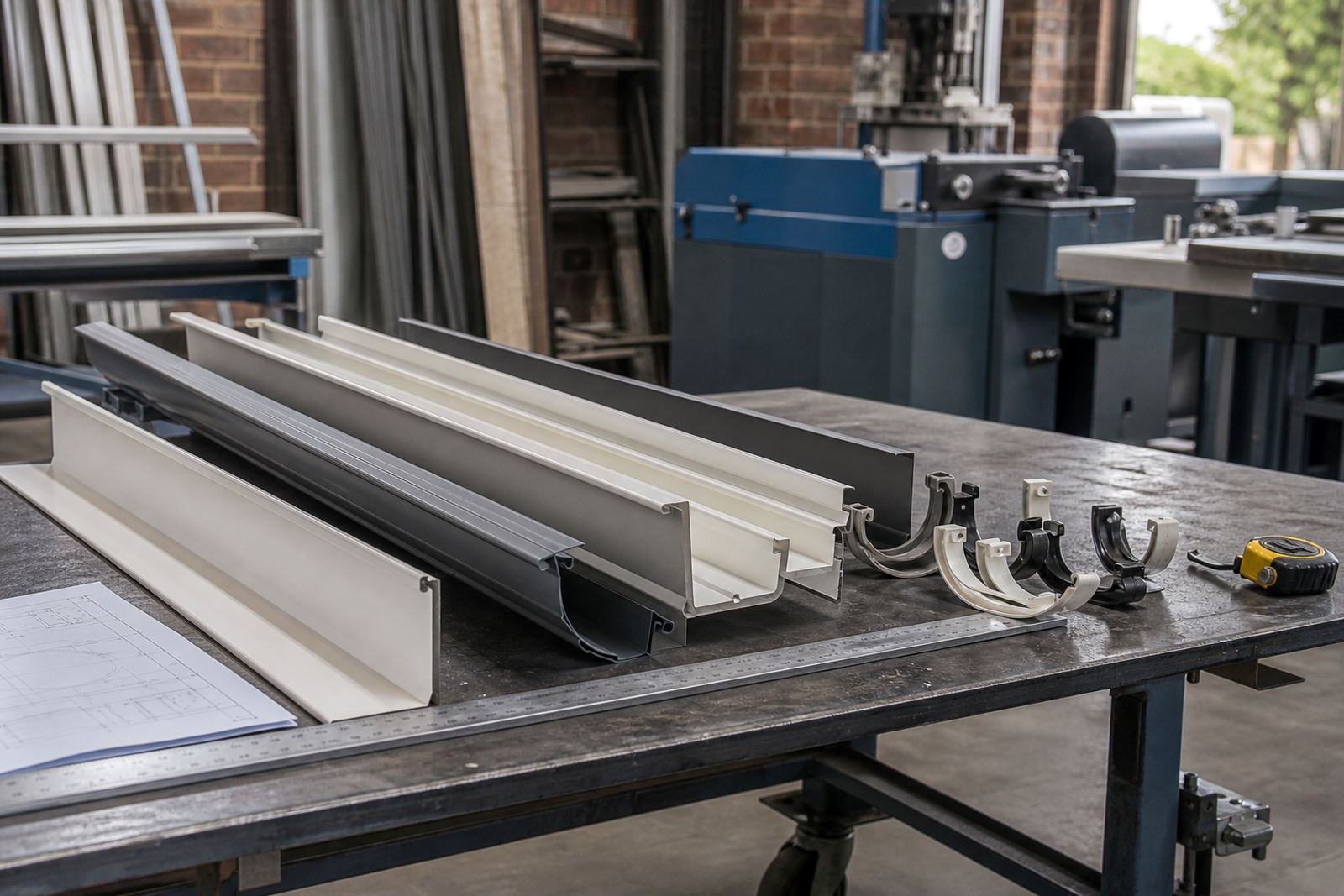
Leaf guards are usually selected by gutter profile, opening size and the look needed at the roof edge. For most rooflines, the guard should match the gutter width and the fascia line so the finished edge stays neat. In practical terms, that means checking the gutter size, the fascia projection and whether the roof sheeting or tiles leave enough room for the guard to sit flat without lifting at joints.
Openings are chosen to balance drainage and debris control. Smaller apertures keep out finer leaf matter but can collect surface dust or pollen a bit faster, so they need proper washing through during maintenance visits. Larger apertures pass heavier rain more freely, though they may allow more small debris through. The right choice depends on the tree cover, the roof pitch and the local weather pattern. In coastal areas, for example, salt air and fine grime can build up quicker than many people expect, so a good fit and regular inspection matters alot.
- Match to gutter width and profile before ordering
- Check aperture size against the type of debris on site
- Confirm the fascia return and roof overhang dimensions
- Choose a finish that suits the existing roofline colour
Where leaf guards make the most sense
Leaf guards are best suited to properties with nearby trees, roof valleys that collect loose material, and buildings where gutter access is awkward or costly to reach often. They are commonly fitted on suburban houses, schools, sectional title units, offices and small industrial buildings where a clean roof edge is needed without constant gutter clearing. On sites with high walls or narrow side passages, the guard can make maintenance simpler because less debris packs into the channel between visits.
They also work well on newer gutter runs where the owner wants to protect the system from repeated blockages caused by leaf drop after storms. In Pretoria and Johannesburg, where seasonal gusts can push dry material onto rooflines, guards help keep the gutter opening clearer. In Durban and Cape Town, where moisture can hold fine debris in place, the benefit is in reducing the sludge that forms at outlets and corners. For Polokwane, long hot spells followed by heavy rain can move a lot of loose material at once, so a fitted guard is useful on exposed roof sections.
- Homes under large trees or near boundary planting
- Townhouse complexes and body corporate properties
- Commercial roofs where access for cleaning is limited
- Roof edges with repeated outlet blockage or overflow marks
Fitting details that keep the line straight
Leaf guards should be fitted by competent people working safely at height, using the right ladders, fall protection and access method for the site. The guard must sit securely along the gutter line without crushing the front lip or twisting the channel. On long roof runs, the installer should work from one end to the other and check every join, corner and outlet so there are no lifted edges where debris can catch.
Good fitting also means checking the gutter falls before the guard goes on. If the gutter slope is wrong, the guard will only cover the problem instead of helping the water move. Brackets, hangers and fascia fixings should be sound, because a sagging gutter can hold water and debris even when the guard is in place. Where the fascia board is being replaced at the same time, the fixing line should be checked for straightness and support before any guard sections are locked in.
- Confirm gutter slope and outlet positions before installation
- Check all brackets, hangers and fascia support points
- Allow for corners, stop ends and downpipe connections
- Use safe roof access and proper edge protection at all times
Cleaning, inspection and day-to-day care
A leaf guard reduces debris build-up, but it still needs checking. Fine dust, flower matter and roof grit can sit on top of the guard and should be washed off or brushed clear during routine maintenance. In shaded areas, moss or algae may hold moisture against the surface and should be removed before it becomes slippery or starts to trap more debris. If water begins to overflow in heavy rain, the guard opening may be partially blocked or a downpipe outlet may need clearing.
It is worth inspecting the guard after strong wind, hail or major tree drop. Look for lifted edges, loose fixings, cracked sections and places where the gutter has moved on its brackets. If the roofline includes old fascia boards or uneven timber, movement can show up at the guard first. A quick visual check from ground level can pick up stains, drips and overflow marks before the problem gets worse.
- Brush or rinse away collected dust and leaf matter
- Check corners, outlets and joins after storms
- Watch for overflow marks on walls and fascia boards
- Include leaf guards in routine gutter maintenance visits
Ordering the right leaf guard for the job
Before ordering, confirm the gutter profile, the length of each run, the number of corners and outlets, and whether the system uses a straight fascia line or stepped roof sections. It helps to note the roof type as well, because the fixing method and edge detail can change between tiled and sheeted roofs. If the building has already been measured, a material takeoff makes it easier to match the right quantity to each section without running short on the day.
Plasteel supports builders, homeowners and contractors with supply for roofline work from Kya Sand, Randburg to Johannesburg, Pretoria, Durban, Cape Town and Polokwane. Our team can assist with site measuring, product supply, gutter installation, fascia installation, downpipe installation, roofline replacement, leak checks, maintenance visits, builder support, homeowner advice and delivery coordination. For leaf guards, the useful details are the gutter width, fascia projection, roof edge condition and any areas where trees overhang the roof. That makes it easier to match the guard to the job and keep the line neat once fitted.
- Gutter width and profile type
- Roof material and gutter run lengths
- Number of corners, stops and downpipe outlets
- Tree cover, access limits and maintenance needs
Key facts
| Product type | Leaf guard for gutter systems |
|---|---|
| Suitable systems | Plastic-steel composite gutters and matching roofline profiles |
| Common use areas | Homes, schools, offices, sectional title and light commercial roofs |
| Typical fit checks | Gutter width, fascia projection, outlet positions and roof pitch |
| Maintenance | Brush, rinse and inspect for lifted edges or blocked openings |
| Service area | Kya Sand, Randburg with delivery to major South African centres |