
Where rafter brackets sit in the roofline
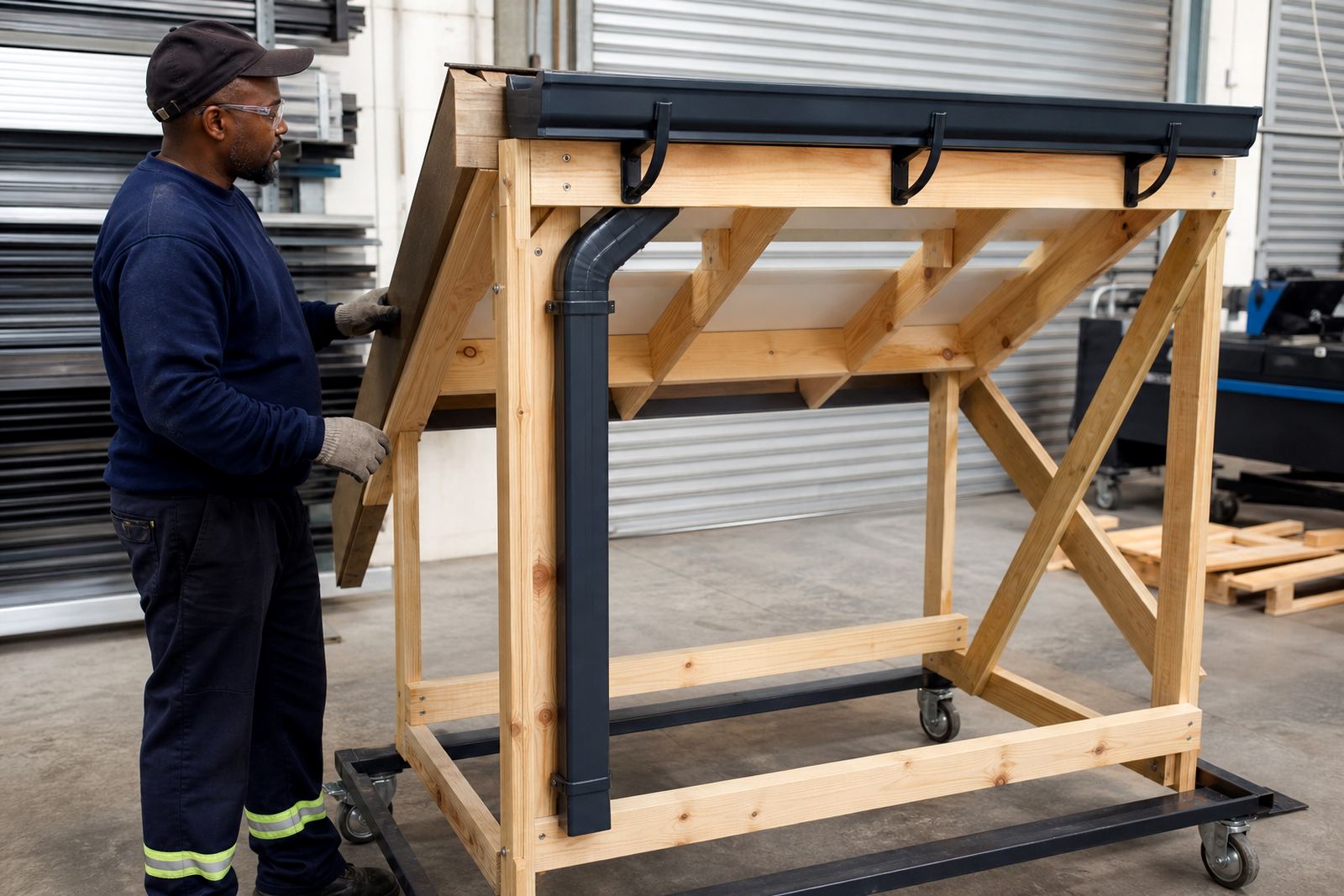
Rafter brackets are fixed to the rafter tails or another sound timber fixing point, then used to carry the gutter line in a set position. In practice they are chosen where the fascia is too weak, uneven, or not suited to taking the full gutter load on its own. They are common on reroofing jobs, timber repairs, and new work where the builder wants the gutter line aligned to the roof pitch and eaves detail.
The bracket gives a firmer anchoring point for the gutter front edge and helps keep the fall true over a long run. On houses in Randburg, Pretoria and Johannesburg you often see them used where old fascia boards have moved or softened. On coastal sites in Durban and Cape Town, the fixing points and coatings need closer attention because moisture and salt can work on exposed metal fittings over time.
Sizes, reach and fixing options
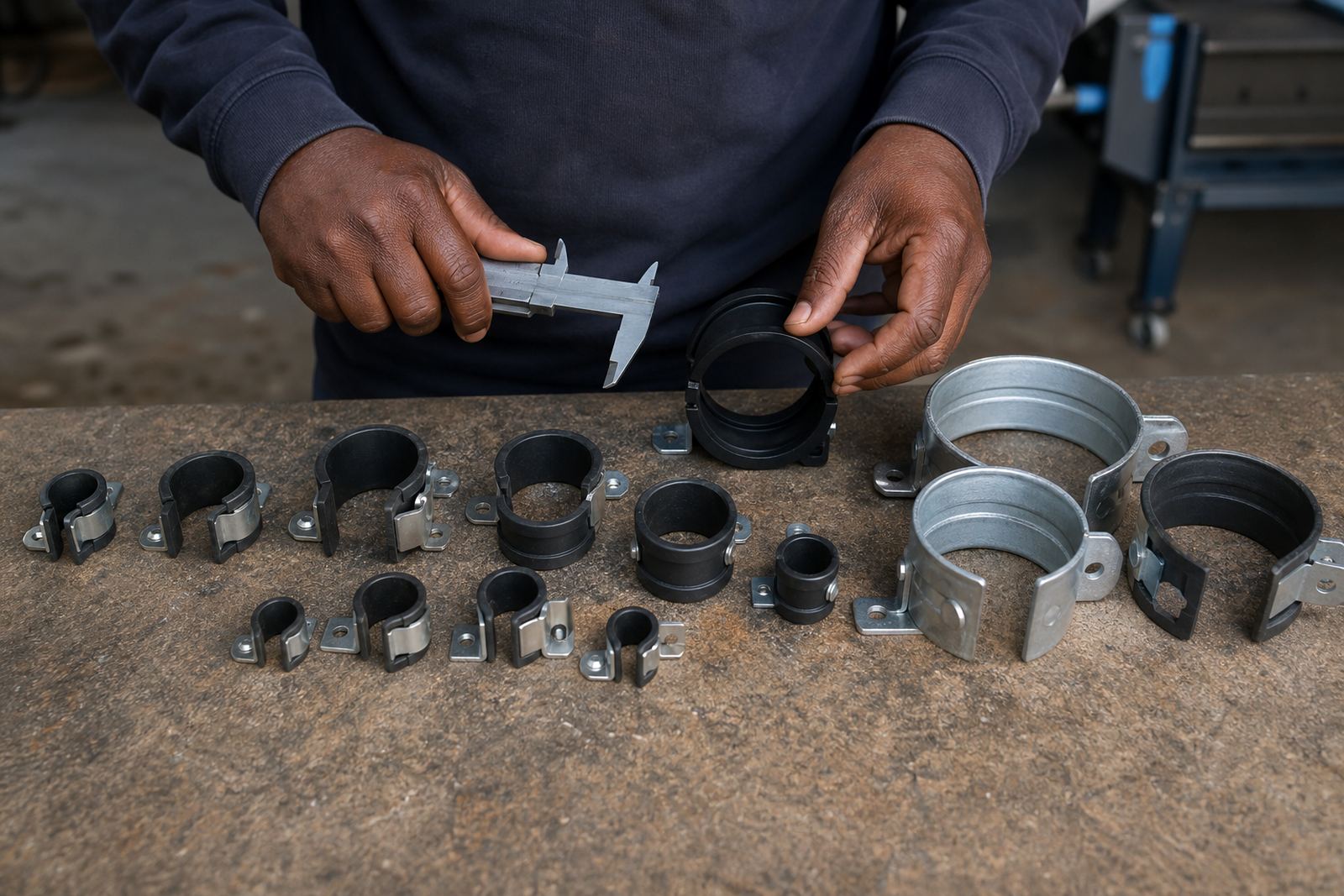
Rafter brackets are supplied in matching sizes for typical roofline work, with the reach and angle selected to suit the roof overhang and gutter profile. The important detail is the projection from the timber to the gutter face, because that determines whether the water runs cleanly into the gutter without standing against the roof edge.
Common options are suited to standard domestic and light commercial roof edges, and can be ordered to suit square line or ogee style gutter layouts. Some jobs need a longer bracket arm where the gutter has to clear a deeper eaves detail or a tiled edge, while others need a shorter bracket to keep the line tight under the roof.
- Standard projection for regular eaves and fascia replacement work
- Extended reach for deeper overhangs and irregular roof edges
- Angle options to match the roof pitch and gutter fall
- Fixing holes set for timber screws or coach screws, depending on the substrate
For rooflines with timber that has shifted over time, the bracket spacing and fixing points must be checked before fitting. A neat gutter line starts with the bracket positions being marked out properly, not just fitted by eye.
Best use cases for builders and homeowners
These brackets suit roof edge work where a secure timber fixing is needed for reliable gutter support. They are used on new builds, replacements, repairs after storm damage, and where the fascia is being renewed at the same time. They also help when the gutter needs to carry more water because of a larger roof area or a steeper pitch that sends water quickly into the run.
They are practical for residential streets in Midrand and Roodepoort, as well as small commercial units where roofline maintenance must be done in stages. On older homes, a rafter bracket can be the right choice when fascia boards have softened at the screw line or when there is a gap between the roof edge and the existing support point.
- Gutter runs where fascia alone will not give enough support
- Rooflines with timber tails still in good structural condition
- Replacement work where the old bracket pattern has to be matched
- Projects needing a cleaner fall line over longer lengths
Fitting notes that matter on site
Rafter bracket installation should be done by competent people working safely at height, with proper access equipment and fall protection where required. The bracket spacing, screw lengths, and alignment must be checked before the gutter is hung. If the roof timber is split, rotten, or out of line, the fixing point must be corrected first because a bracket is only as sound as what it is fixed into.
Fitting also needs the gutter fall to be planned from the start. If the brackets are set too level, water can sit in the run and leaves can collect. If the fall is too steep, the line can look uneven and discharge can be noisy during heavy rain. The correct set-out depends on the roof length, outlet position, and the shape of the gutter being used.
- Measure the roof edge and mark out the bracket centres before drilling
- Check timber condition at every fixing point
- Keep the gutter line true to the planned fall
- Seal and fasten joints properly at outlets and corners
For longer runs, it helps to confirm the outlet positions early so the bracket layout works with the downpipe positions. That avoids last minute changes on site and keeps the roofline neat.
Care in coastal and inland conditions
Rafter brackets need basic inspection during routine roofline maintenance. Look for loose fixings, movement after high winds, and signs of corrosion or fatigue around the screw holes. In humid areas such as Durban, brackets and fasteners should be checked more often because moisture can work into exposed joints. In places with hot sun and dust, such as parts of Gauteng and Limpopo, the main concern is movement, debris build-up, and ageing sealant around the gutter line.
A clean bracket and gutter line lasts longer when leaves are cleared, outlets stay open, and any early movement is corrected before it pulls on the fascia or roof timber. If the paint or protective finish on the bracket is damaged, that point should be treated sooner rather than later. Small issues on roof edges can become bigger repairs when rain starts running behind the fascia.
Rafter Brackets: profile and colour checks
Before a set of rafter brackets is supplied, the roofline measurements need to be checked carefully. The correct bracket depends on the gutter profile, roof pitch, timber fixing point, and the required projection from the fascia line. It also helps to confirm whether the installation is a new roofline, a replacement, or a repair onto existing timber.
- Gutter profile and size, such as standard domestic or larger commercial runs
- Required projection from the rafter tail to the gutter front edge
- Roof pitch and overhang depth
- Fixing surface condition and timber spacing
- Outlet positions and downpipe layout
- Location of the job, especially coastal exposure or heavy rain areas
Plasteel works with builders and homeowners from Kya Sand, Randburg to Johannesburg, Pretoria, Durban, Cape Town and Polokwane, with supply and delivery coordination where needed. If the job includes fascia boards, gutter sections, downpipes or roofline replacement, the bracket choice should be matched to the full run so the completed line sits correctly and stays serviceable.
Key facts
| Product | Rafter brackets for roof timber fixing |
|---|---|
| Use | To support gutter lines where support must be fixed back to rafters rather than fascia alone |
| Common fitment | Domestic and light commercial roof edges, new work and replacement jobs |
| Sizes/options | Standard and extended reach options, with matching angle and fixing layouts |
| Fixing method | Timber-fixed with suitable screws or coach screws, set to planned gutter fall |
| Areas served | Kya Sand, Randburg and supply or delivery to major South African centres |