
What downpipe clips do on a roofline
Downpipe clips are the wall-fixing points that secure a downpipe at regular intervals so the pipe stays true and does not pull away under its own weight, water movement or wind. In a gutter and fascia system, the clip spacing matters because a run that is left loose can bow, work against its fixings and place extra strain on bends, offsets and the outlet connection.
For builders in Johannesburg, Pretoria, Durban, Cape Town and Polokwane, the practical job is the same: keep the pipe tight enough to look neat, but allow the run to sit square to the wall and drain freely. On taller walls or exposed corners, proper clip placement also helps reduce rattling in strong wind and movement where the wall surface is uneven.
- Keeps the downpipe aligned from outlet to drain point
- Helps reduce strain on elbows, offsets and joins
- Supports the pipe at measured intervals along the wall
- Improves the finished look of the roofline
Sizes and clip styles used with common downpipes
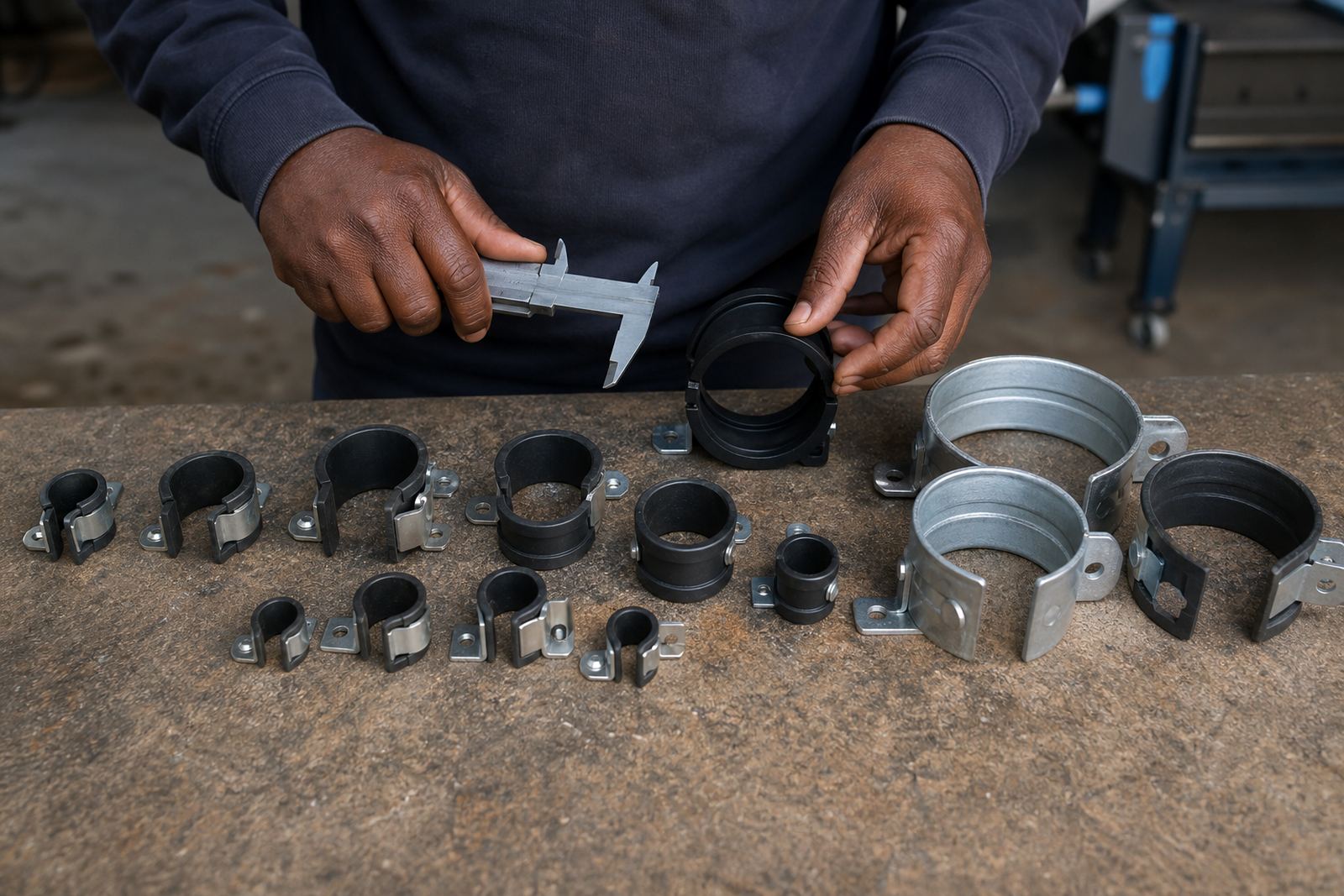
Downpipe clips are selected to suit the pipe profile and the wall fixings used on site. Common options are made for round or square downpipes, with matching sizes for the pipe diameter or profile used on the job. For most homes and small commercial buildings, the clip must match the actual outside size of the pipe, not just the nominal size, so the fit is steady and secure.
Where walls are rendered, brick or concrete, the clip and fixings need to suit the base material and any waterproofing detail at the point of fixing. On coastal work in Durban or Cape Town, the fixing choice also has to cope with salt air and damp conditions, so corrosion resistance is worth checking before the first hole is drilled.
- Round and square clip options for different pipe profiles
- Sizes matched to the pipe outside diameter or section size
- Single pipe clips for standard wall runs
- Offset clip arrangements for uneven wall surfaces
- Fixings selected for brick, block, concrete or cladding
Where these clips suit best
These clips suit any roof drainage run that needs a tidy, fixed line against a wall. They are used on new builds, roofline replacement work and maintenance repairs where old clips have cracked, corroded or pulled out. On commercial buildings, longer wall runs often need more frequent support and careful setting out around windows, service pipes and boundary walls.
For homeowners, the most common use is on single-storey and double-storey houses where the downpipe drops from the gutter, passes the wall and discharges into a drain point or rainwater collection detail. On larger sites, the clip positions need to be planned with the full fall route in mind so that the pipe is not forced around awkward bends or left hanging off the wall.
- Domestic roofs with gutter outlets near external walls
- Office blocks, shops and light industrial buildings
- Replacement work on cracked or missing clip points
- Wall runs beside windows, corners and service routes
- Sites where a neat finished line matters to the client
Fitting points that matter on site
Downpipe clips are only as good as the fixing behind them, so installation needs careful marking, sound substrates and correct spacing along the wall. Roofing work at height must be done safely by competent people with the right access equipment and fall protection. The pipe should be plumb, the clips should not pinch the profile too hard, and the fixings should be set so the run does not twist when the pipe fills with water.
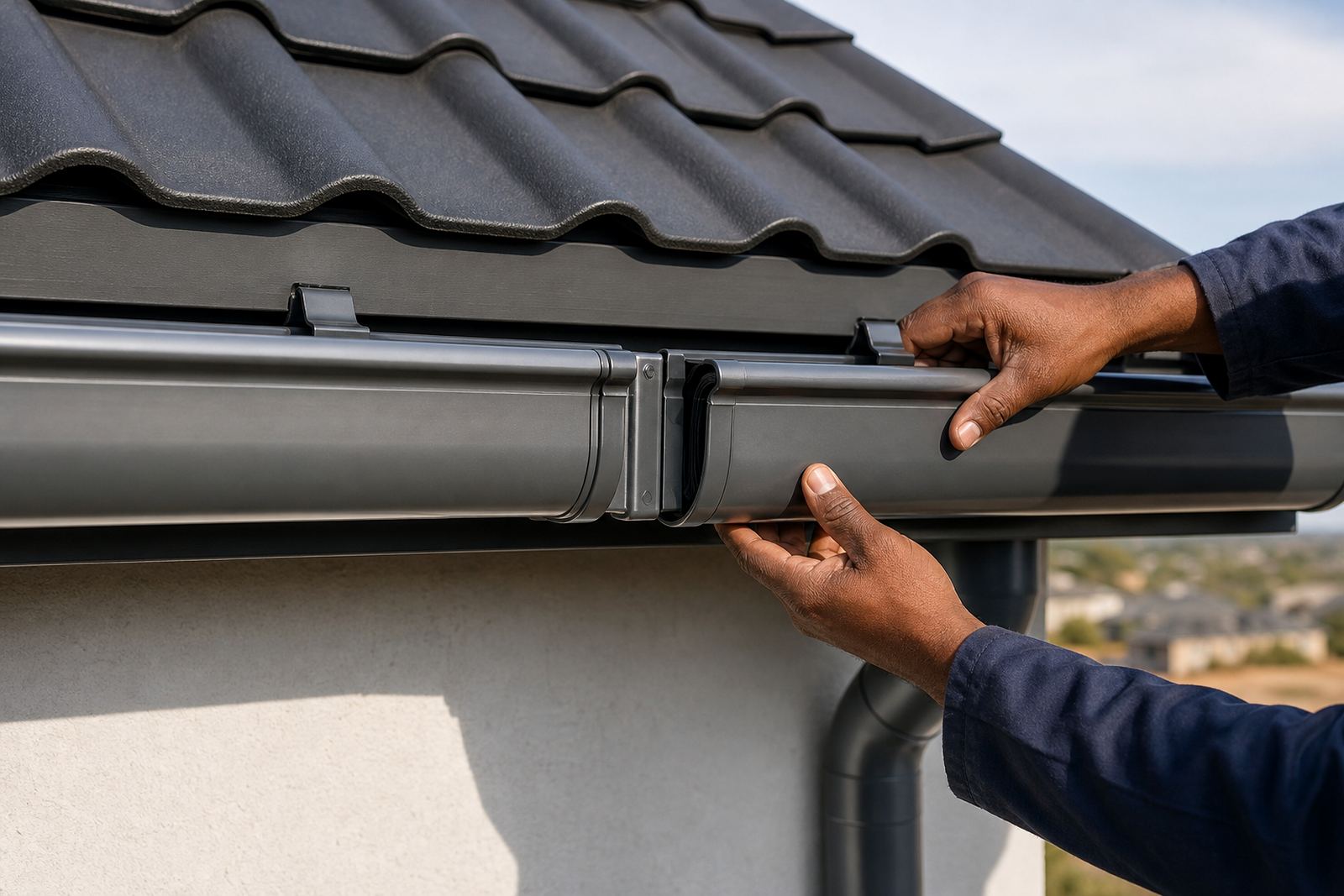
Where the downpipe connects to a gutter outlet or offset elbow, the first clip is normally set to support the weight close to the join, then the rest of the run is fixed at regular intervals. On exposed walls in coastal areas or high-wind zones, tighter support intervals may be needed. If the wall surface is uneven, packing or a clip stand-off may be needed so the pipe does not sit under stress.
- Check the wall material before choosing plugs, screws or anchors
- Set the run plumb before drilling all fixing points
- Support the pipe near joints and elbows to reduce strain
- Use safe access methods for work at roof height
Care and maintenance for long service
Downpipe clips need very little attention, but they should be checked when gutters are cleaned or after strong wind, heavy rain or roof repairs. A loose clip can let the pipe move, which may create noise, leaks at joints or rubbing against the wall. On sites close to the coast, salt build-up and damp can affect metal fixings faster than on inland properties, so regular inspection is sensible.
If a clip is cracked, rusted or missing, replace it before the pipe starts to sag. Keep the wall area clear of creepers, debris and loose mortar around the fixing points. Where paint or sealant has been applied around the pipe, make sure it has not bridged the clip in a way that prevents normal movement or creates extra pressure on the pipe wall.
- Inspect clips during gutter cleaning and roofline checks
- Replace damaged fixings before the pipe sags
- Look for rust, cracking or wall movement around anchors
- Keep discharge points and splash zones clear of debris
Downpipe Clips: profile and colour checks
Before ordering downpipe clips, the key measurements and site details must be confirmed so the clip suits the pipe and the wall. A small mismatch can lead to a loose fit or an awkward fixing pattern. Builders and homeowners should confirm the downpipe shape, the outside size, wall type and the number of fixing points needed for each run.
For mixed roofline work, it also helps to note whether the pipe passes through a fascia detail, whether there are offsets at eaves height and whether the wall finish is painted, bagged brick, plastered block or cladded. On new supply jobs in Randburg, Midrand and Roodepoort, these details save time on site and keep the fixings neat. If the project includes gutter installation or replacement, the clip positions should be planned with the outlet and fall line, not after the pipe is already on the wall.
- Pipe profile and outside size
- Wall material and fixing surface condition
- Number of clips needed per run and per storey
- Location of elbows, offsets and outlet connection
- Whether the job is new work, replacement or maintenance
Key facts
| Product type | Wall-fixing clips for vertical downpipe support |
|---|---|
| Compatible profiles | Round and square downpipes |
| Typical use | Domestic and commercial roof drainage runs |
| Fixing method | Mechanical wall fixing with matched anchors |
| Support role | Holds pipe line at regular intervals to reduce movement |
| Use area | Kya Sand, Randburg and delivery across South Africa |