
A clean route from gutter outlet to ground drainage
A round downpipe is the vertical pipe fixed to the outside wall that carries water from the gutter outlet to the stormwater point, soakaway or rainwater storage point. On typical pitched roofs it is fitted below the gutter running line, then clipped to the wall at regular centres so the pipe stays straight and does not pull on the outlet when the system fills in heavy rain.
Round profiles are used where a neat, familiar finish is preferred and where the gutter outlet can feed directly into a bend, shoe or offset. On larger roofs or where long runs of gutter catch fast-moving water, the downpipe size and number of outlets must match the roof area and the local rainfall pattern, especially in coastal towns where storms can drop a lot of water in a short time.
Sizes, wall thickness and fitting combinations
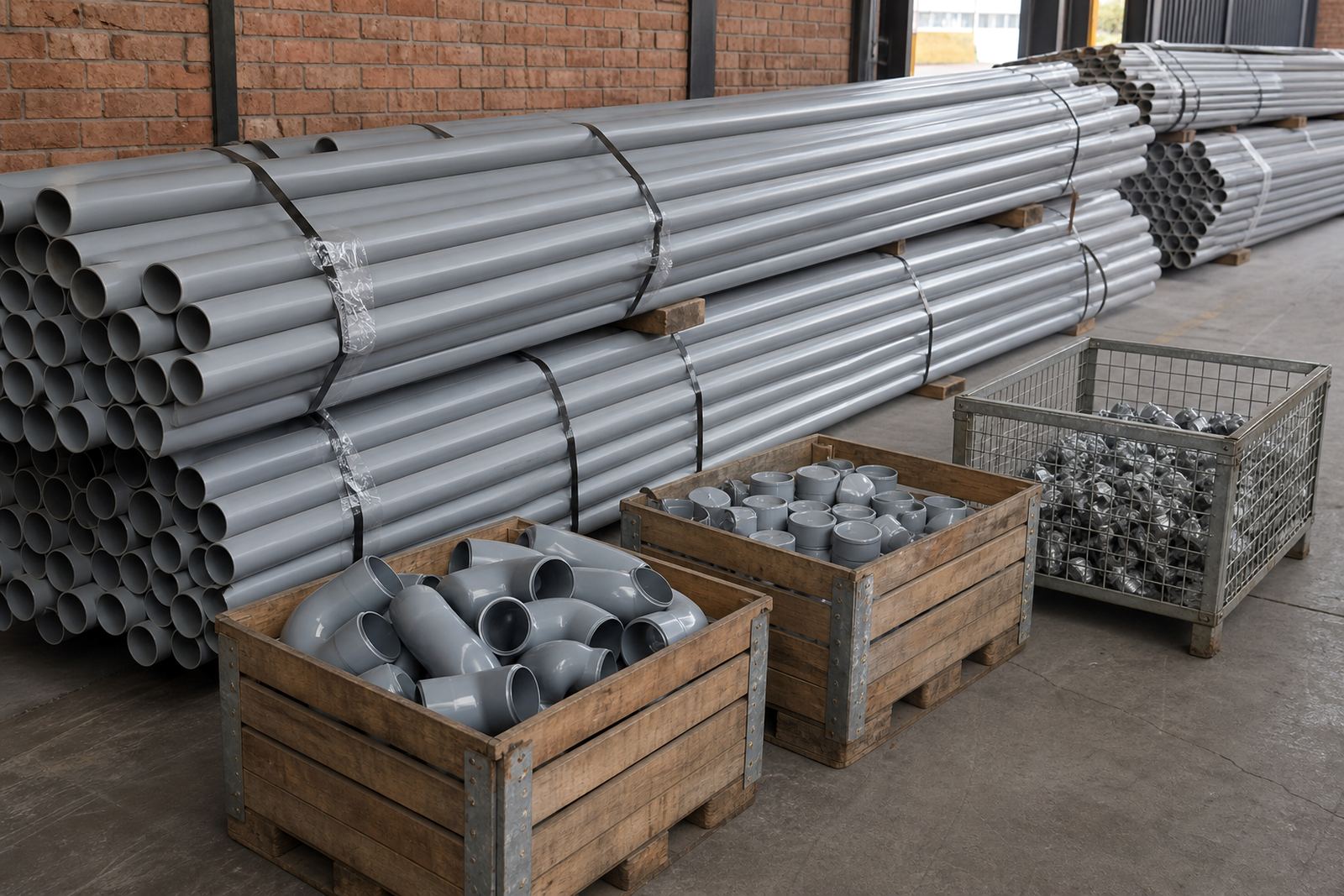
Round downpipes are usually specified by outside diameter and sold with matching sockets, bends, clips and offsets. Common trade sizes include 75 mm and 90 mm diameters for many homes, with larger sizes used where roof catchment is bigger or where a single outlet would be overloaded. The correct wall thickness matters too, because a thin pipe can flex, sag or split at the fixing points over time.
- Standard lengths are often supplied in straight 3 metre or 4 metre sections
- Matching bends are used to step around fascias, soffits or wall offsets
- Inspection points may be added where blockages are likely
- Pipe clips are spaced to keep the line true against the wall
- Reducers can be used where the outlet and pipe sizes differ
The pipe should suit the gutter outlet shape and the fascia line, with enough clearance to allow for clipping and for the installer to keep a proper fall through any offset sections. If the roof line is complex, a site measure helps avoid short lengths being joined too close to corners or windows.
Where round downpipes fit best
Round downpipes work well on tiled and sheeted roofs, townhouse complexes, freestanding homes and small commercial buildings where the drainage path is straightforward. They are commonly used on facades that need a simple vertical line, and they suit walls finished in plaster, face brick or painted render. In humid coastal areas, the pipe and fittings should be chosen for good resistance to sun, moisture and daily temperature movement.
They are also practical where a builder wants a consistent look across several units. One pipe size can often be repeated across the site, with outlet positions adjusted to suit each roof section and the nearest downpipe run. For long eaves or stepped rooflines, additional pipes may be needed so water does not travel too far along the gutter before it drops.
- Residential roofs with moderate catchment
- Cluster housing and sectional-title buildings
- Commercial roofs with simple outlet positions
- Replacement work where existing wall boxes or clips are already in place
Fixing the pipe properly on site
Good installation starts with the outlet position, then the installer sets the line of the pipe down the wall to the discharge point. The pipe must be fixed plumb, with brackets tight enough to hold shape but not so tight that they deform the pipe. At roof height, work must be carried out safely by competent people using suitable access equipment and fall protection where required.
Where the pipe has to step around a roof overhang or decorative fascia, offset bends are fitted and the joints are aligned so water flows freely without sitting in low spots. The discharge end should direct water away from the wall, not back onto paving or into a traffic area where splashback can stain the finish. On sites with municipal stormwater rules or body corporate requirements, the final discharge point may need to tie into a specific drain line or approved outlet.
- Keep pipe sections aligned to avoid stress at the joints
- Use the correct clip spacing for the pipe diameter
- Seal and connect joints as specified for the product system
- Check that water can discharge without ponding near the base of the wall
Care, cleaning and common wear points
Round downpipes need only basic maintenance, but the small things matter. Leaves, roof grit and nest material can build up at the outlet or in bends, especially where trees overhang the roof. A blocked pipe forces water back into the gutter, so the first signs are usually overflow at the eaves or damp marks on the wall below the outlet.
For routine care, inspect the pipe after heavy rain and check that clips have not loosened. In areas with intense sun, look for fading, brittleness or movement at the joints. On coastal properties, salt air can be hard on metal fixings, so the brackets and screws should be checked for corrosion and replaced where needed. A quick wash with clean water and a soft brush is usually enough to remove dust and grime.
- Clear leaf build-up at the outlet and first bend
- Check for cracks around clip points and joints
- Watch for staining that points to a leak above
- Confirm the base discharge remains open and free draining
Round Downpipes: profile and colour checks
Before a downpipe order is released, the key details should be checked against the site measure and the roof drawing. That includes the diameter, length, number of bends, colour, outlet type and the required discharge position. If the wall has reveals, canopies or set-backs, the offset length must be allowed for so the pipe reaches the ground without being forced into position on site.
It also helps to confirm whether the job is a new build, a roofline replacement or a repair on an existing wall line. Builders often need matching parts for repeated units, while homeowners may only need one or two replacement lengths with the correct clips and connectors. For delivery planning, the town or suburb and the access to the property matter, especially on sites with narrow driveways or upper-storey access.
- Pipe diameter and total length required
- Colour and finish to match the fascia and gutter line
- Number of bends, shoes, clips and joiners
- Outlet height and discharge point
- Whether the pipe is for new work or replacement
- Site location for delivery or collection
Key facts
| Product type | Round downpipe system for roof water drainage |
|---|---|
| Typical sizes | 75 mm, 90 mm and other matched sizes on request |
| Lengths | Straight sections commonly supplied in 3 m or 4 m lengths |
| Fittings | Bends, offsets, sockets, clips, shoes and joiners |
| Use areas | Homes, townhouses, light commercial roofs and roofline repairs |
| Material | Plastic-steel composite components for weather exposure and wall fixing |