
The ogee profile and where it fits
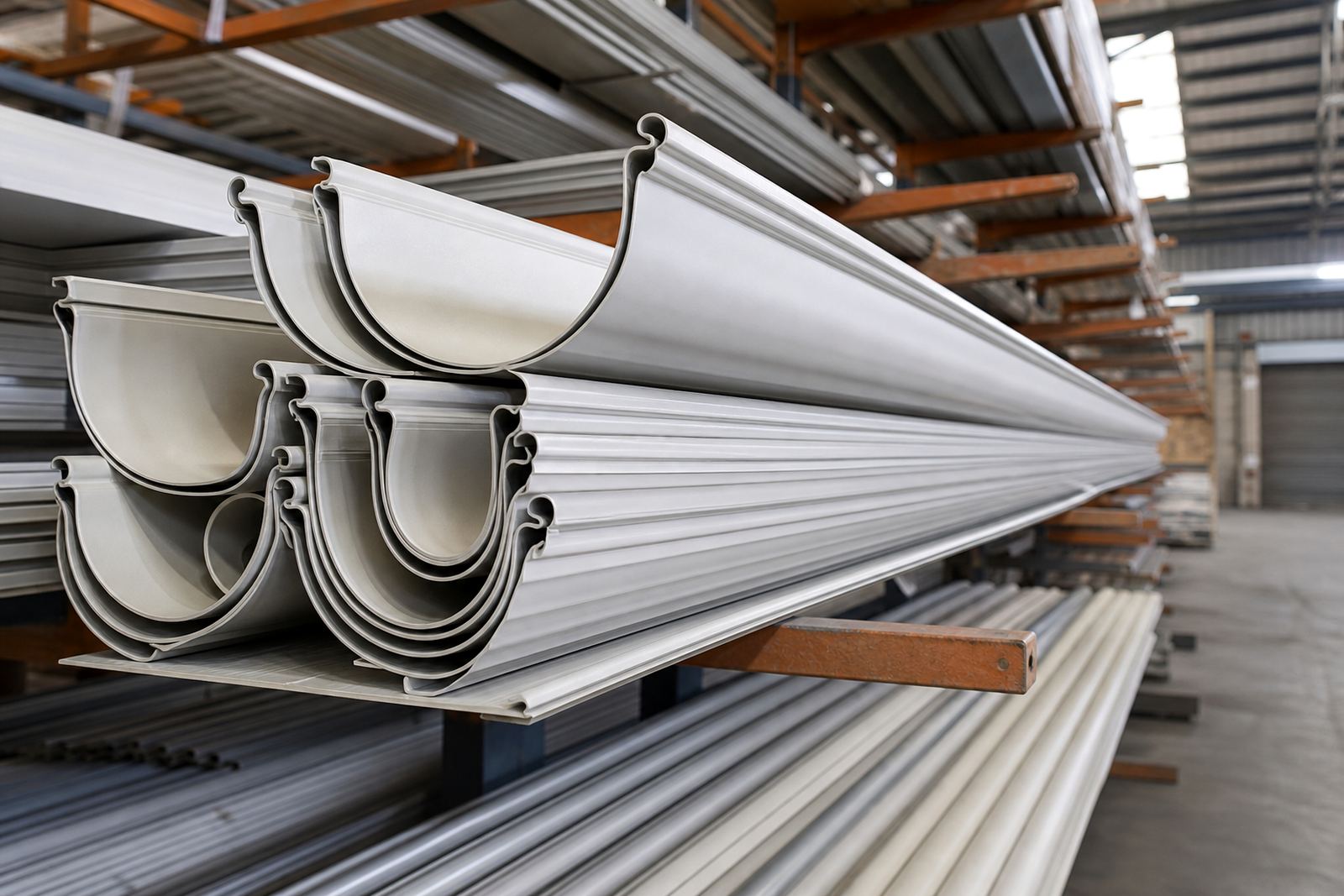
An ogee gutter has a curved front profile that gives the roof edge a more traditional finish while still moving rainwater well. The shape carries water cleanly along the channel and suits tiled roofs, light commercial roofs and residential rooflines where the gutter is visible from the street. In coastal areas such as Durban and parts of Cape Town, the material choice matters just as much as the profile because salty air and high humidity can punish weak fittings over time.
Plasteel ogee gutter sections are plastic-steel composite parts for the building and plumbing trade. The outer shape is light enough to handle on site, while the metal support inside adds strength. It suits new work and roofline replacement where the builder wants a neat result without making the installation harder than it needs to be.
- Traditional ogee face for a cleaner street view
- Suitable for residential homes, complexes and light commercial buildings
- Works with matching fascia boards and downpipe runs
- Useful where rainwater must be moved away from walls, paving and foundations
Sizes, lengths and fitting options to specify
Gutters are usually ordered by profile size, length, colour and the fittings needed to complete the run. The right choice depends on roof area, rainfall exposure, pitch and the number of downpipes. A long eaves run on a large house in Pretoria may need more than one downpipe point, while a smaller roof in Randburg can often be handled with shorter sections and standard outlets if the falls are set correctly.
When ordering, confirm the nominal gutter size, section length and the joiner type needed for the run. For ogee systems, builders also check the fascia face height and the depth available under the roof edge so the brackets sit square and the gutter line stays straight. If the roof is wide or the pitch is sharp, the installer may need extra outlets or closer bracket spacing to help keep the line stable during heavy rain.
- Standard section lengths commonly used for site handling and transport
- Single and multiple outlet positions depending on roof area
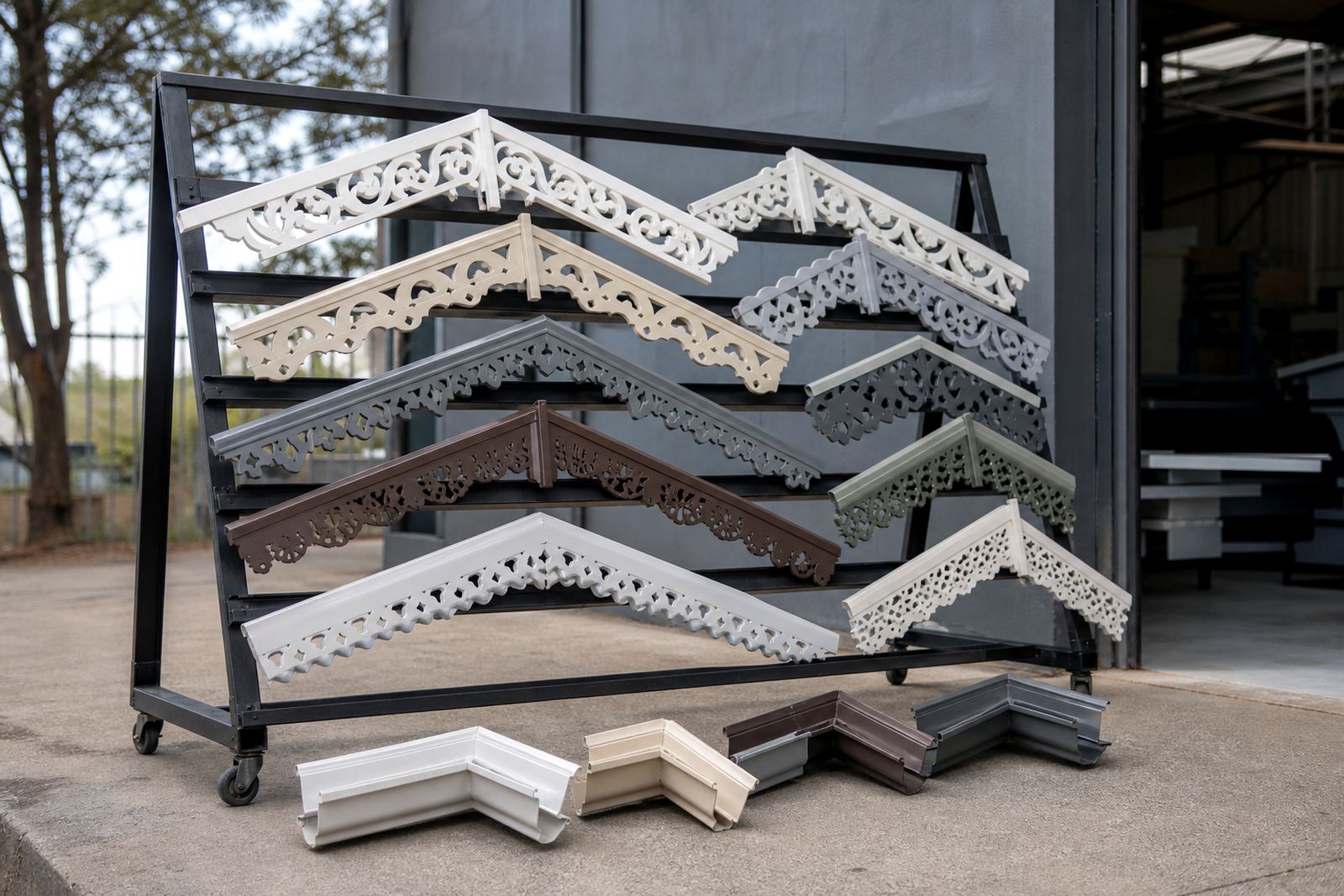
- Matching stop ends, unions, internal and external corners
- Colour selection to suit roof sheets, walls and fascia lines
Fall, brackets and the water path that matters
Even a good gutter profile will underperform if the fall is wrong. The gutter should be installed with a gentle slope to guide water towards the outlet point, not left dead level across a long run. Roofers and gutter installers normally work out the fall during site measuring, then set the brackets or hangers so the line drops gradually without looking uneven from the ground.
Bracket spacing needs to suit the length of the run, the expected water load and the fixing surface. On fascia boards the brackets must be anchored firmly into sound material, because a gutter full of water can carry a surprising weight during a summer storm in Johannesburg or a heavy coastal shower in Durban. For roofline replacement work the fascia condition is checked first, because rotten or warped board surfaces can throw the whole line out.
- Set a gentle continuous fall to the outlet, not a flat run
- Use closer bracket spacing on long spans and exposed roof edges
- Check fascia straightness before fixing brackets
- Allow for expansion, jointing and neat outlet placement
Downpipes, fascia boards and the full roof edge
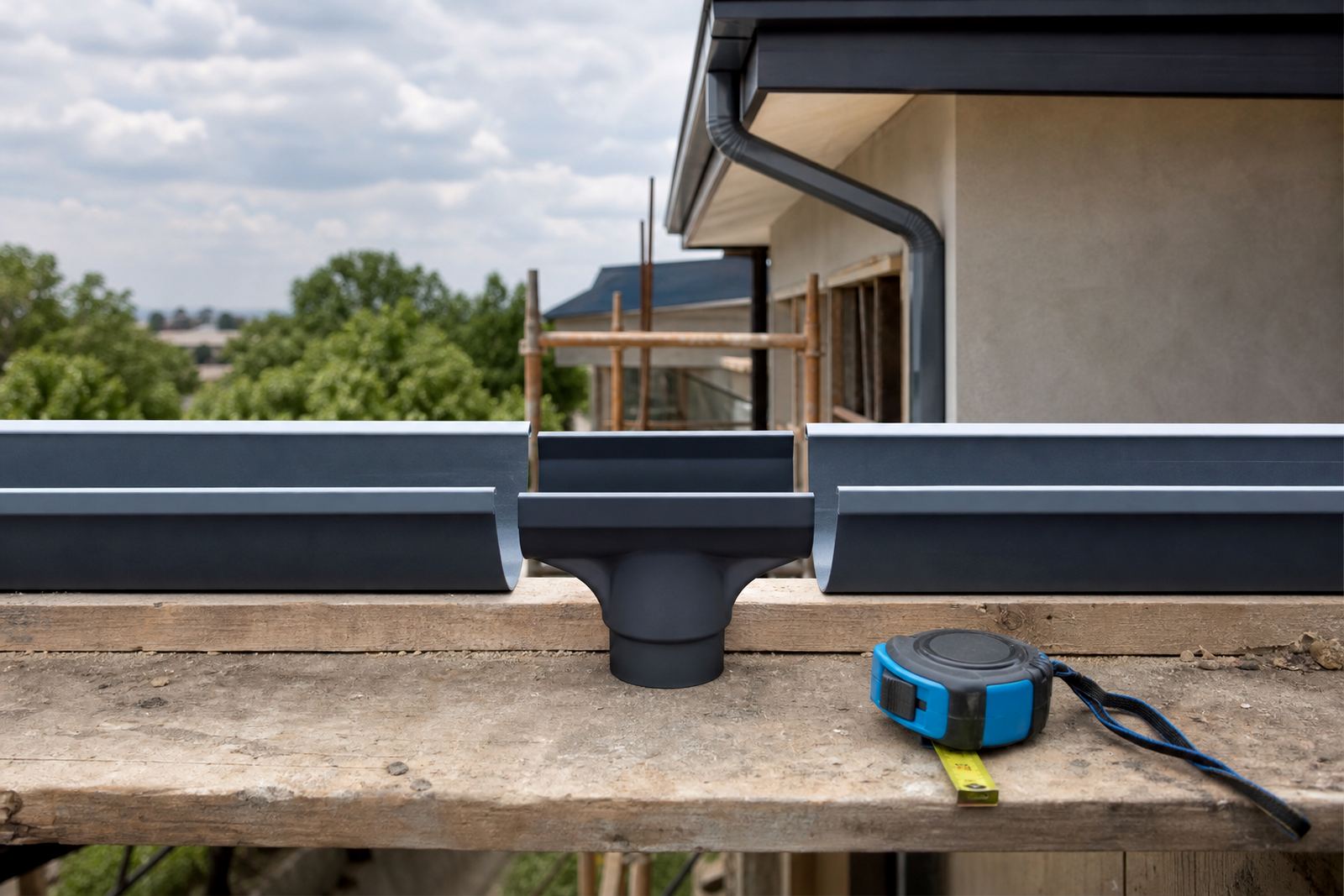
An ogee gutter works best as part of a complete roof edge system. Downpipes must be sized and placed to suit the gutter length and the amount of water entering the run. If outlets are too few or too small, water can back up in a storm and overflow the front edge. The downpipe line should also discharge where water will not stain walls or flood paths, and municipal drainage rules may apply where water is directed into stormwater systems.
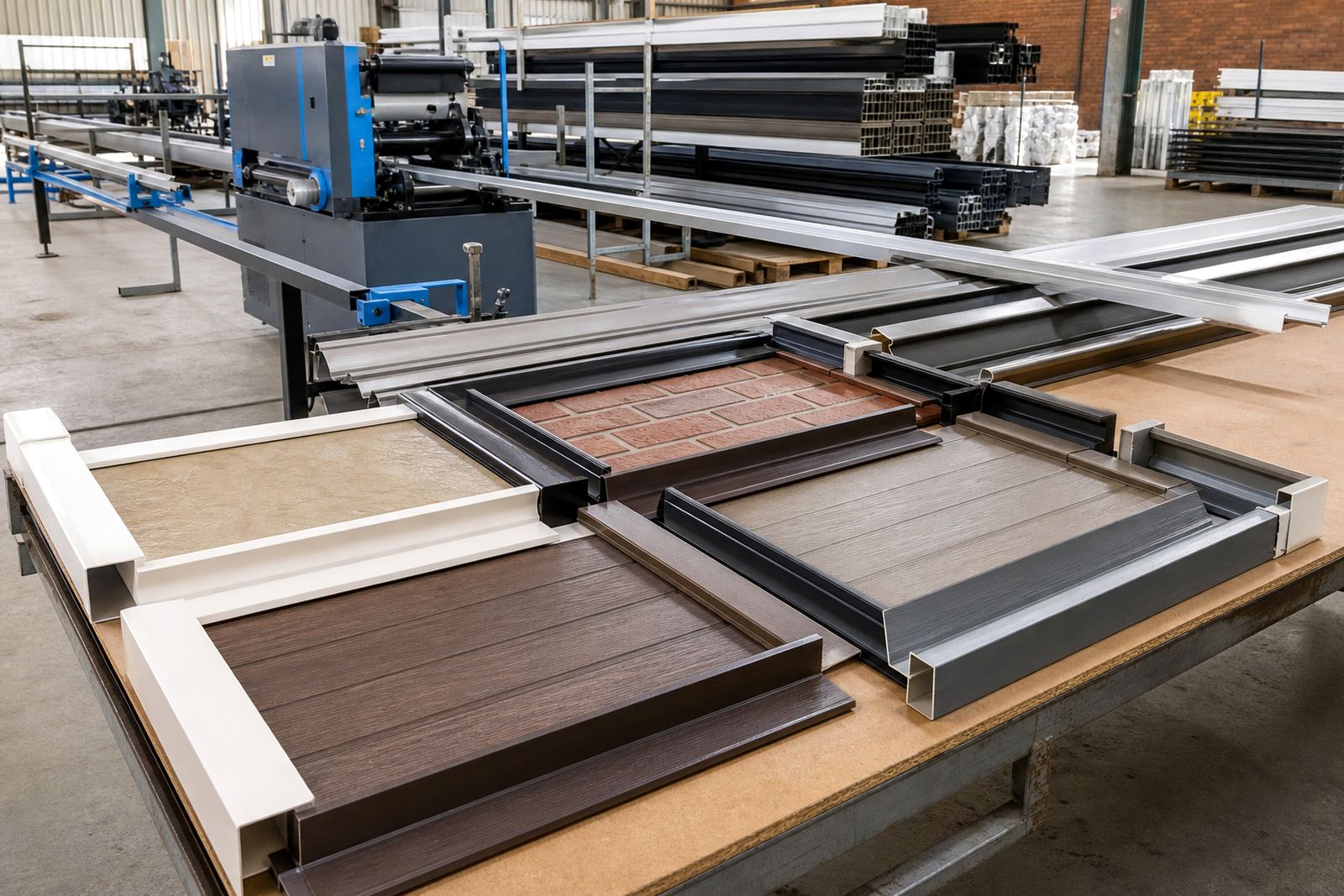
Fascia boards do more than finish the look. They give the gutter a fixing face and help carry the line in a neat, continuous run. Plastic-steel composite fascia boards suit many South African projects because they hold a clean edge and cope well with changing weather. On a townhouse complex in Midrand or a home in Polokwane, the installer still needs to check the roof timber, spacing and board alignment before fitting the gutter system.
- Match gutter outlet size to the downpipe diameter
- Position downpipes so runoff clears paving and wall bases
- Use fascia boards that are straight, sound and properly fixed
- Coordinate gutter, fascia and downpipe colours for a tidy finish
Installation work that protects the roofline
Gutter installation and roofline replacement must be handled by competent people working safely at height. That means suitable access equipment, secure footing and careful handling of ladders, scaffolding or roof access systems. In many cases the work starts with site measuring and a material takeoff, so the right lengths, outlets, corners and brackets are on hand before the job begins.
For builders, the value lies in fewer site delays and a roof edge that is easier to close off neatly. For homeowners, it means less chance of repeated leaks around the eaves or overflowing gutters after a hard rain. When maintenance visits are due, the installer can check the joints, fixings and fall line, then tighten or replace parts before small defects turn into larger repair work.
- Site measuring before supply helps reduce waste and missed fittings
- Careful fixing at height is part of the job, not an afterthought
- Leak checks can identify failed joints, blocked outlets or loose brackets
- Roofline replacement may include fascia, gutters and downpipes together
Care, cleaning and order details to confirm
Ogee gutters need regular clearing of leaves, grit and nesting debris, especially near trees or where wind drives dust onto the roof. A blocked outlet is often the first sign of trouble, so maintenance visits should include the outlet, end caps, corners and downpipe entry point. In coastal conditions, rinse salt build-up from exposed sections when practical and watch for corrosion on fixings that are not protected properly.
When placing an order, confirm the profile, section length, colour, outlet count and whether matching fascia and downpipe items are needed. It also helps to note the roof type, eaves height, access conditions and the town where the delivery or supply is going. For projects in Johannesburg, Pretoria, Durban, Cape Town and Polokwane, the material list should be matched to the local weather exposure and the roof size, not guessed on site.
- Confirm gutter profile, length and colour
- Confirm outlet positions and downpipe quantity
- Check fascia width, board condition and roof edge measurements
- Note site access, delivery area and any replacement parts needed
Key facts
| Profile | Ogee front shape with practical rainwater carrying capacity |
|---|---|
| Material | Plastic-steel composite gutter, fascia and downpipe components |
| Typical use | Homes, complexes, light commercial buildings and roofline replacement |
| Key matching parts | Corners, unions, stop ends, outlets, brackets and downpipes |
| Finish options | Colours matched to roof and fascia requirements |
| Service area | Kya Sand, Randburg with supply and delivery across South Africa |