A square profile that sits neatly with the building line
Rectangular downpipes are used to carry rainwater from gutters down to ground level or into a stormwater connection where the site design allows it. The square or rectangular profile works well on current-style homes, office blocks and new builds because it sits close to plastered walls and matches the straight lines of fascia boards and boxed roof edges.
In practice, the downpipe size must suit the roof area, the number of gutter outlets and the expected rainfall on the site. A pipe that is too small can back up water at the outlet, while a pipe that is too large may look out of proportion on a narrow wall pier. On larger roofs, more than one downpipe is often placed along the gutter run to keep water moving evenly during heavy summer storms.
For builders, the value is in the detail. A neat outlet position, correct bracket spacing and a straight drop line make the finished roof edge look orderly, not patched together.
Common sizes, outlets and matching fittings
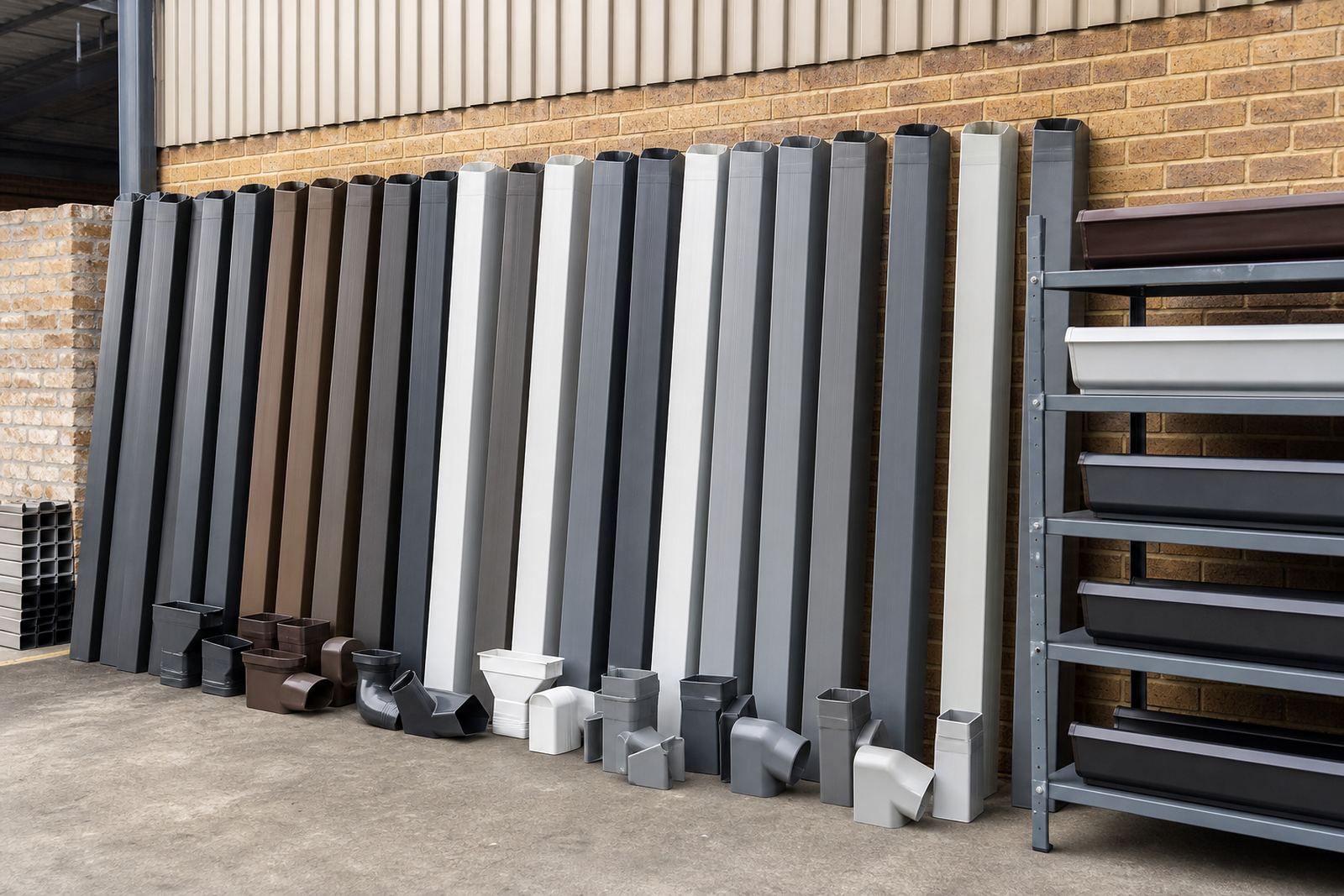
Rectangular downpipes are supplied in set sizes so the gutter outlet, bends and shoe pieces line up properly. The size chosen should match the gutter profile and the volume of water the roof needs to move. On most residential work, the outlet is selected together with the gutter section so the system flows without bottlenecks.
- Typical rectangular sizes used on site include 75 x 50 mm, 100 x 75 mm and 125 x 75 mm sections
- Lengths are commonly supplied in straight sections that can be cut to suit the building height
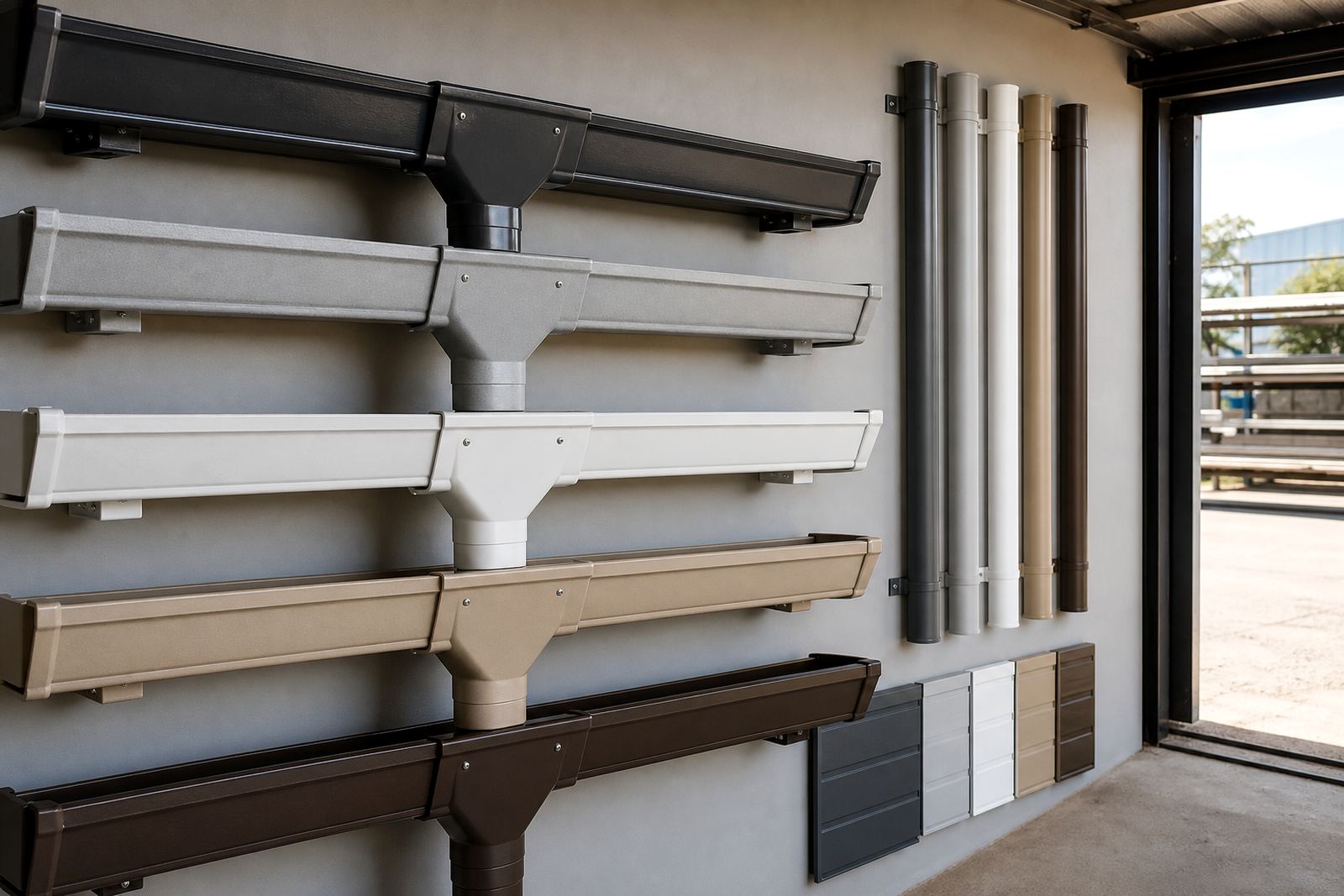
- Fittings may include offset bends, shoes, outlets, joiners, brackets and wall clips
- Where a wall projection or roof overhang gets in the way, offset bends help the pipe run clear of the brickwork
- Colour matching to fascia and gutter components helps the vertical lines blend into the elevation
It is worth confirming the exact outlet shape and the way the pipe joins into the gutter. Some jobs need a compact outlet near a parapet, while others need a deeper outlet to suit a wider fascia line. If the pipe is being run close to a corner, the bend arrangement must be checked before cutting starts.
Where rectangular downpipes work best
These downpipes suit modern houses, townhouse complexes, light commercial buildings and boundary walls where straight lines matter. They are often used on facebrick or painted plaster walls in Johannesburg and Pretoria, and also on coastal and inland projects where the finish must look tidy from the street.
Because the profile is neat and angular, rectangular downpipes are useful where round pipes would interrupt the look of the facade. They can sit close to a corner or follow a wall edge with less visual bulk. That makes them handy on narrow side passages, porch columns, garage returns and parapet walls.
On coastal sites such as Durban and Cape Town, the surrounding environment can be harsher on external fittings due to salt in the air and constant dampness. The pipe material and fixing points should be selected with that in mind, and the installation should allow for proper cleaning so debris does not stay trapped in the outlet section.
- Suitable for new builds and replacement work
- Useful where wall lines, parapets and fascia boards are straight and visible
- Works well with neat rainwater management on compact erven
- Can be used on homes, small shops and larger commercial roof edges
Fitting the pipe so it carries water properly
Good fitting starts at the gutter outlet and continues down to the discharge point. The pipe should be held plumb and fixed with brackets at sensible intervals so it does not twist when filled with water or move in strong wind. On taller walls, extra support is often needed at the joints and near bends. Roofline work at height must be done safely by competent people using proper access equipment and fall protection.
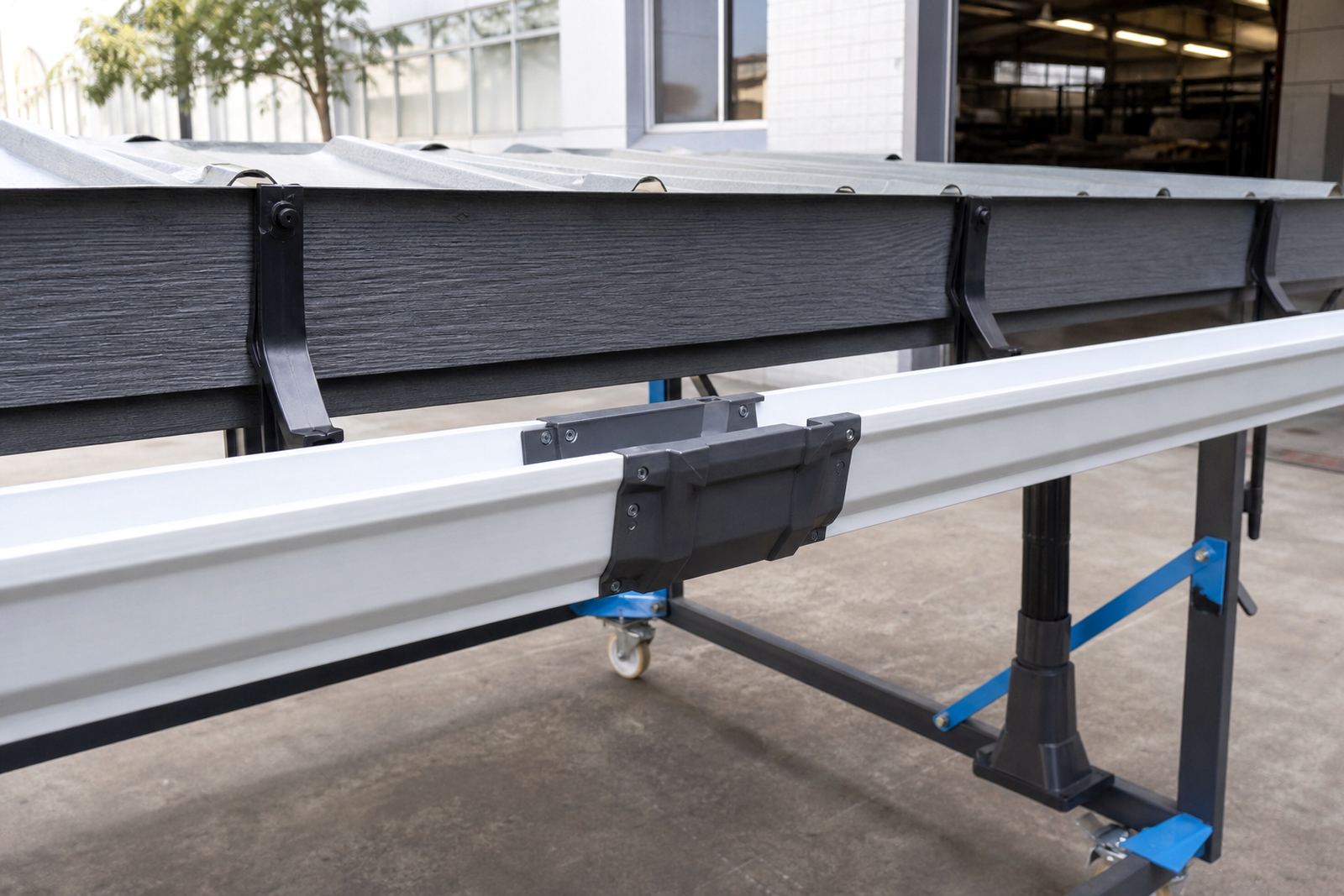
The gutter itself needs the correct fall towards the outlet so rainwater does not sit in the channel. If the fall is too flat, water may linger and carry dirt back toward the fascia. If it is too steep, the gutter can look uneven and may not line up with the roof edge. The downpipe must then be positioned so the outlet receives the flow cleanly, with no sharp misalignment at the entry point.
For installation teams, the checking list should include the gutter profile, outlet position, wall surface, fixing points and the route down to the discharge point. If a pipe is passing past window reveals or security bars, the offsets need to be measured before any holes are drilled. On multi-storey work, the route can change from floor to floor and that is where careful measuring saves time on site.
Care, cleaning and maintenance visits
Rectangular downpipes do not need constant attention, but they do perform better when gutters and outlets are cleared regularly. Leaves, roof grit, sand and small branches can settle in the top section and slow the flow. If the pipe is hidden behind a wall feature, it is even more important to check the outlet and the first bend after a storm.
Basic care is practical and straightforward. Inspect the brackets, look for loose joints and make sure the discharge point is open. On properties with tall roofs or trees overhanging the gutters, a maintenance visit before the rainy season can prevent overflow marks on walls and staining below the outlet. In warmer inland towns, dust and dry debris can build up fast, while coastal moisture can encourage algae or grime on the pipe surface.
- Check for blocked outlets after heavy rain
- Inspect brackets and clips for movement or corrosion
- Keep the discharge area clear so water does not splash back onto walls
- Replace damaged bends or split sections before they cause leak marks
Details to check before ordering
To supply the correct rectangular downpipe, a few site details need to be checked first. The gutter size, outlet shape and wall height all affect the final selection. It also helps to know whether the pipe will run to ground, into a soakaway or into another stormwater arrangement approved for the site. Builders often ask for delivery to site in Johannesburg, Pretoria, Randburg, Midrand, Roodepoort, Durban, Cape Town or Polokwane, so the quantity and lengths should be confirmed before dispatch.
When ordering, it is best to confirm the colour, the length of each section, the number of bends, and whether the pipe must pass around a corner or under an eave. Fascia boards, gutter brackets and pipe clips should be checked together so the line stays consistent from the roof edge to the ground. If the wall finish is uneven or has returns, the fixing method may need adjustment on site.
- Pipe size and colour
- Overall wall height and number of floors
- Outlet position and gutter profile
- Number of bends, clips and joints required
- Discharge point and site route
- Whether the pipe must match existing fascia or gutterwork
A tidy rainwater line that carries water away properly is usually the main goal for both builders and homeowners. The right rectangular downpipe helps the roof edge do its job and keeps the facade looking clean, even after a hard summer downpour.
Key facts
| Profile | Rectangular, square-edged vertical rainwater pipe |
|---|---|
| Common sizes | 75 x 50 mm, 100 x 75 mm, 125 x 75 mm |
| Lengths | Cut to site height from straight sections |
| Fixings | Brackets, clips, joiners, bends, shoes and outlets |
| Use case | Residential, townhouse, commercial and roofline replacement work |
| Typical finishes | Colour-matched options to suit fascia and gutter lines |