How a rainwater head fits into the roof edge
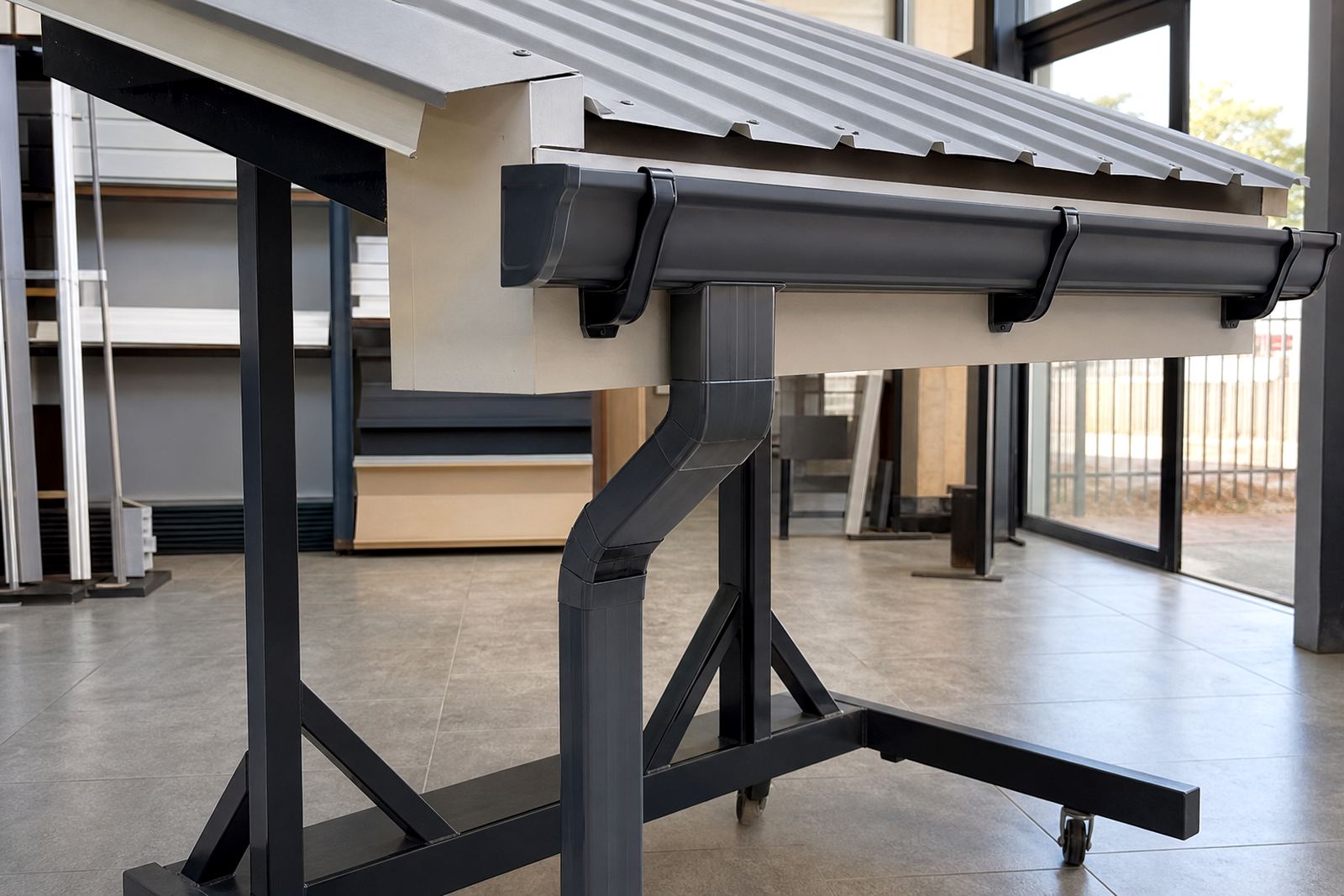
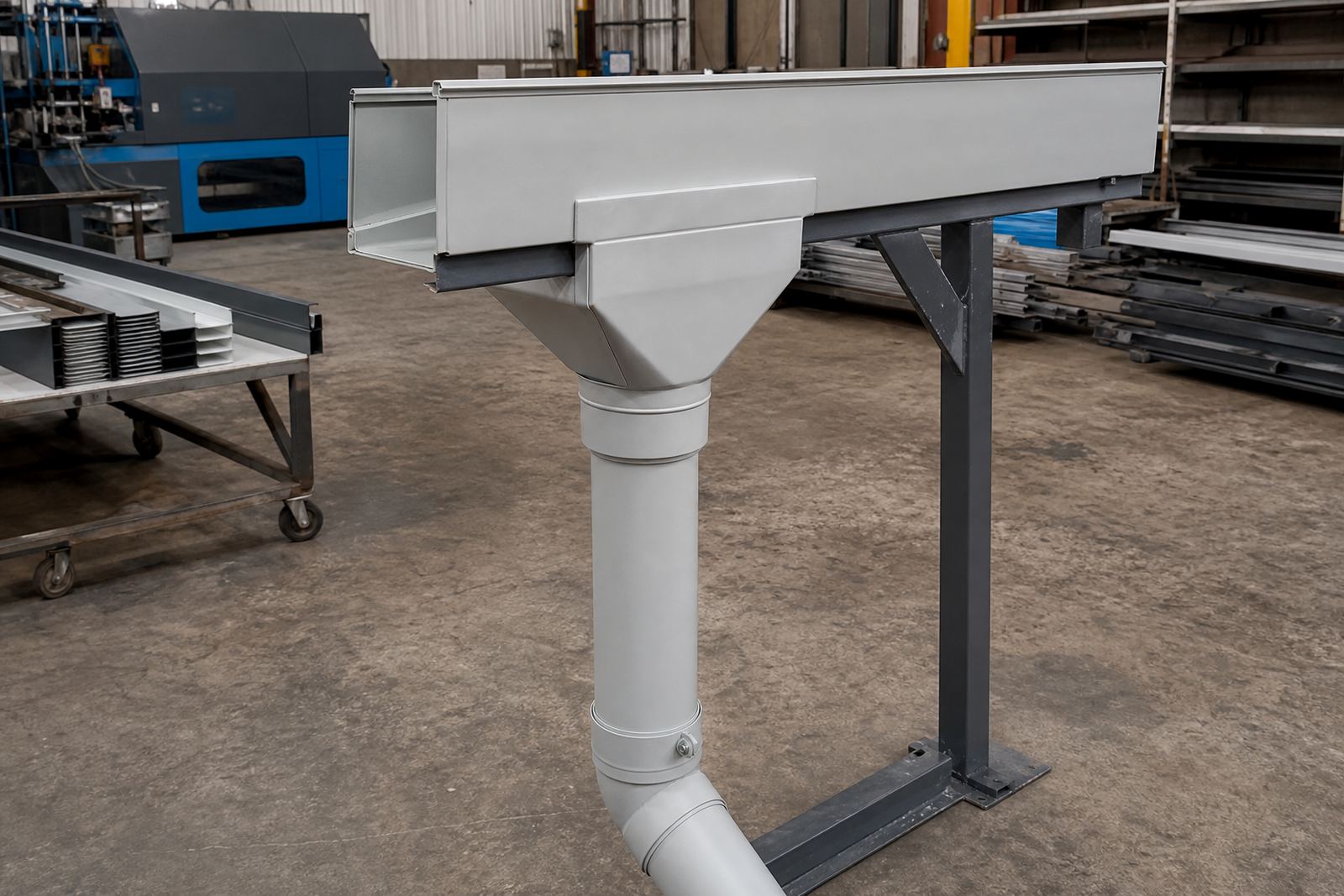
A rainwater head sits between the gutter outlet and the downpipe, or at a parapet outlet where the roof drains through a wall face. It creates a larger collecting chamber than a standard drop outlet, which helps when several roof planes feed one point or where a short, sharp storm sends water down the line quickly. In South African conditions, that extra holding space is useful on low slopes, long eaves and commercial roofs with more runoff than a small outlet can handle on its own.
Its job is straightforward: collect runoff neatly at the gutter line and feed it into the downpipe without water washing over the fascia or wall face. A well set rainwater head also makes the outlet easier to inspect, which matters when leaves, sand and roof grit build up after wind or heavy rain.
Sizes, outlet positions and profile options
Rainwater heads are usually selected by the gutter and downpipe size, the roof catchment area and the look of the building. Common outlet sizes line up with standard downpipes, and the chamber size must suit the expected water load. On larger roofs, a wider chamber and a larger outlet reduce the chance of backing up during a sudden downpour.
- Round or square outlet options to match the downpipe profile
- Compact heads for small residential roofs and porch areas
- Larger chambers for wide roof spans, offices and factory edges
- Front or side outlet positions depending on the wall line and fascia detail
- Profiles that sit neatly with composite gutters and fascia boards
The best fit depends on the roof edge detail, the length of the gutter run and whether the water is being taken straight down or redirected along a wall section. In coastal towns, a cleaner profile with fewer dirt traps makes maintenance easier when salt and windblown debris collect around the roofline.
Where a larger collection chamber helps most
Rainwater heads suit homes and commercial buildings where water from a roof section must be gathered at one point before moving into a downpipe. They are common on parapet roofs, long run gutters, sections with several valleys feeding one outlet, and buildings where the drainage point is visible on the face of the wall. They also suit replacement work where an existing outlet is undersized and the roof has shown signs of spillover at heavy rain.
On industrial or retail buildings in Johannesburg, Pretoria and Durban, the chamber can help with heavier stormwater flow where the roof area is large and the downpipes are spaced wider apart. On residential properties in Randburg, Roodepoort or Midrand, the same fitting is often used to improve the neatness of the roof edge and keep water moving away from the fascia board in a controlled way.
- Parapet roofs with an internal drainage point
- High rainfall areas where water volume rises quickly
- Roof sections with two or more gutters feeding one outlet
- Replacement work on older roofline drainage details
Fitting details that affect flow and finish
Correct fitting matters as much as the part itself. The rainwater head must sit square, line up with the gutter outlet and connect cleanly to the downpipe. If the outlet is too high, too low or off centre, water can pool in the chamber or spill at the join. Roofline work at height must be done safely by competent people, with proper access equipment and care around wet surfaces, corrugated sheets and brittle tiles.
When the head is fitted into a composite gutter and fascia system, fixing points should be firm and the seal line kept neat. The installer should confirm the gutter fall, since the head works best when water is being delivered to it rather than held back by a flat run. On replacement jobs, old sealant, damaged fasteners and warped backing boards should be checked before the new unit is set in place.
- Confirm the gutter fall towards the outlet
- Check the downpipe line is clear and unobstructed
- Use suitable brackets and fixings for the wall and fascia detail
- Seal joints carefully, especially where the roofline gets strong sun
Materials that suit South African weather
For gutters, downpipes and fascia boards, plastic-steel composite parts are chosen for a reason. They need to hold shape, resist weathering and keep their finish through strong sun, wind, dust and heavy rain. In coastal areas such as Durban or Cape Town, salt air and moisture can be hard on roofline fittings, so the material choice and the fixing method both matter. On inland sites, heat and dust still put strain on joints and exposed edges.
A rainwater head in this material group should be matched to the rest of the system so the finish reads as one line, not a mix of unrelated parts. Clean edges, consistent colour and proper alignment all help the roofline look finished after installation. Maintenance is straightforward if the chamber remains easy to reach and the outlet is not buried behind debris or loose roof leaves.
Maintenance that keeps the chamber open
Rainwater heads need regular inspection, especially after summer storms or wind that drops leaves and grit onto the roofline. A quick look at the chamber can show whether water is moving freely or sitting back because of a blocked downpipe, a sagging gutter or debris caught at the outlet. If the head is on a higher building, access should be planned safely and only handled by people competent to work at height.
Simple care helps the system last longer and keeps minor faults from turning into stained walls or soaked fascia boards. The main things to watch are the outlet, the joint seal and any movement at the fixing points.
- Remove leaves, roof grit and bird nesting material from the chamber
- Check for staining that may point to a small leak or overflow
- Inspect sealant and fasteners after harsh weather
- Wash off coastal salt build-up where the roofline is exposed
Details to confirm before supply or replacement
Before ordering, it helps to confirm the outlet size, the gutter profile, the downpipe shape and the wall or fascia detail where the head will sit. On replacement work, an existing opening may need to be measured carefully because the old fitting can leave a slightly different cutout or fixing pattern. If the roof has already shown overflow, the catchment size and the number of downpipes should be checked as well.
For builders, the useful information is the same on most jobs: roof type, gutter size, outlet position and the finish needed for the visible face. For homeowners, a site measure or material takeoff can prevent mismatched parts and awkward adjustments on the day of installation.
- Gutter profile and size
- Downpipe diameter or section size
- Outlet position and direction of discharge
- Roof type and whether the fitting is new or a replacement
- Length of run feeding the drainage point
- Colour or finish required to match the roofline
Plasteel supplies rainwater head solutions for builders and homeowners across Johannesburg, Pretoria, Durban, Cape Town and Polokwane, with support for supply, site measuring and roofline coordination from Kya Sand, Randburg.
Key facts
| Product type | Rainwater head for roof drainage |
|---|---|
| Common use | Collection chamber between gutter outlet and downpipe |
| Typical matching sizes | Sized to suit standard downpipes and gutter profiles |
| Material | Plastic-steel composite |
| Suitable applications | Residential roofs, commercial roofs, parapets and replacement work |
| Support options | Site measuring, material takeoff, supply and installation coordination |