
How a rise and fall bracket sets the gutter line
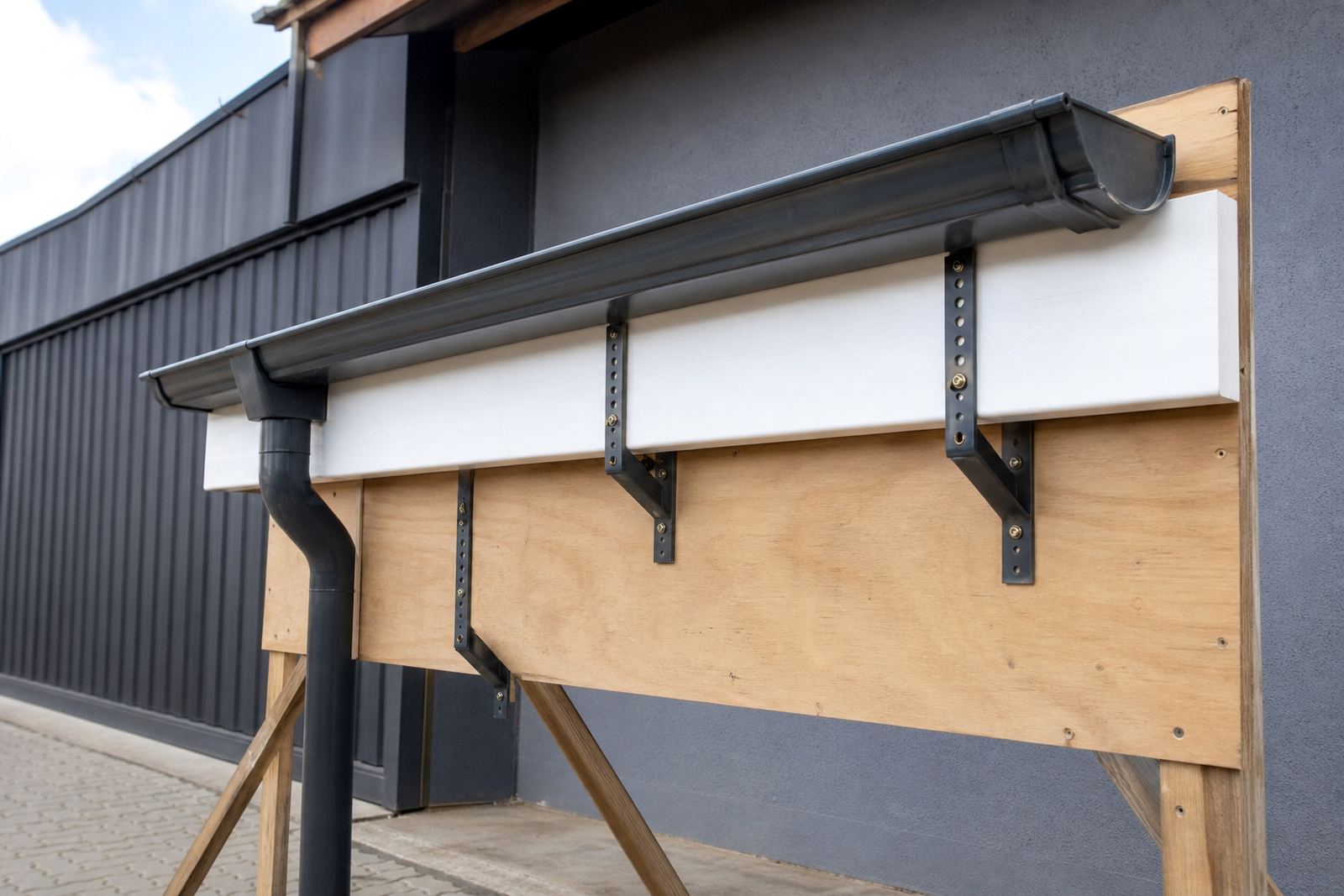
A rise and fall bracket is a fixing bracket with an adjustable arm or slot arrangement that lets the gutter sit higher or lower at each fixing point. On a roofline, that matters because a gutter should not run dead level. It needs a slight fall towards the downpipe so rainwater keeps moving and does not pool in low points.
In practice, the bracket gives the installer control when the fascia board is not perfectly straight, the brickwork has small irregularities, or a replacement gutter has to match existing roof edges. The bracket is positioned to support the gutter profile firmly while still allowing the line to be corrected in small steps.
- Used to create a controlled fall along the gutter run
- Helps align gutters on uneven fascia lines
- Supports the gutter without forcing the profile out of shape
- Useful on new work and roofline replacement jobs
Sizes and options for site conditions
Rise and fall brackets are generally selected to match the gutter profile, the fascia fixing method and the amount of adjustment needed on the roof. For composite gutter work, the key detail is that the bracket must suit the profile width and sit securely under the gutter lip or within the approved fixing point on the system.
Common site choices include brackets for standard domestic runs and heavier duty brackets where there are longer spans, stronger wind exposure or more frequent maintenance access. In coastal towns like Durban and Cape Town, installers often pay close attention to corrosion resistance and fixing quality because salt air and damp conditions can work on exposed metal parts over time.
- Profile match for the gutter size in use
- Adjustable rise to set the fall accurately
- Fixing method suited to fascia board or rafter support
- Suitable for domestic, light commercial and builder supply work
Where these brackets suit best
These brackets suit gutters on tiled roofs, metal roof sheeting and mixed roofline work where the gutter needs to be held true while the fall is set. They are especially useful on long runs, corner returns and roof sections where the outlet position is fixed and the line must be worked back from the downpipe.
They are also practical on homes and business premises where fascia boards are being replaced at the same time. A neat fascia line makes it easier to keep the gutter even, but in real roof work the old line is not always perfect. A rise and fall bracket gives the installer room to correct that without forcing the gutter into a twist.
- Residential rooflines with visible eaves detail
- Commercial buildings with long gutter runs
- Replacement work over older fascia boards
- Sites where the outlet position is fixed first
Fitting notes for a clean fall and firm support
Correct fitting starts with marking the outlet and the high point before any brackets are fixed. The fall is then set along the run so the gutter slopes evenly toward the outlet. Brackets need to be fixed on sound material, with spacing chosen for the profile, the span and the expected water load. On roof work at height, competent people and safe access equipment are essential.
For neat results, installers usually check the gutter line from ground level as well as from the roof edge. Small adjustments at bracket level are easier to make before the final fasteners are tightened. Where a downpipe connection sits near a corner or at a valley area, the bracket spacing and support around the outlet should be checked carefully so the gutter does not sag once it fills with water.
- Set the outlet position before fixing the full run
- Keep bracket spacing even across the length of the gutter
- Check the line from more than one angle before final tightening
- Use safe access methods for all work at height
Maintenance that keeps the line working
Rise and fall brackets need little attention once installed, but the gutter system around them does. Leaves, sand and windblown debris can sit in the channel and slow water movement. In areas with coastal humidity or heavy summer storms, regular checks help prevent standing water and early wear on fixings.
During a maintenance visit, the installer should look for loose screws, bent brackets, gutter sections that have dropped out of line and seal points that need attention. If the gutter has been overloaded by debris, the bracket line may need resetting after cleaning. That is common after windy weather, especially on exposed roofs and tree-lined streets.
- Clear gutter debris before checking the bracket line
- Look for movement at joints and outlet points
- Inspect fixings after strong wind or heavy rain
- Reset any low spots before they hold water
Rise Fall Brackets: profile and colour checks
Before a bracket is supplied for a job, the main details to confirm are the gutter profile, the fixing surface and the amount of adjustment needed to set the fall. If the job is on a fascia board, the board thickness and condition matter. If it is fixed to rafters or masonry, the fixing method changes. These details keep the bracket choice practical on site and reduce delays during installation.
It also helps to confirm whether the project is new build, roofline replacement or repair work. On replacement jobs, the existing gutter size may not match the original drawings and the line may already have minor movement. For builders and homeowners alike, a quick site measure and material takeoff makes the order more accurate and keeps the roof edge tidy.
- Gutter profile and nominal size
- Fascia, rafter or masonry fixing point
- Required rise or adjustment range
- Run length, outlet position and corner details
A practical fit for builders and homeowners
Rise and fall brackets are small parts, but they carry a lot of the job’s accuracy. When the fall is set properly, water moves cleanly, the gutter sits straight and the roof edge looks finished. For builders, that means fewer call-backs on the line. For homeowners, it means a gutter that is easier to keep clear and less likely to hold water in low spots.
On composite gutter work, the bracket has to support the system properly without distorting the profile. That is why size matching, accurate fixing and correct spacing matter as much as the gutter itself. When the bracket line is set right from the start, the rest of the roofline work usually falls into place more neatly.
- Helps set a usable fall toward the outlet
- Supports straight, neat roof edges
- Suitable for repair, replacement and new installation work
- Works well where rooflines need on-site adjustment
Key facts
| Product type | Adjustable rise and fall bracket for gutter alignment |
|---|---|
| Material | Plastic-steel composite compatible fixing component with metal support elements |
| Typical gutter compatibility | Domestic and light commercial gutter profiles, subject to profile match |
| Adjustment range | Site adjustable to set the required fall |
| Fixing points | Fascia board, rafter edge or other approved roofline support |
| Common use | Gutter installation, replacement runs and on-site level correction |