
Start with the part that is failing, not the whole roofline
Most roofline problems show up in one of three places: the gutter body, the fascia board, or the downpipe run. On a house in Randburg with a few lifted joints, a repair may be enough if the rest of the system still has sound fixing points and the correct fall. On a coastal property in Durban, UV and salt air can shorten the life of fittings, so the same fault can spread faster than it would inland.
Look for the cause before choosing a fix. A leak at one joint may come from a blocked gutter, a twisted bracket, or a section that no longer holds the right slope toward the outlet. If the damage is local and the surrounding material is straight, clean and firm, a targeted repair can make sense. If the run has moved, sagged or cracked in several places, replacement often saves labour later.
Signs that a repair is still worth doing
Small faults are often repairable when the material around them is still in good shape. The key is to inspect the full length of the run, not only the wet patch on the wall. A good repair should correct the fault and leave the rest of the line stable.
- One cracked joint or seal point, with no extra damage along the run
- Loose brackets but the fascia board still grips firmly
- A downpipe elbow that has split, while the pipe body is straight
- Minor overflow caused by leaves, dirt or nests blocking the outlet
- Local corrosion, fading or impact marks without soft, swollen or warped sections
If the gutter and fascia are still aligned, a local repair can be practical. A competent installer can clean the line, re-secure brackets, reset the fall and replace only the parts that have failed. That keeps waste down and avoids disturbing sections that are still doing their job.
When replacement makes more sense than patching
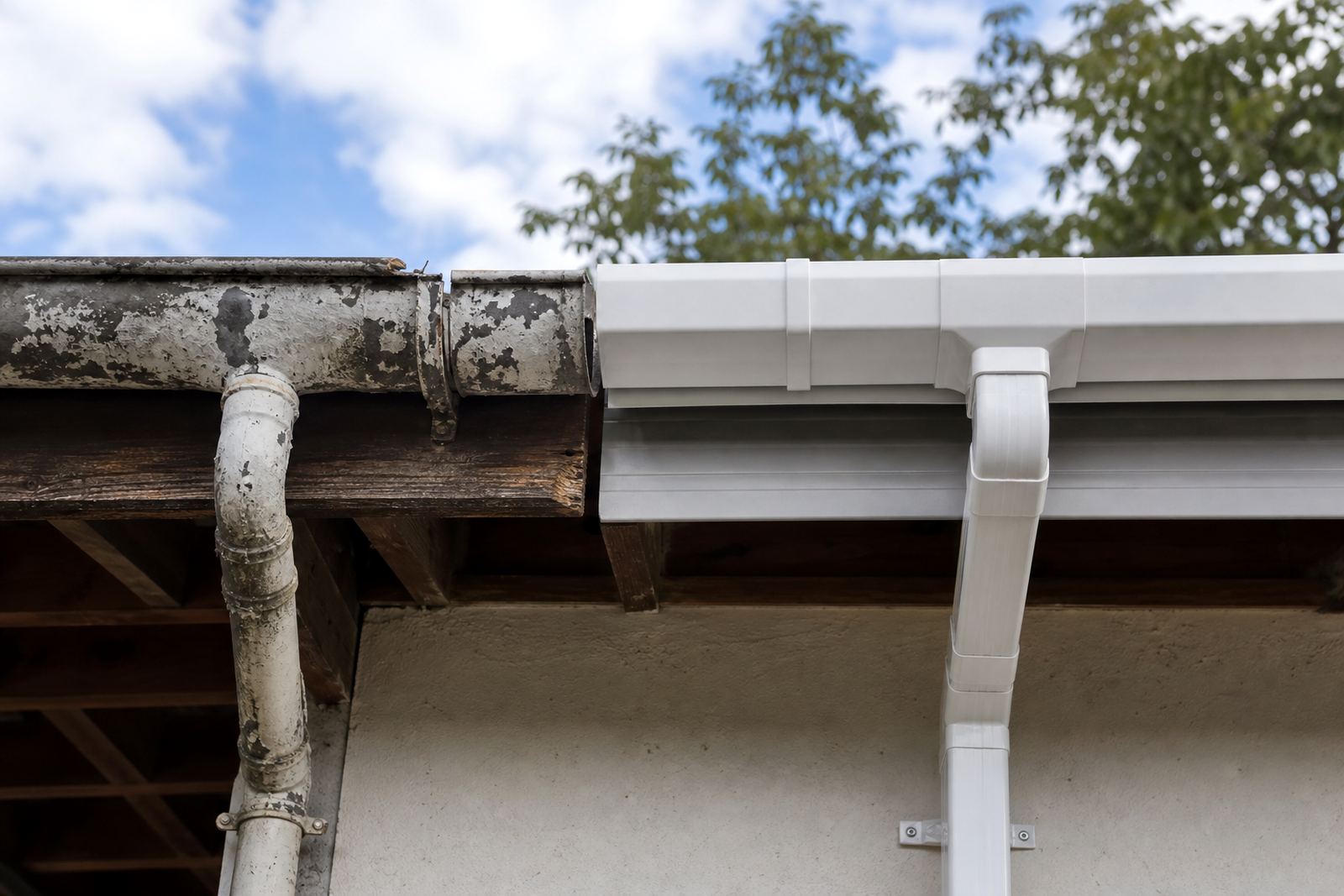
There comes a point where patching becomes false economy. If the line has repeated leaks after earlier repairs, or if brackets are pulling away from the fascia, the structure may no longer support dependable service. On older homes in Johannesburg or Pretoria, you may also find mixed repairs over time, with different materials and fixings that no longer match well.
Full replacement is usually the better choice when the faults are spread through the system. That can include a gutter with multiple splits, a fascia board that has started to soften, or downpipes that are repeatedly coming loose because the fixing points are tired. If water has been running behind the fascia for some time, hidden damage may already be present and replacing only the visible piece may not solve the problem.
Replacement also helps when the roofline needs a new layout. A wider roof area, a changed pitch, or added sections from a renovation may need a fresh material takeoff and a better arrangement of outlets and downpipes. In those cases it is cleaner to replace the affected run in one go rather than keep patching sections that no longer suit the roof.
Check falls, brackets and outlets before deciding
Gutters need a gentle and consistent fall toward the outlet so water moves away without ponding. If the run is nearly level, or if it dips in the middle, water will sit in the line and put extra strain on the joints. That is often the real reason for repeated overflow, even when the gutter itself looks acceptable.
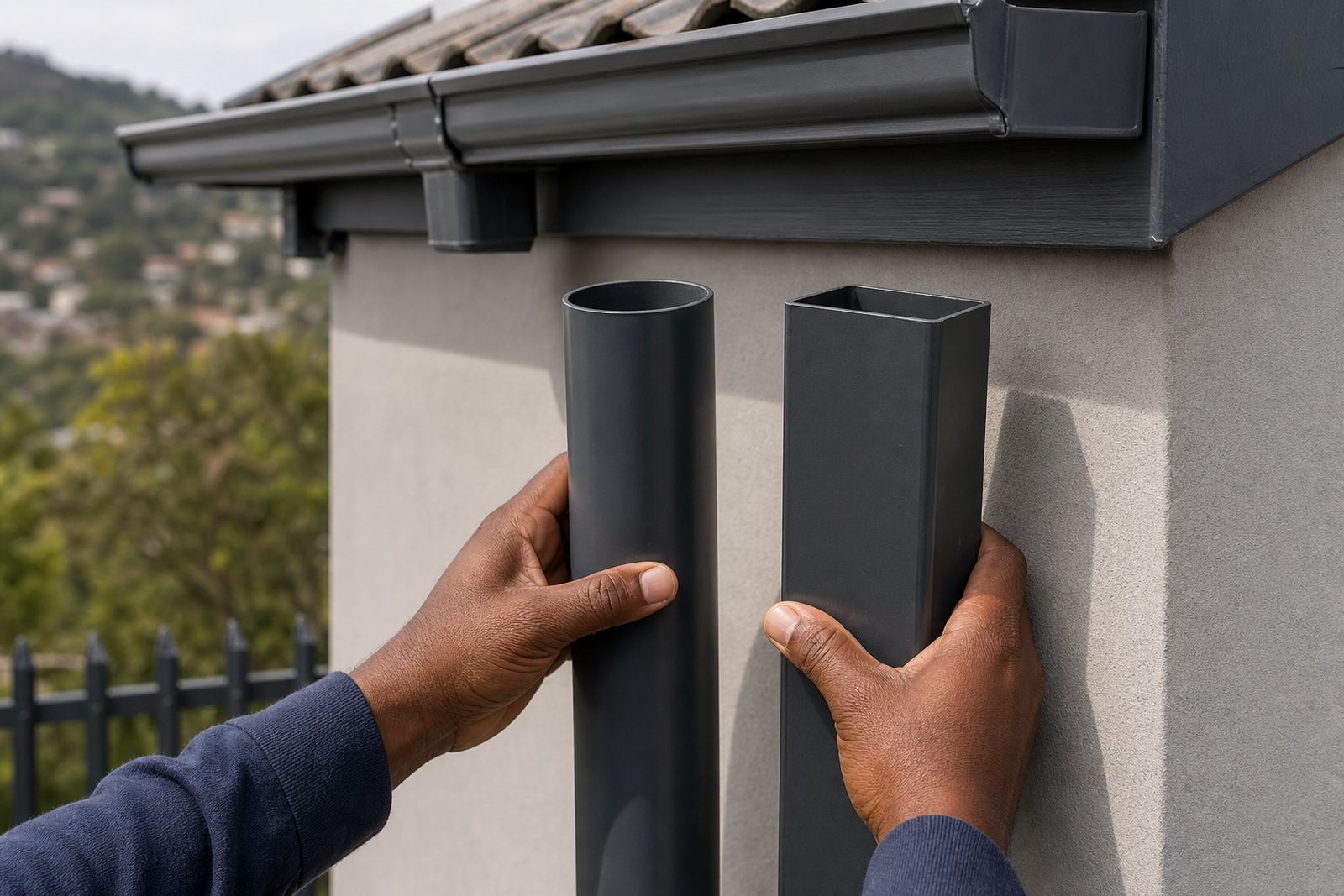
Brackets should hold the gutter firmly and keep the spacing even. Where spacing is too wide, or the fixing substrate is weak, the gutter can twist under the weight of water and debris. The outlet position matters too. If the downpipe is undersized for the roof area, or if there are too few outlets for a long run, the whole system can back up during heavy rain.
- Check for standing water after rain or a hose test
- Look for brackets that have shifted, bent or pulled loose
- Confirm the outlet is clear and large enough for the roof area
- Inspect joints for gaps, staining or lifted seal lines
- Make sure the downpipe discharges where water will not pool against the wall
These checks are useful before any decision is made. A good repair might be only one bracket and a cleaned outlet. A poor layout however, usually needs more than a patch.
Material choices that change the repair decision
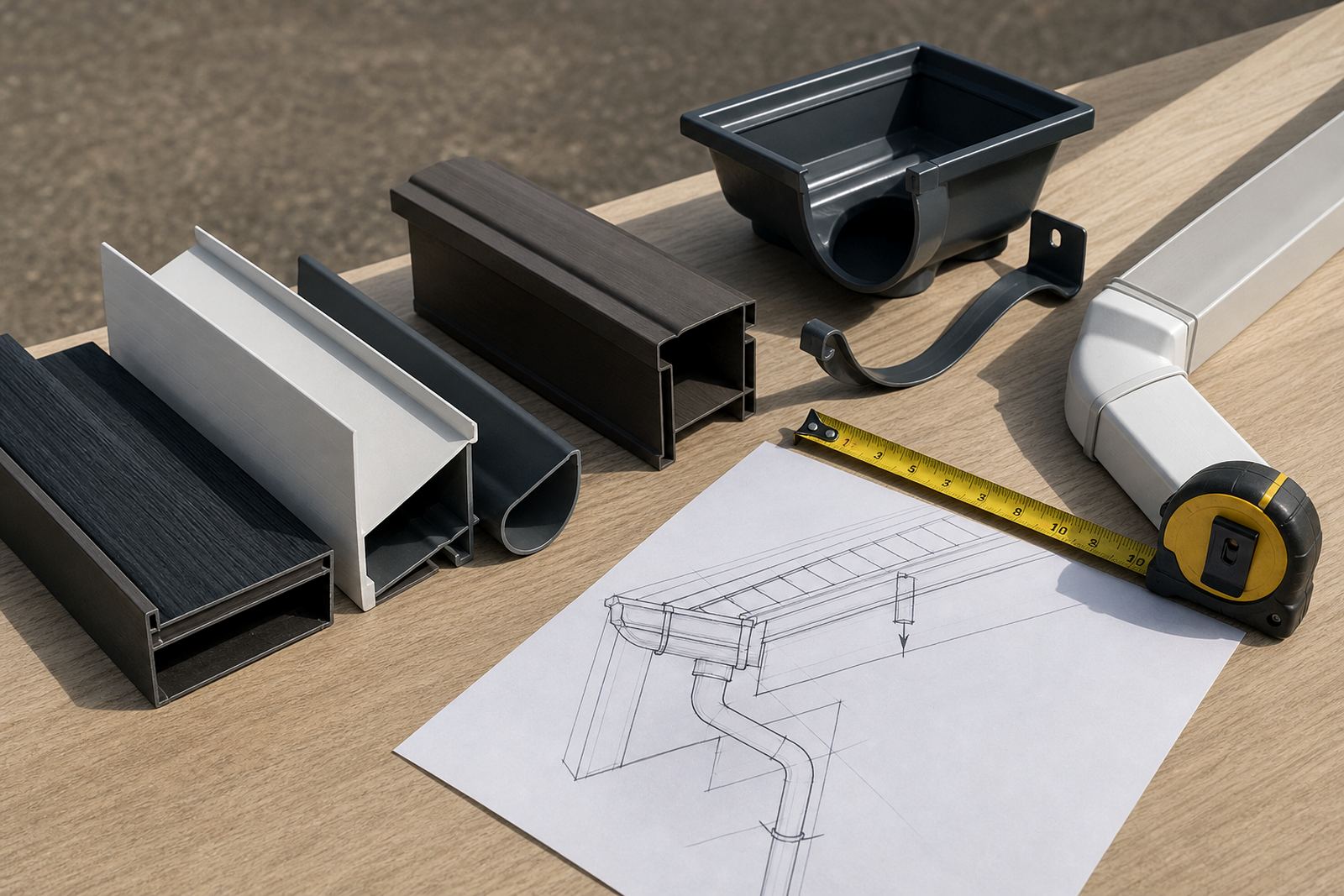
Plastic-steel composite roofline products are chosen for a balance of strength and handling. They are used on residential and commercial work where a neat finish and steady performance matter. Even so, the surrounding conditions still matter. In hot inland areas the material may be exposed to strong sun and dust. In coastal towns, salt and moisture can test fittings and fasteners, so regular inspection helps extend service life.
Fascia boards should stay straight, hold fixings securely and provide a clean mounting line for the gutter brackets. If the fascia is warped or water-damaged, replacing only the gutter will not fix the support problem. Likewise, if the downpipe is sound but the elbows or straps are failing, those smaller parts can often be swapped without touching the full pipe run.
For builders, the choice often comes down to how far the damage has spread and how much time is available on site. For homeowners, the question is often whether the repair will last through the next rainy season or only delay more work. A proper assessment from the roof edge to the discharge point helps settle that.
A practical decision checklist for site work
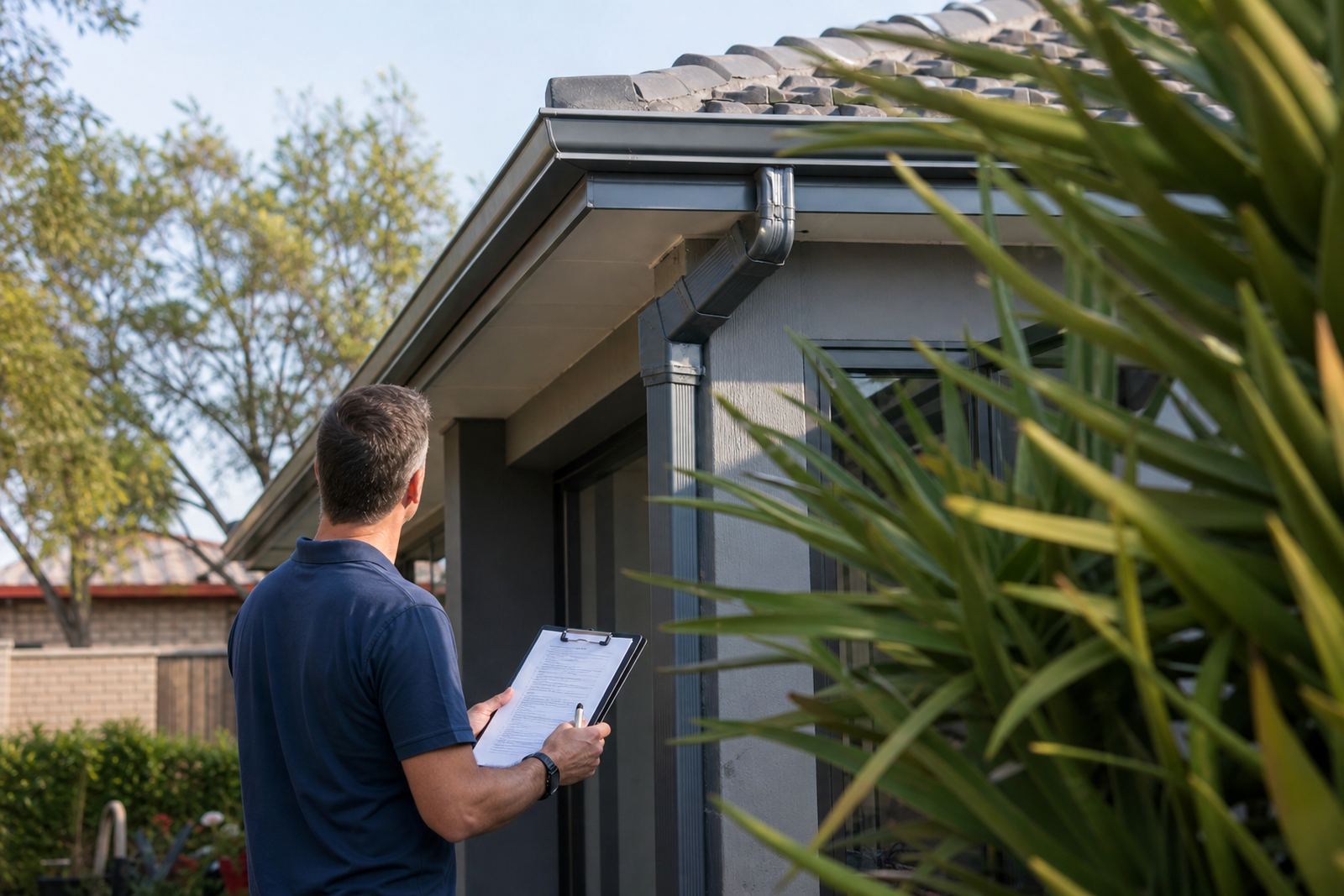
Use this quick check before ordering parts or scheduling a larger job. It helps separate a tidy repair from a wider replacement and keeps the scope clear for everyone on site.
- Is the fault local, or are there several weak points across the run?
- Do the brackets still grip the fascia board securely?
- Does water move toward the outlet, or does it sit in low spots?
- Are the downpipes clear, straight and properly fixed?
- Is the fascia board sound enough to keep supporting the system?
- Has the same section failed more than once?
If most answers point to one bad section, a repair may do the job. If several answers raise concern, replacing the affected roofline section is often the better long term option. Roofing work at height must be done safely by competent people, with the right access, fall protection and handling of tools and materials.
How Plasteel supports the next step
From Kya Sand in Randburg, Plasteel works with builders and homeowners across Johannesburg, Pretoria, Durban, Cape Town and Polokwane. The team can help with site measuring, material takeoff, product supply, gutter installation, fascia installation, downpipe installation, roofline replacement, leak checks, maintenance visits, builder support, homeowner advice and delivery coordination.
If a roofline only needs a small repair, the material list can stay narrow. If a broader replacement is the safer choice, the scope can be set out clearly before work starts. That makes it easier to match the materials, the falls and the fixings to the actual condition on site, instead of guessing from the ground.