
Start With A Straightforward Roofline Check
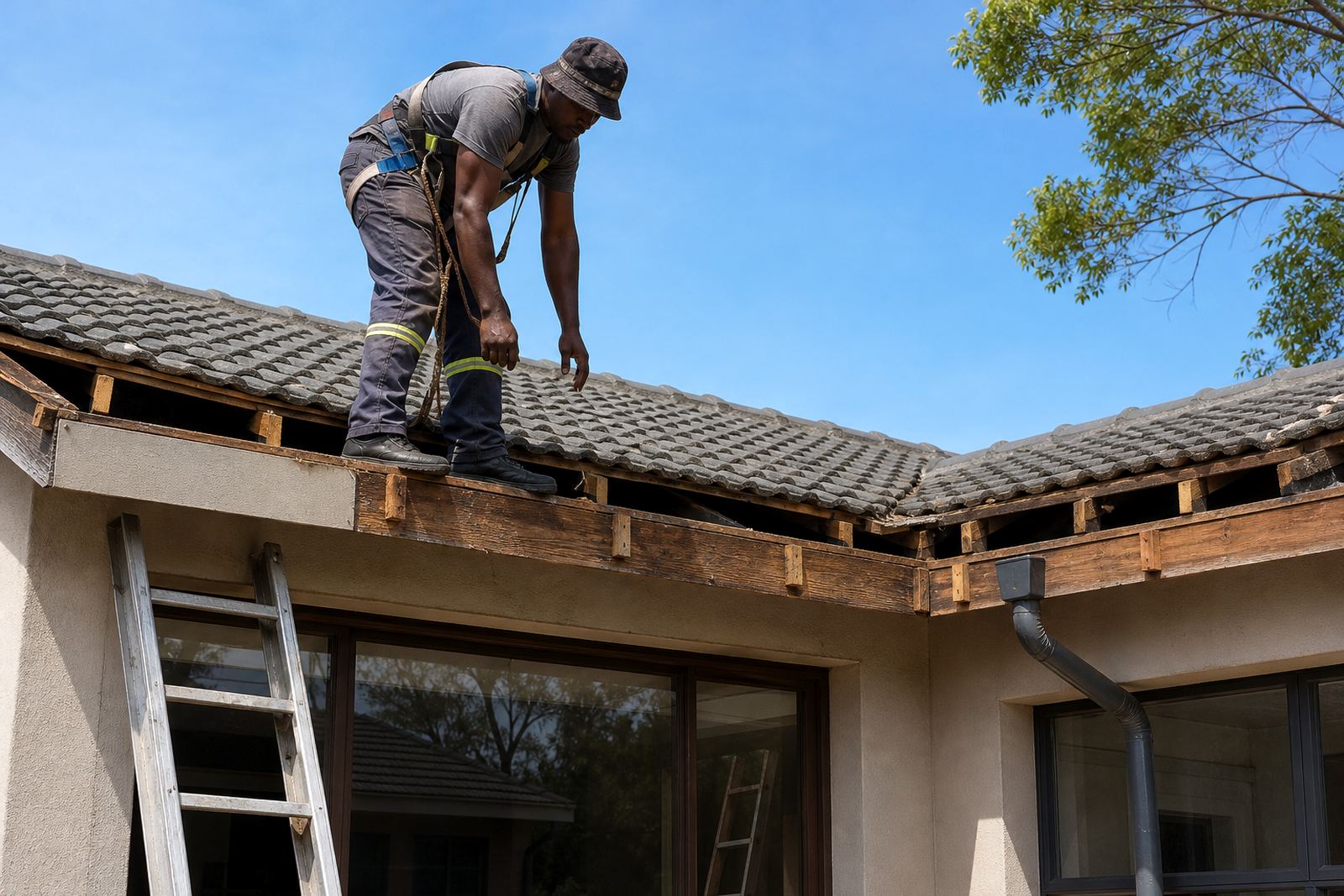
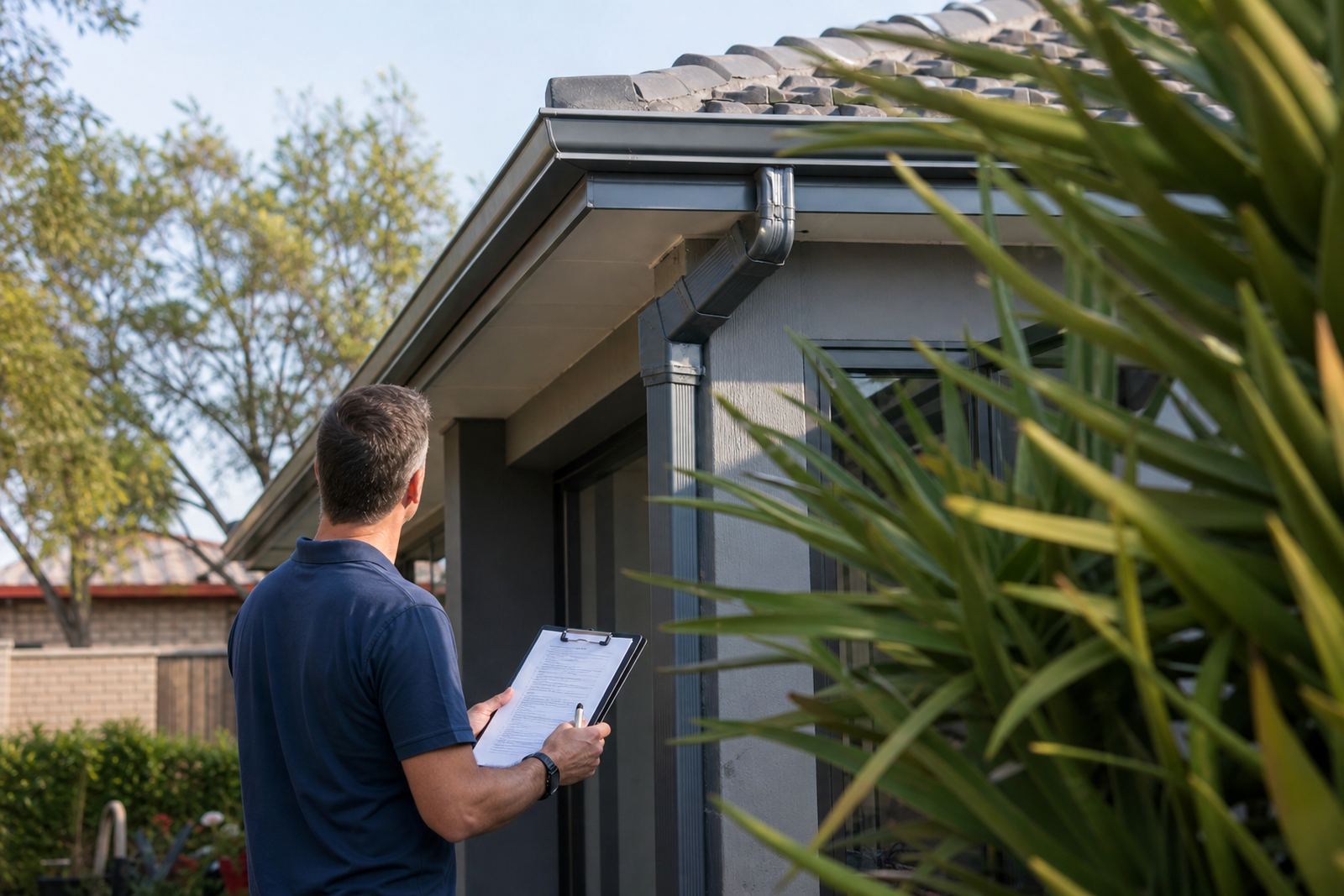
Walk around the property after rain if it is safe to do so and look at the full roof edge from ground level first. You are checking for water spilling over the sides, sagging runs, wet patches on fascia boards and streaks on walls below the gutter line. On taller buildings or steep roofs, work at height must be handled by competent people using proper access equipment and fall protection.
A good gutter run should hold its line with a slight fall toward the outlet so water keeps moving. If a section looks flat, twisted or bowed between brackets, it may be holding water and strain will build up over time. That is common where brackets have loosened, joints have moved or fasteners have rusted.
Clear Leaves Before They Form Heavy Sludge
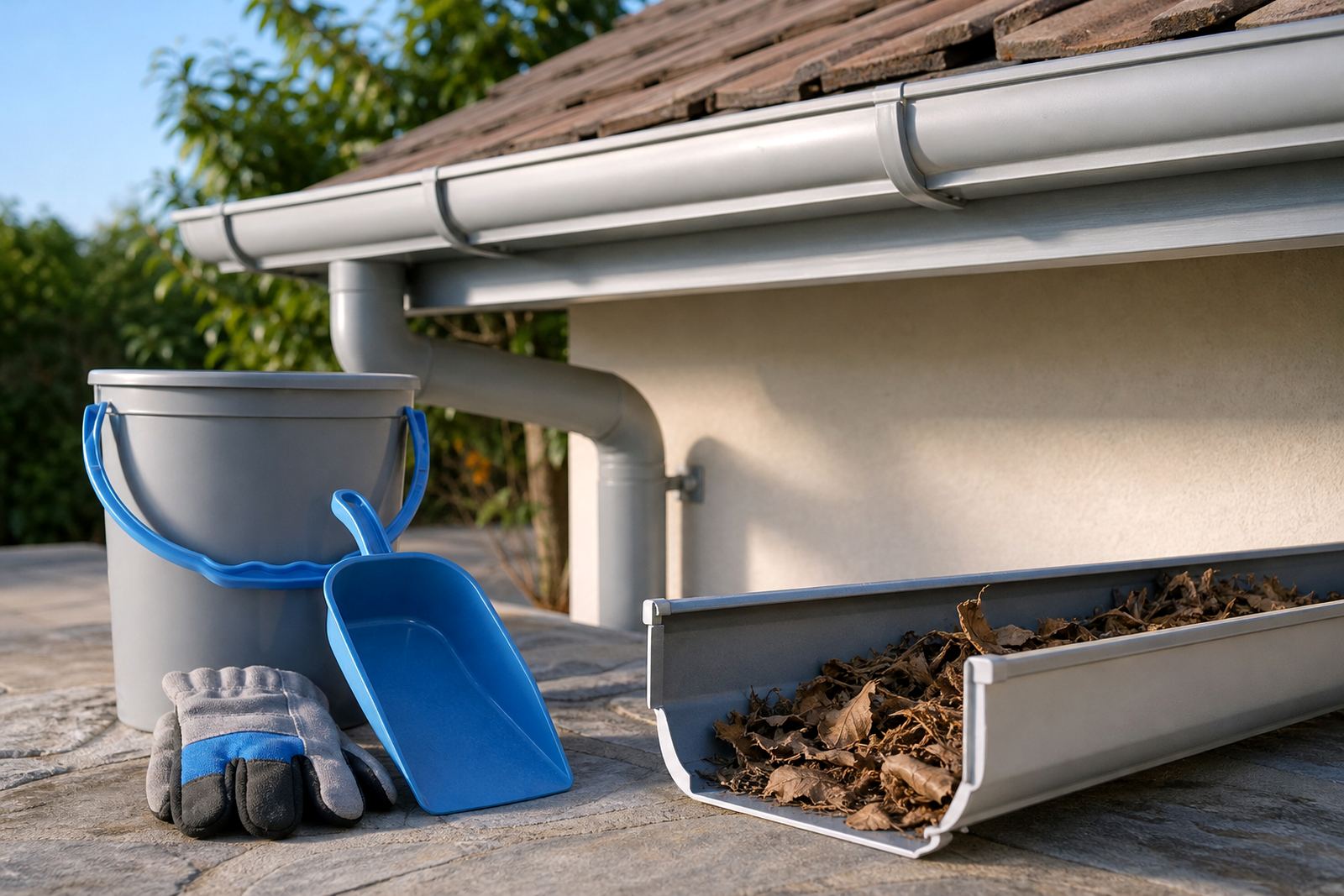
Leaves, seed pods, dust and nesting material collect quickly, especially under trees and near open veld. When that material stays wet it becomes heavy, blocks outlets and can pull joints apart. A simple cleaning routine helps a lot, particularly in areas with summer storms and frequent wind-blown debris.
- Scoop out loose debris with a plastic scoop or gloved hand.
- Flush the gutter with clean water to see how the flow moves.
- Check that water reaches the downpipe outlet without backing up.
- Remove any buildup around mitres, stop ends and outlets.
- Make sure downpipe shoes and bends are open, not packed with muck.
If your gutters carry fine dust from nearby roads or building work, rinse them more often. In coastal areas salt and grime can sit on fixings and joints, so a closer look at rust marks and loose screws is worthwhile.
Check Brackets, Joints And The Fascia Behind Them
Brackets carry the load of water, debris and wind pressure, so they need to sit firm and evenly spaced. If a bracket has pulled away from the fascia board, the gutter can droop and the fall becomes uneven. Look for cracked sealant at joins, open seams, rust spots on steel fixings and small gaps where water may be escaping.
Fascia boards should remain straight, dry and sound. When water has been overflowing for a while, the board behind the gutter can soften, stain or rot. That is often the point where a repair becomes more than a cleaning job. If the board has swollen, split or no longer holds fasteners properly, it needs attention before the gutter is put back into service.
Keep Downpipes Free So Water Can Move Away
Downpipes matter just as much as the gutter channel itself. Even a clean gutter will spill over if the outlet or pipe is blocked. Check that water flows freely from top to bottom and that the pipe discharges away from the building, not back against foundations or paving edges.
- Look for dents, loose clips and separated joints.
- Check for splash marks at the base, which can show restricted flow.
- Make sure bends are not clogged with leaves or roof grit.
- Confirm that the pipe is not cracking where it meets brackets.
- Inspect stormwater tie-ins where they are allowed on the site.
On commercial buildings and long runs, a blocked downpipe can affect several roof sections at once. If water is pushing out at the top, the outlet may need to be cleared or resized for the amount of roof area it serves.
Seasonal Routine For South African Conditions
Gutter maintenance should follow the weather pattern, not just the calendar. Before the first heavy rains, clear the full run and inspect every outlet. After summer storms, check for windblown debris and any movement in the brackets. In dry months, dust can build up and harden around joints, so a rinse helps keep the system open.
Homes in Johannesburg and Pretoria often deal with tree litter and dust. Durban properties may need extra attention from humidity and salty air, while Cape Town roofs can pick up wind-driven debris and hard rain in short bursts. In Polokwane and similar inland areas, dust and sudden downpours can both test the system hard.
When The Gutter Needs More Than A Clean
Some signs point to a deeper problem rather than routine maintenance. Repeated overflow at the same point, cracked sections, loose fascia, stained walls or damp patches inside the property all deserve a proper inspection. If the gutter has been patched many times, or the falls are wrong from the start, a replacement section may be the better option.
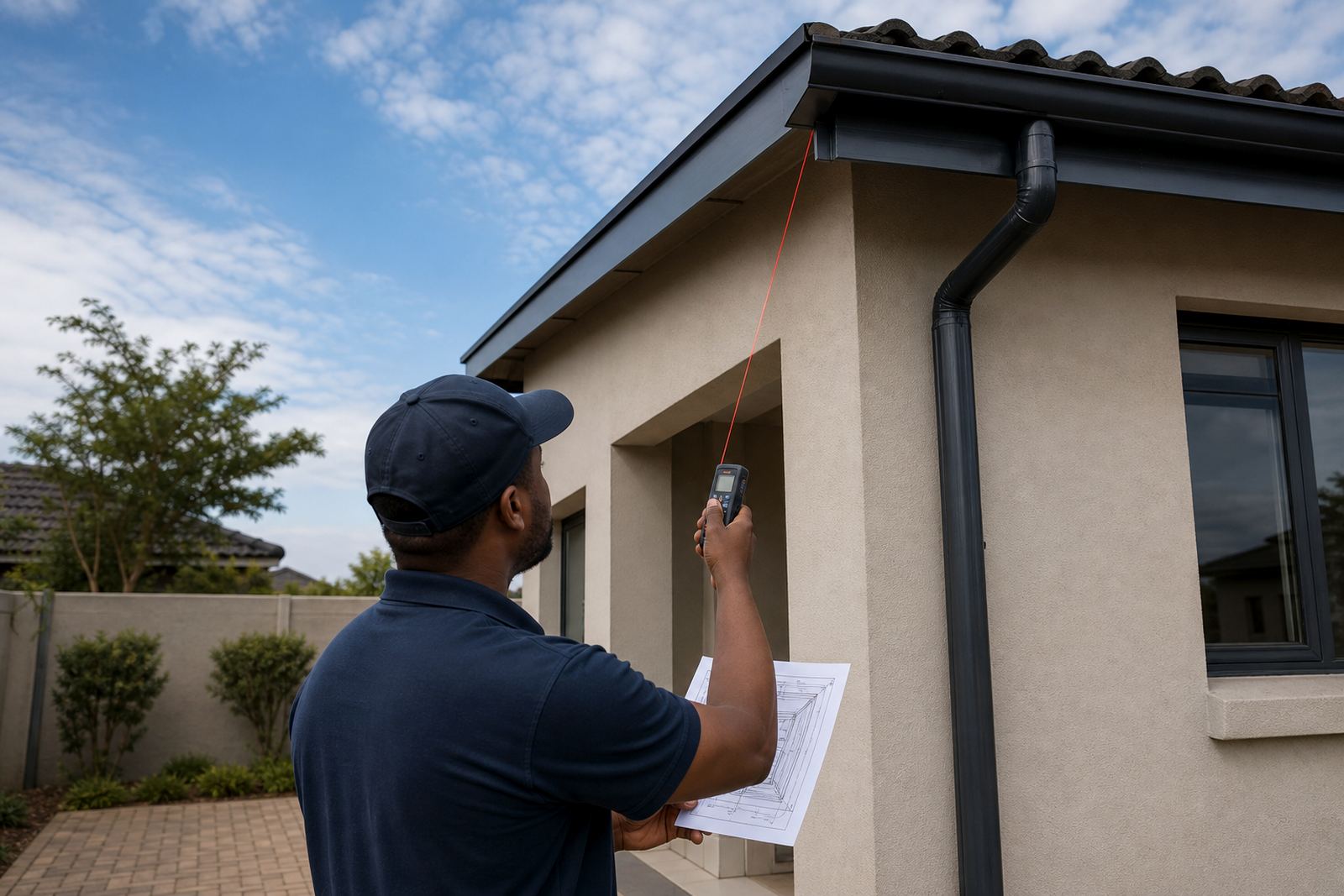
Material choice also matters. Plastic-steel composite gutter, downpipe and fascia components are used for their balance of strength and weather resistance, but no material can perform well if the run is poorly supported. Measure lengths accurately, keep bracket spacing even and allow the water path to move cleanly to the outlet. That is the part that protects the roofline over time.
A Practical Maintenance Checklist For Owners And Builders
Use this list when you inspect the roofline. It is a good way to catch minor issues before they spread to the fascia or walls. If the building is high, the roof pitch is steep or access is awkward, call in competent people with safe access methods.
- Remove leaves, grit and sludge from the gutter channel.
- Flush the run and watch where water slows or pools.
- Check brackets for looseness and uneven spacing.
- Inspect joints, end caps and outlets for leaks.
- Look at fascia boards for swelling, stains or soft spots.
- Confirm that downpipes are open and discharge correctly.
- Check for signs of overflow after heavy rain.
Regular maintenance keeps small defects from turning into water damage. It also helps builders and homeowners spot when the roofline needs repair, replacement or closer technical attention.