
Set the roofline before the last sheet goes down
Roofline work is easiest to coordinate while the roof structure, barge boards and external finishes are still open for measuring. On a new build, gutter length, fascia cover, bracket spacing and downpipe positions should be checked against the roof pitch, eaves width and where water must leave the building. That avoids awkward joins, short offcuts and pipes ending up over doors, paving or windows.
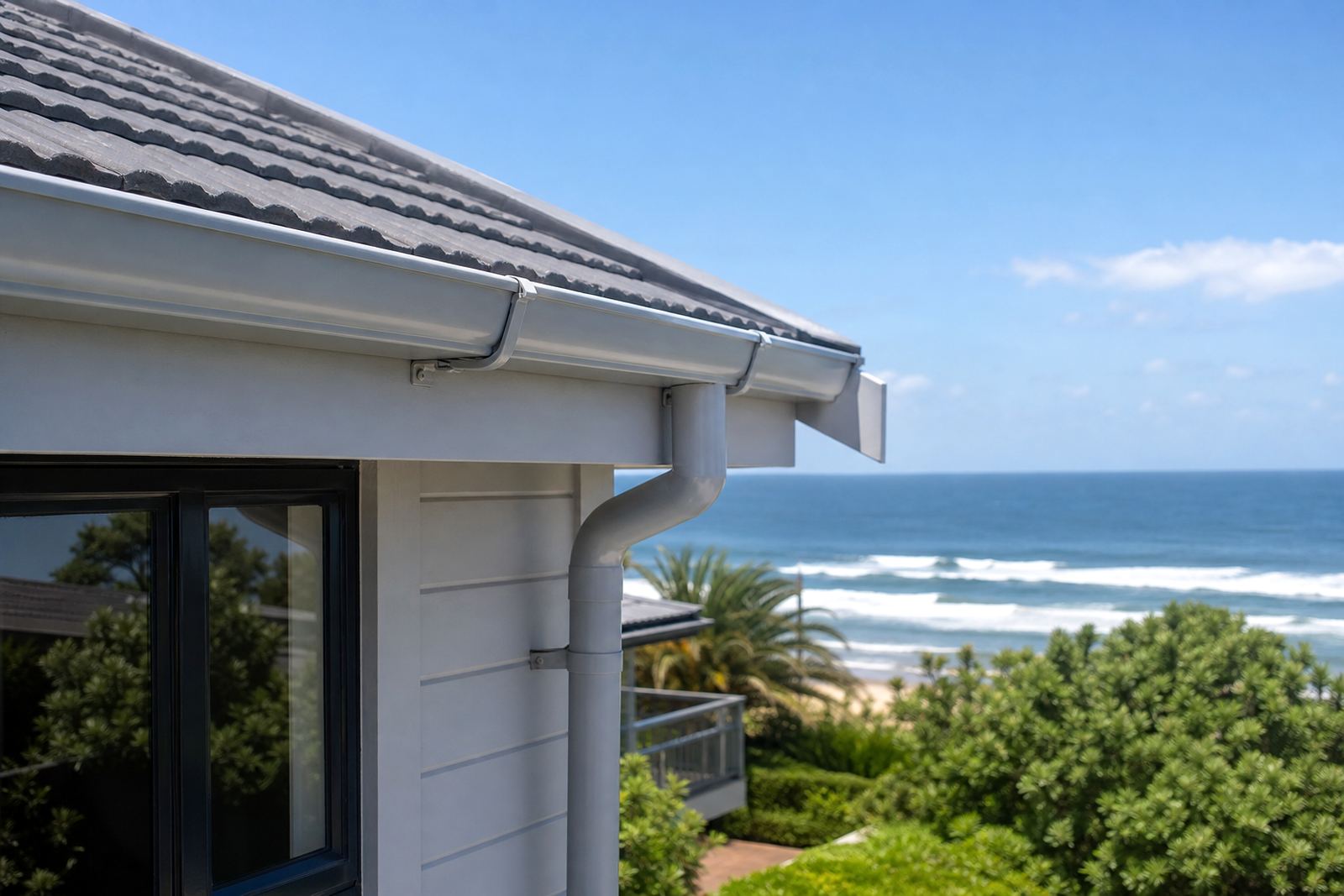
For most homes and light commercial work, the gutter line should follow a steady fall so water moves to the outlets without ponding. The exact fall depends on the run, but the gutter should never be level over long stretches. In areas with strong summer storms or coastal humidity, good drainage and proper fixings matter even more.
Measurements that save rework on site
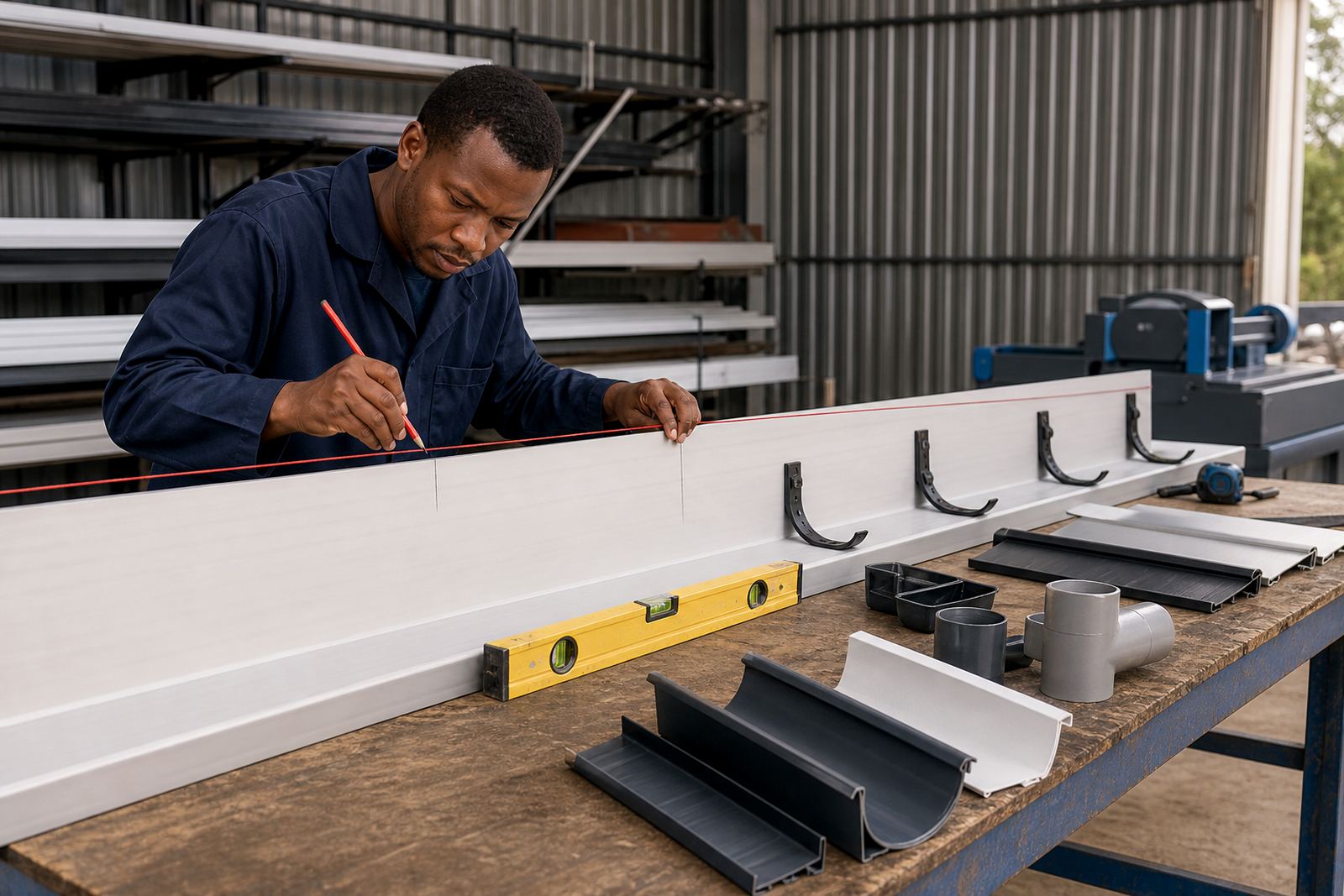
Careful measuring on site keeps the order true to the building. On new builds, check the roof perimeter, outlet positions, fascia lengths, corner details, and where downpipes can drop neatly to ground level or into a stormwater connection where the plumbing layout allows it. Builders usually get the best outcome when the roofline schedule is prepared with the roof plan, not after the finishes are complete.
- Measure each roof face separately, especially where the house has returns, dormers or changing rooflines.
- Confirm gutter width, fascia board size and downpipe diameter to suit the roof area and rainfall exposure.
- Mark bracket points before cladding or painting so fixings do not clash with other finishes.
- Check where leaf guards, stop ends and unions are needed at corners and longer runs.
It helps to keep a simple materials list for each elevation. That list should include gutters, fascia boards, downpipes, brackets, joiners, outlets, straps, elbows and splash points where required.
What to order for each stage of the build
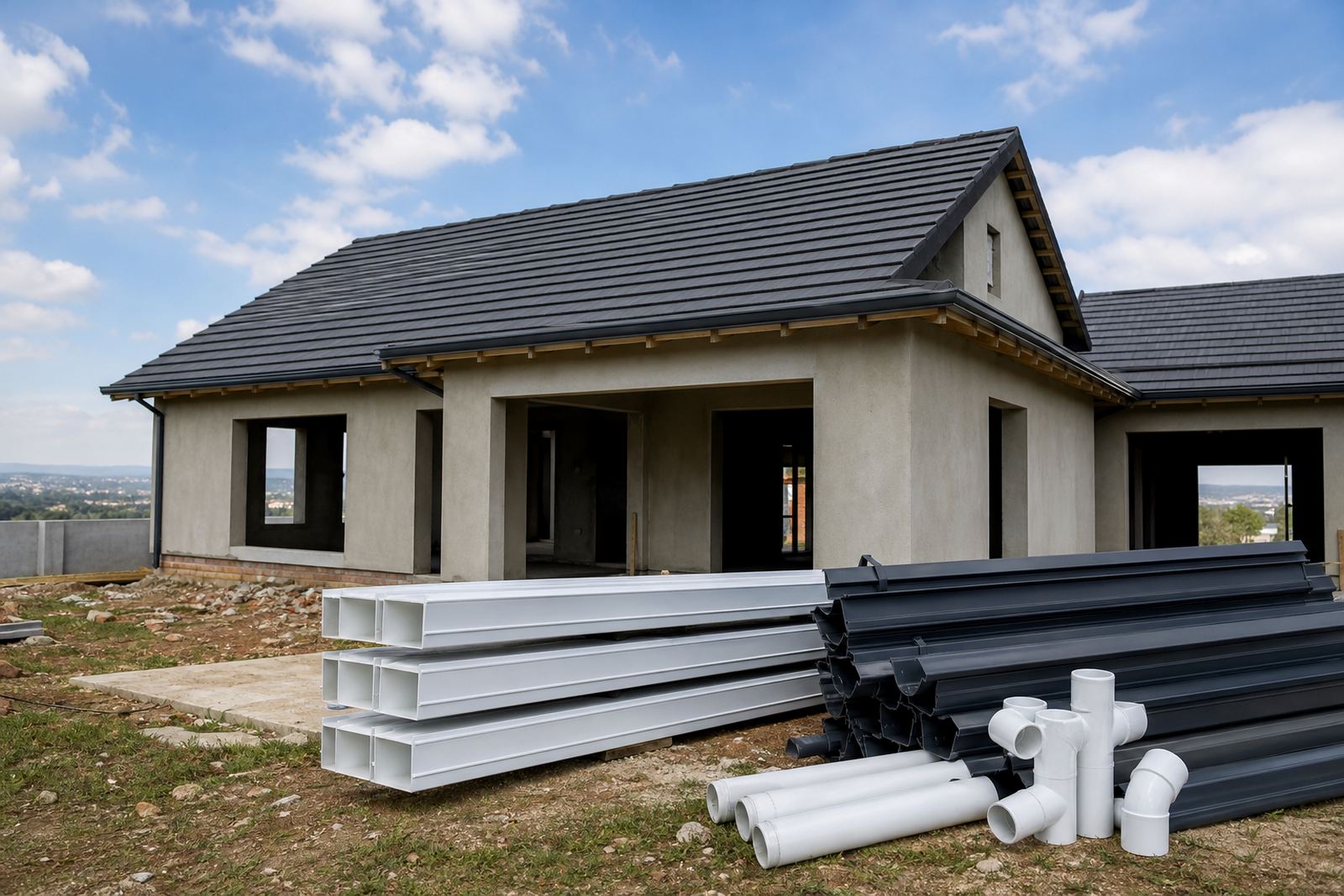
Roofline products do not all need to arrive at once. On many new builds, fascia boards are fitted first, then gutters once the roof edge and wall finish are ready, and downpipes after the outlet positions are confirmed. Ordering in stages can reduce damage from other trades moving ladders, scaffolding and materials around the site.
- Early stage: fascia boards, fixings and layout checks for roof edges.
- Roof completion stage: gutters, outlet pieces, brackets and joiners.
- Finishing stage: downpipes, elbows, clips and final alignment to drainage points.
- Close-out stage: maintenance access checks, leak testing and touch-up work where needed.
For homes in Johannesburg, Pretoria, Durban, Cape Town and Polokwane, conditions vary quite a bit. Coastal air, hard inland sun and summer downpours all influence how the roofline is fixed and how often it should be checked after completion.
Keeping the roofline neat with the rest of the exterior
Fascia boards do more than hide the roof edge. They finish the line of the building, support the gutter system and help the roof edge look square and tidy. On new builds, it is worth checking that board joints line up well with corners, parapets and changes in wall finish. Poor alignment shows up quickly once paint and paving are complete.
Downpipes should be placed where they do not interfere with pedestrian movement, garage access or planned landscaping. On tighter stands, a downpipe that is awkwardly placed can create splashback, staining or a trip risk. Builders often find it useful to confirm positions before the final wall finish goes on, so the pipework can be integrated properly.
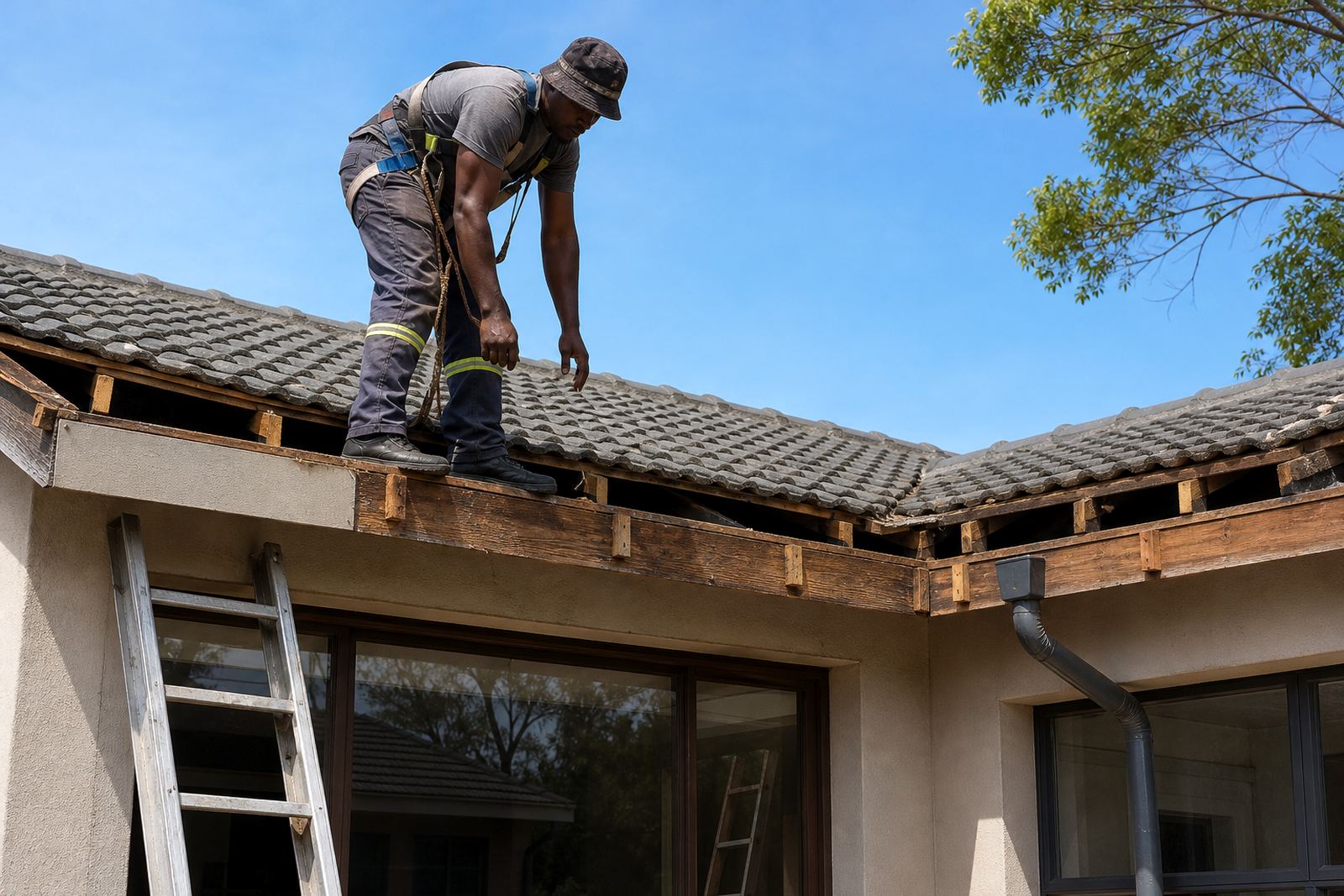
Where roofs are steep or access is limited, roofing work at height must be done safely by competent people with the right equipment. That includes safe ladders, fall protection where needed and controlled movement around fresh roof finishes.
After install checks before handover
A new build roofline should be checked while there is still easy access to the roof edge and gutters. A careful close-out inspection can pick up loose brackets, misaligned joins, poorly seated outlets or sections where the fall is too flat. Small issues are simpler to correct before the site is fully handed over.
- Run water through each gutter line and watch for ponding at joins and corners.
- Check that downpipes discharge cleanly and do not spill against the wall.
- Inspect bracket spacing, end caps and joint seals for movement.
- Make sure fascia boards are secure, straight and free of gaps at corners.
- Confirm that access for future maintenance has been considered, including safe ladder positions.
If the build includes a perimeter wall, paving or soakaway work, the roofline and drainage plan should work together. A gutter that is sound but discharges to the wrong point can still create wet patches, erosion or staining later on.
What homeowners should keep an eye on after handover
Once the house is occupied, roofline maintenance is mostly about keeping water moving and fixing small faults early. Leaves, roof dust and windblown dirt can collect in gutters, especially on sites near trees or in coastal areas where debris sticks after rain. A quick seasonal check is usually enough on many homes, but more frequent visits may be needed where storms are heavy or the roof has nearby overhanging branches.
Look out for water running over the front of the gutter, rust marks on fixings, loose downpipe straps or staining on walls below outlets. If any section starts sagging, the brackets may need attention or the gutter may be holding water where the fall is wrong. Maintenance visits are best done before the wet season gets going, not after the first blockage shows up.
For builders handing over multiple units, a short roofline care note can save a lot of follow-up work. It should show where the access points are, which sides need regular cleaning and who to contact if a leak appears near a joint or outlet.
How Plasteel fits into a new build programme
Plasteel works with builders and homeowners on roofline supply, measuring, material takeoff and installation coordination for new builds. From Kya Sand, Randburg, supply and delivery are handled across Johannesburg, Pretoria, Durban, Cape Town and Polokwane, with support for Randburg, Midrand and Roodepoort projects as well. The aim is to keep gutters, downpipes and fascia boards matched to the building layout and the site programme.
For new developments, that usually means confirming sizes, outlet locations and access before production or delivery is arranged. It also means keeping the roofline practical for later maintenance, not just tidy on day one. That is the difference between a rushed finish and a roof edge that stays serviceable.