Salt Air Changes the Job
Homes and buildings near the sea face more than just rainwater. Fine salt, strong wind and regular moisture can shorten the life of roofline parts if the material choice and fixing method are not right. In places like Durban and the Cape coast, roof edges also dry out more slowly, so water can sit in joints and around brackets for longer than it does inland.
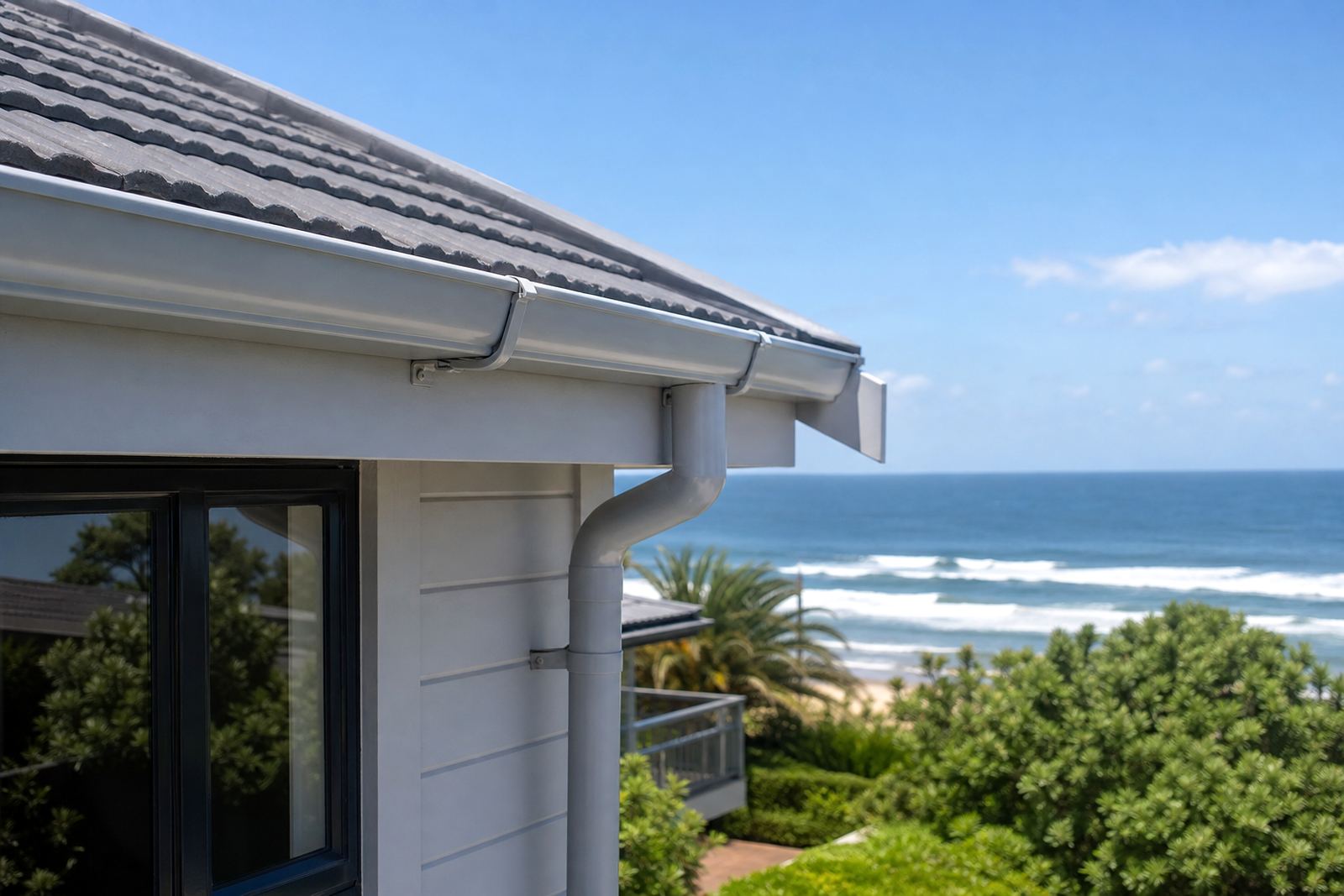
For a coastal site, look closely at the whole roof edge, not only the gutter itself. Fascia boards need to stay straight, downpipes need secure support, and the flow path must take water away from walls, paving and boundary lines. If the building is exposed to onshore wind, choose parts that can cope with movement and regular cleaning.
- Check whether the roof edge is exposed to direct sea spray
- Look for shaded sides where damp may linger after rain
- Note if trees drop leaves, seeds or sand into the gutter run
- Plan for easier access for cleaning and inspection
Sizing the System for Real Rainfall
Coastal rain can arrive fast and hard, so size matters. A gutter that is too small for the roof area will overflow at the corners and near outlets, especially where valleys feed extra water into one section. Downpipes must also be matched to the roof area and the number of outlets, otherwise water backs up and stains the fascia or wall below.
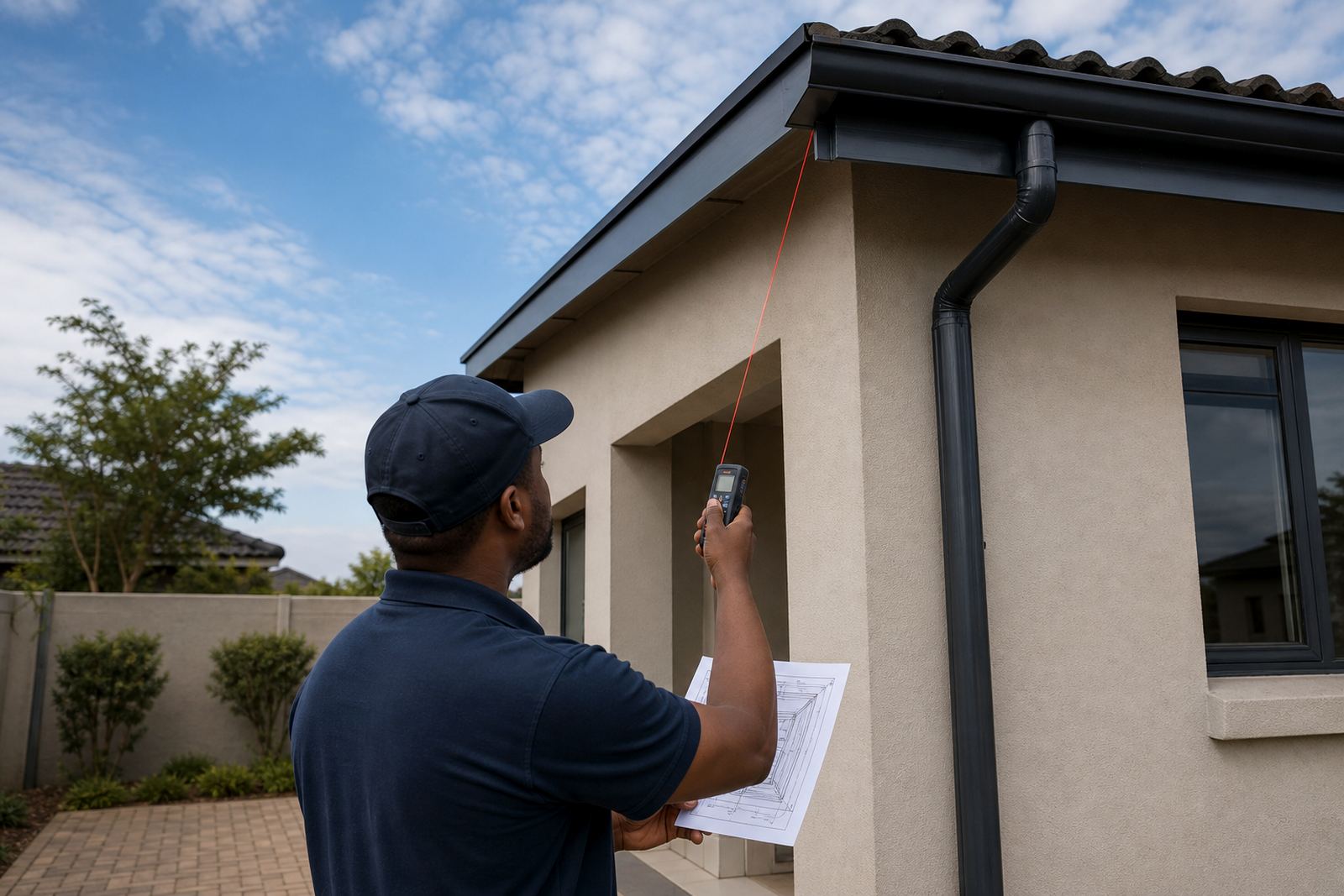
General practice is to confirm the roof span, the catchment area and the fall before ordering materials. A neat-looking run means little if the outlet point is poorly placed. On larger roofs, it is often better to use more than one downpipe rather than stretching one long run and expecting it to cope with every storm.
- Measure the roof edge lengths that need guttering
- Check the position of valleys, parapets and roof changes
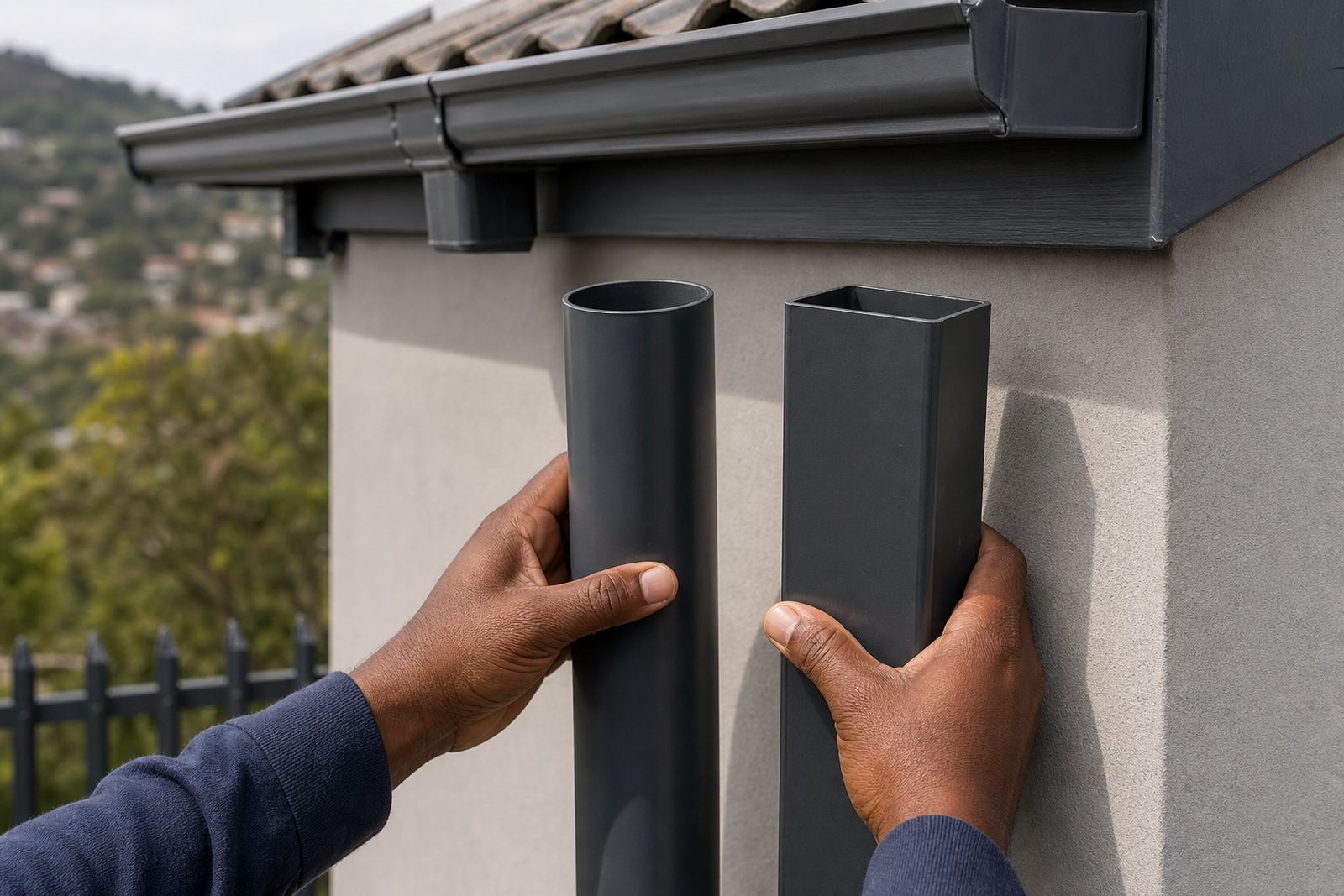
- Confirm the number and size of downpipes needed
- Plan outlet points so water moves away from splash zones
Falls, Brackets and the Shape of the Run
Water only moves properly when the gutter has the right fall. Too little fall leaves standing water and silt build-up, while too much can make the run look uneven and push water too quickly to one outlet. For coastal work, steady flow is important because salt and dirt settle where water sits still.
Bracket spacing also matters. A gutter that is too lightly supported can sag over time, especially under heavy rain or where wind movement is constant. Fascia boards must be straight enough to carry the line cleanly, and fixings should hold firm in moist conditions. Roofline work at height must be done safely by competent people with the right access equipment and fall protection.
- Keep the fall consistent along the full run
- Use brackets at regular intervals, tighter on long spans
- Allow for corners, joins and outlet positions
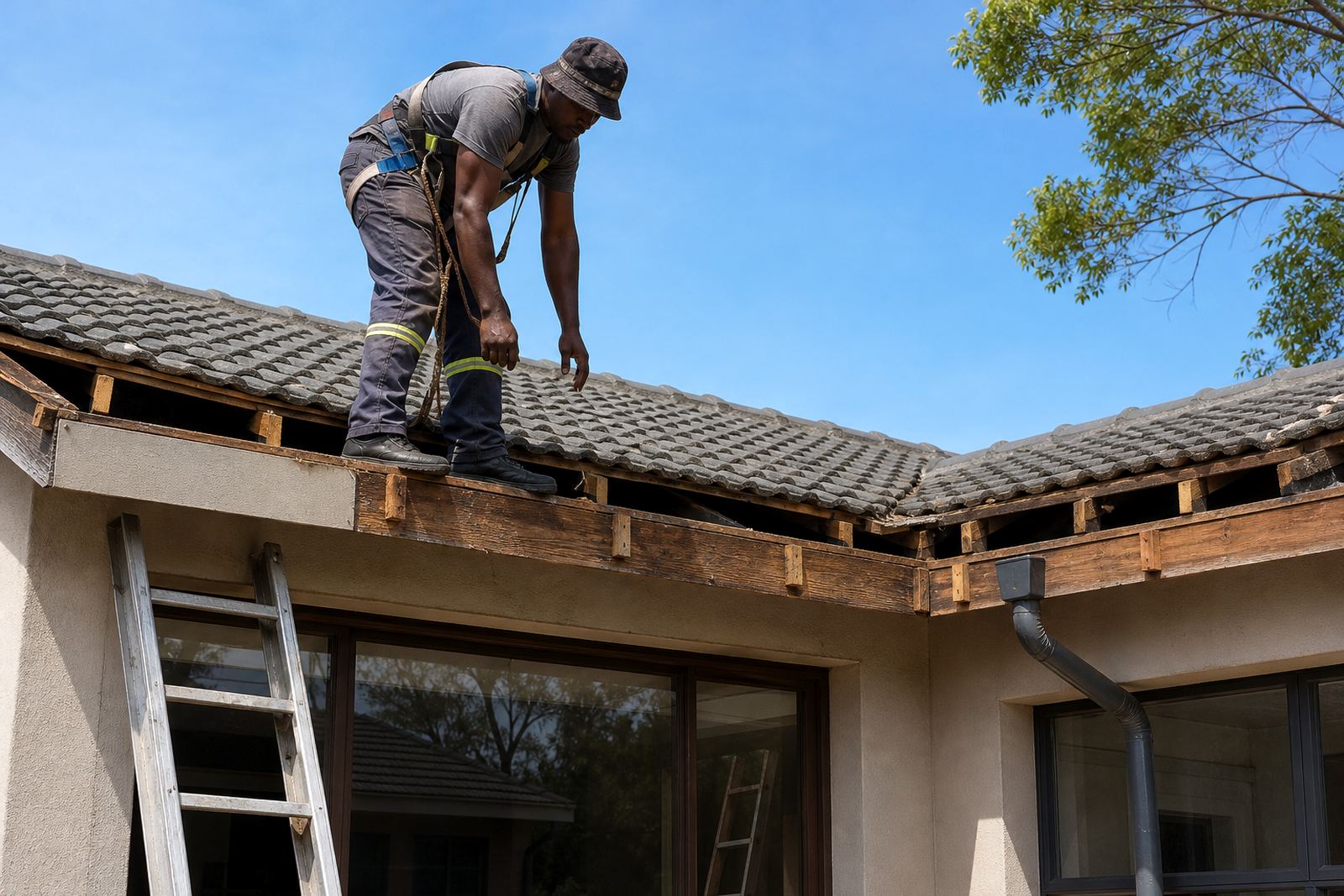
- Check that fascia boards are sound before fixing new parts
What Coastal Homeowners Should Inspect Before Buying
Before choosing materials, inspect the roof edge from ground level and, where safe and allowed, from a proper access platform. Look for rust on old metal parts, cracks in boards, sagging sections and evidence of staining below joints. If the existing system leaks only in heavy rain, the issue may be flow, not just a damaged joint.
Builders working on a new home or a roofline replacement should also consider how the site is used. A home with shaded walls and narrow side passages may need a different downpipe arrangement from a commercial building with open access. In wet coastal towns, easy access for cleaning is just as important as the material finish.
- Inspect corners where blockages often start
- Check whether water marks show past overflow
- Look for loose brackets or pulled fixings
- See if downpipes discharge into a safe drainage point
Routine Care That Keeps the Line Clear
Good roofline care is not complicated, but it must be regular. Leaves, sand and bird debris build up faster near the coast and can block outlets before the owner notices a problem. A simple cleaning routine helps the gutter move water cleanly and reduces pressure on the fascia and fixings.
Maintenance visits should focus on the points where trouble usually starts. Clean the gutter, flush the outlet, check the fall, then inspect the brackets and downpipe joints. If the property is close to the sea, rinse salt deposits from accessible surfaces where practical, especially after windy weather. Small problems are easier to fix before they spread into wall damp or timber damage.
- Clear leaves and debris from gutter channels
- Flush outlets and downpipes to confirm free flow
- Check seal points, joints and end caps
- Look for movement in brackets after strong wind
A Buyer Checklist for Coastal Rooflines
Use a simple checklist before ordering materials or starting installation. This helps builders, homeowners and property managers compare what the building needs against what the site will actually face. A well planned roofline makes future maintenance easier and lowers the chance of repeat leaks.
For coastal buying, the best choice is the one that suits the roof shape, exposure and access conditions. It should also fit the rest of the roof edge neatly so the fascia line stays straight and the downpipes are placed where water can leave the site safely. In dense suburbs and mixed-use areas, pay attention to boundary lines and where runoff is directed.
- Roof area measured and outlet points noted
- Exposure to sea air, wind and shade checked
- Falls and bracket spacing planned
- Downpipe route and discharge point confirmed
- Access for cleaning and future maintenance considered
When to Bring in Site Help
Some jobs are straightforward, but others need site measuring, material takeoff and proper installation planning. A long roof run, a high building, or a roof with several changes in level can make the difference between a tidy system and one that overflows in the first heavy storm. Builders often need support on quantities and layout, while homeowners may want practical advice on maintenance and replacement choices.
Plasteel supports roofline supply and installation needs from Kya Sand, Randburg across Johannesburg, Pretoria, Durban, Cape Town and Polokwane. For coastal work, the key is to match the materials and layout to the conditions on site, then keep the system clean and properly supported over time.