
Start With the Roof Plan, Not the Ladder
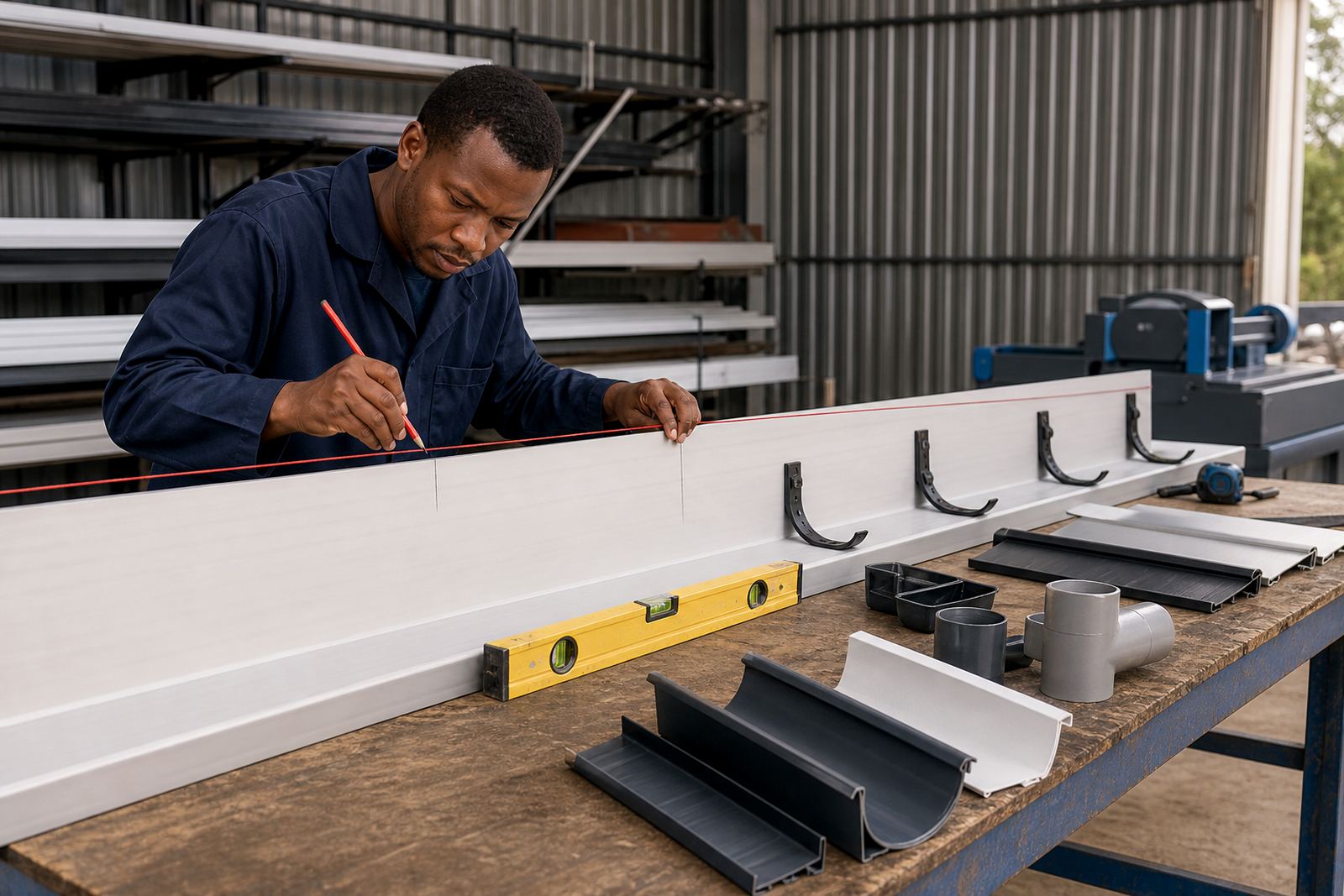
Before any gutter work is priced or ordered, measure the roof edge properly. The total gutter run, the number of corners, roof pitch and the distance from one downpipe point to the next all influence how many outlets are needed. A long eaves line with one outlet at the far end will hold water for too long during heavy rain, while a short run with multiple outlets may be unnecessary and untidy.
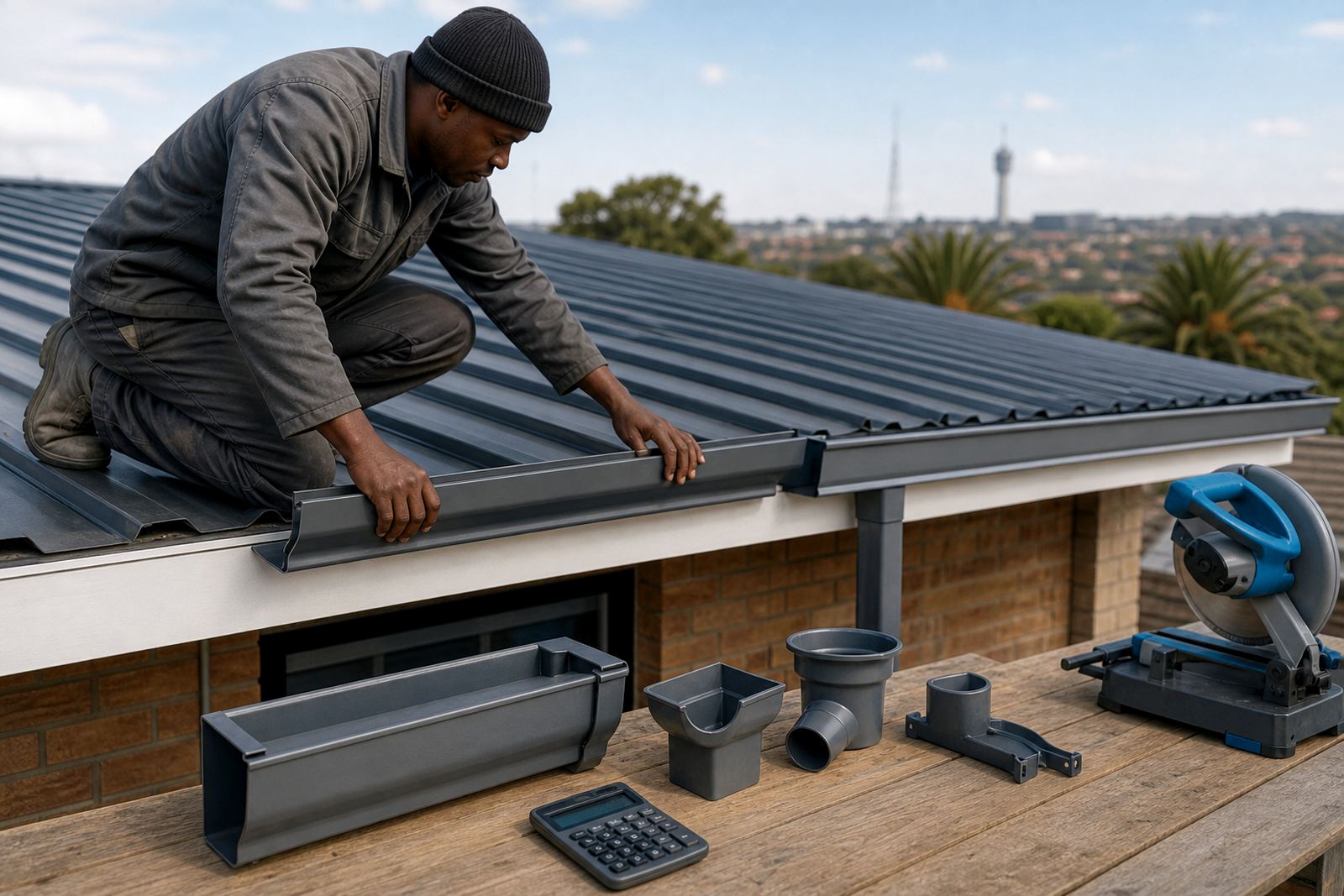
For builders in Johannesburg, Pretoria, Durban, Cape Town and Polokwane, the same roof shape can behave differently because rainfall intensity changes from area to area. Coastal moisture in Durban and the Cape can also push corrosion and maintenance needs, so outlet layout should be planned with the full exposure in mind. Roofline work at height must be handled by competent people using the correct access equipment and fall protection.
- Measure each gutter run separately
- Mark all corners, joins and roof valleys
- Note where rainwater can safely discharge
- Check for obstructions such as walls, paving or boundary lines
What Actually Drives Outlet Numbers
There is no single outlet count that suits every roof. The main factors are catchment size, gutter capacity, run length and the local rainfall pattern. A bigger roof collects more water, and a longer run gives water more time to build up before it reaches a discharge point. If the roof has several valleys or steep faces feeding one section of gutter, that section may need extra outlets or a larger gutter profile.
As a guide, short residential runs may work with one outlet per section, but longer commercial eaves lines often need more frequent discharge points. The answer also depends on downpipe size. A narrow downpipe can become the bottleneck even if the gutter is large enough, so outlet count should be matched to the full system, not just the fascia line.
- Roof area and slope
- Length of each gutter run
- Rainfall intensity in the town or coastal zone
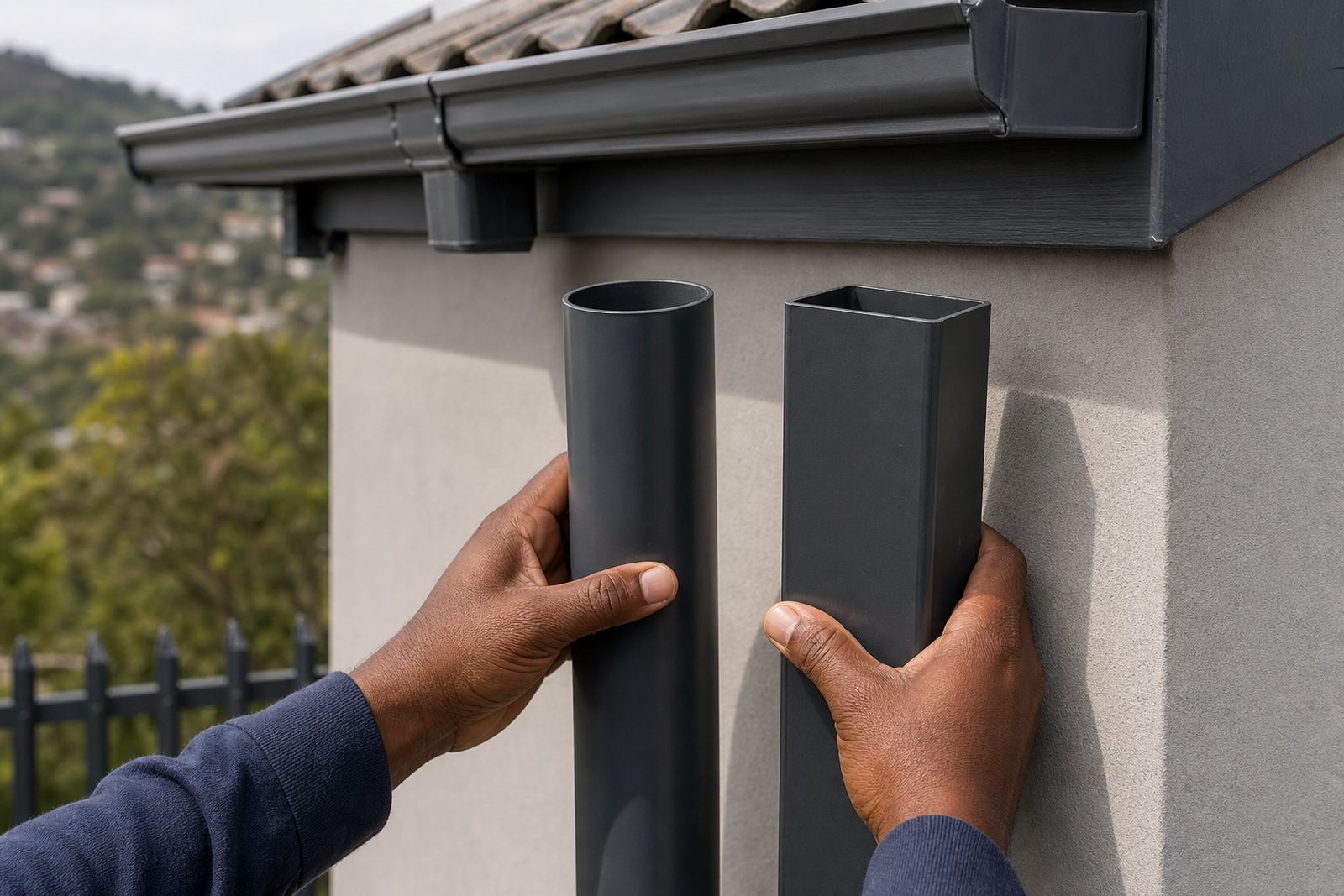
- Downpipe diameter and route
- Overflow risk near doors, garages and walkways
How to Space Outlets on Real Roofs
Outlets are usually positioned so water does not have to travel too far along the gutter before discharge. On a level run, slight fall is still needed to move water toward the outlet. On a long run, it is often better to split the length into two or more drainage sections instead of trying to force all water to one end. That keeps the gutter from carrying standing water and reduces the chance of leaf build-up settling in the low points.
Plasteel gutter, fascia and downpipe work is generally paired to the roof geometry, not forced to one standard layout. Fascia boards need to stay straight and properly fixed so brackets and outlets remain aligned. A sloppy fascia line can lead to poor falls, loose brackets and leaks at the outlet cut-out. In humid coastal conditions, clean fixing and correct slope matter even more because water and salt can work into weak joints.
Where water has to cross a long distance, use intermediate discharge points rather than overloading one outlet. If the building has a parapet, boundary wall or limited discharge side, outlet positions may need to be adjusted to suit municipal drainage practice and site conditions.
A Practical Check Before You Order Materials
Good estimating saves time on site and avoids shortfall or waste. Before materials are cut or supplied, confirm the outlet count against the roof plan and the chosen gutter size. Builders often check the run length and forget the corners, but every corner or change in direction can affect the flow path and the final outlet position. Fascia boards, brackets and downpipe lengths should be matched to the same layout so the system hangs true.
For homeowner advice and builder support, it helps to work from a simple checklist. This is especially useful on mixed roof lines where one section drains quickly and another feeds more slowly. Maintenance access also matters, because outlets need to be reachable for cleaning and inspection after heavy weather or seasonal leaf drop.
- Confirm all gutter runs and their measured lengths
- Check the number of roof faces feeding each section
- Match outlet positions to downpipe routes
- Allow for clips, brackets and joins
- Plan access for future maintenance visits
Maintenance Signs That the Outlet Count Is Not Right
If water overflows at the corners, drips behind the fascia or leaves marks below the gutter line, the system may need another outlet or a different slope. A gutter that stays full after rain is another warning sign. In some cases the issue is not the outlet count but debris, a loose bracket or a downpipe that is too small for the roof area. That is why leak checks and maintenance visits are useful, especially after storms.
Common warning signs include splash marks on walls, damp patches near entries and water running where it should not after a short downpour. In windy conditions, water can also drive back under weak joints if the layout is not sound. For residential and commercial properties alike, regular inspection helps to catch these problems before they damage the roof edge or fascia.
- Overflow during moderate rain
- Water stains on walls or paving
- Standing water in the gutter after rain
- Loose brackets or sagging sections
- Debris collecting around the outlet
When Site Measuring Makes the Difference
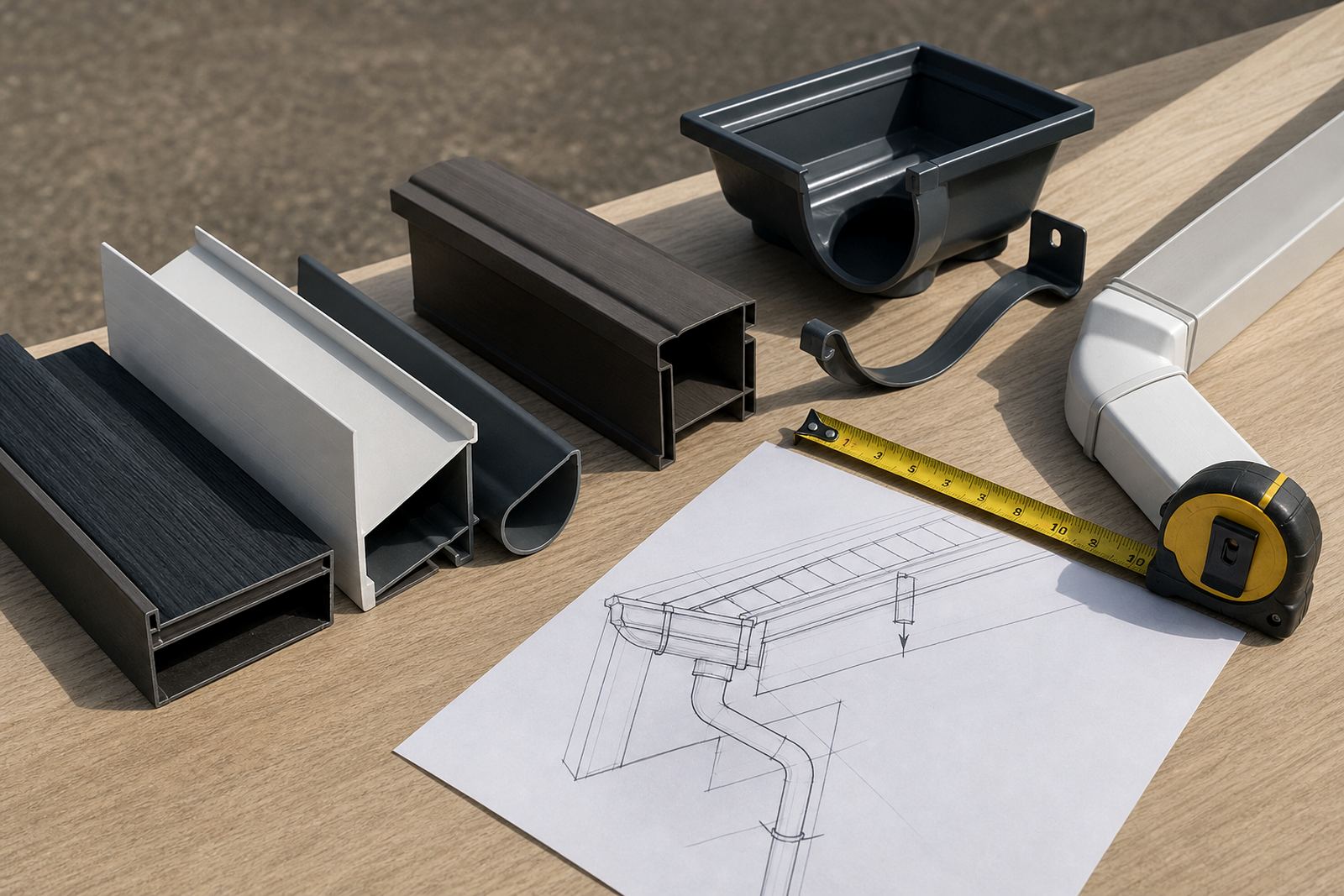
Accurate outlet planning starts with site measuring and material takeoff. A roof that looks straightforward from the ground can have hidden slope changes, awkward parapets or valley discharge points that affect the final number of outlets. On bigger developments, it is worth checking the full roofline before supply so the fascia boards, gutters and downpipes arrive in the correct lengths and quantities.
Plasteel supports builders and homeowners across Kya Sand, Randburg and beyond with product supply, delivery coordination and practical roofline guidance. The aim is to get the drainage layout right before work begins, because outlet spacing, bracket placement and fall all work together. If the system is designed well, rainwater moves cleanly and the fascia stays drier, which helps the whole roof edge last longer.