How the gutter is held changes the whole roofline
On most jobs the gutter is only as good as the support behind it. The bracket must suit the fascia, the roof pitch, the gutter size and the way water is expected to move towards the outlets. If the fixing points are wrong, the gutter can sag, twist or hold water where it should be running free.
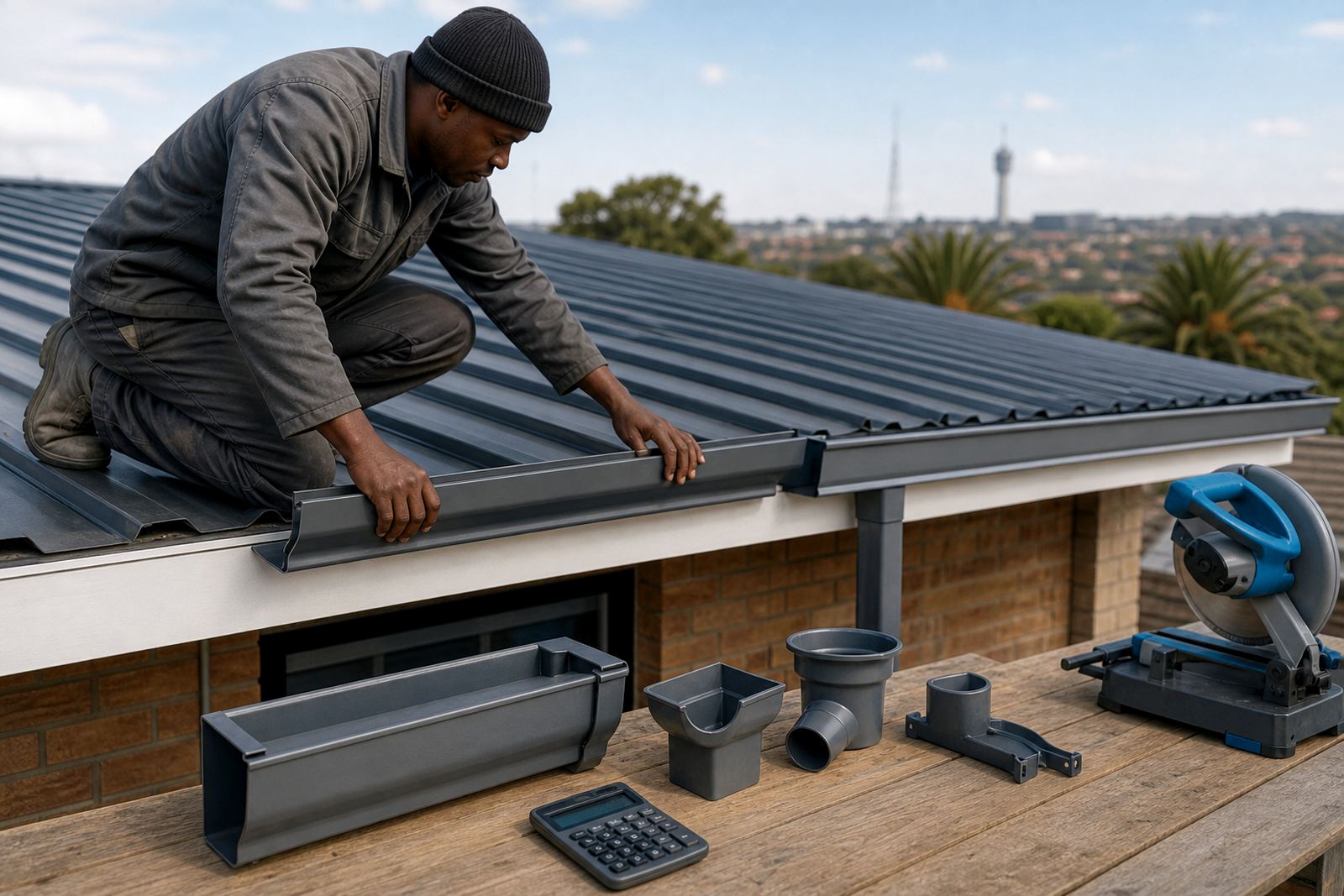
For a clean run, the installer should check the fascia board condition, the rafter positions and the fall before selecting the bracket type. On taller buildings or steep roofs, that work must be handled safely by competent people with proper access gear and fall protection.
Internal brackets for tucked-away fixing points
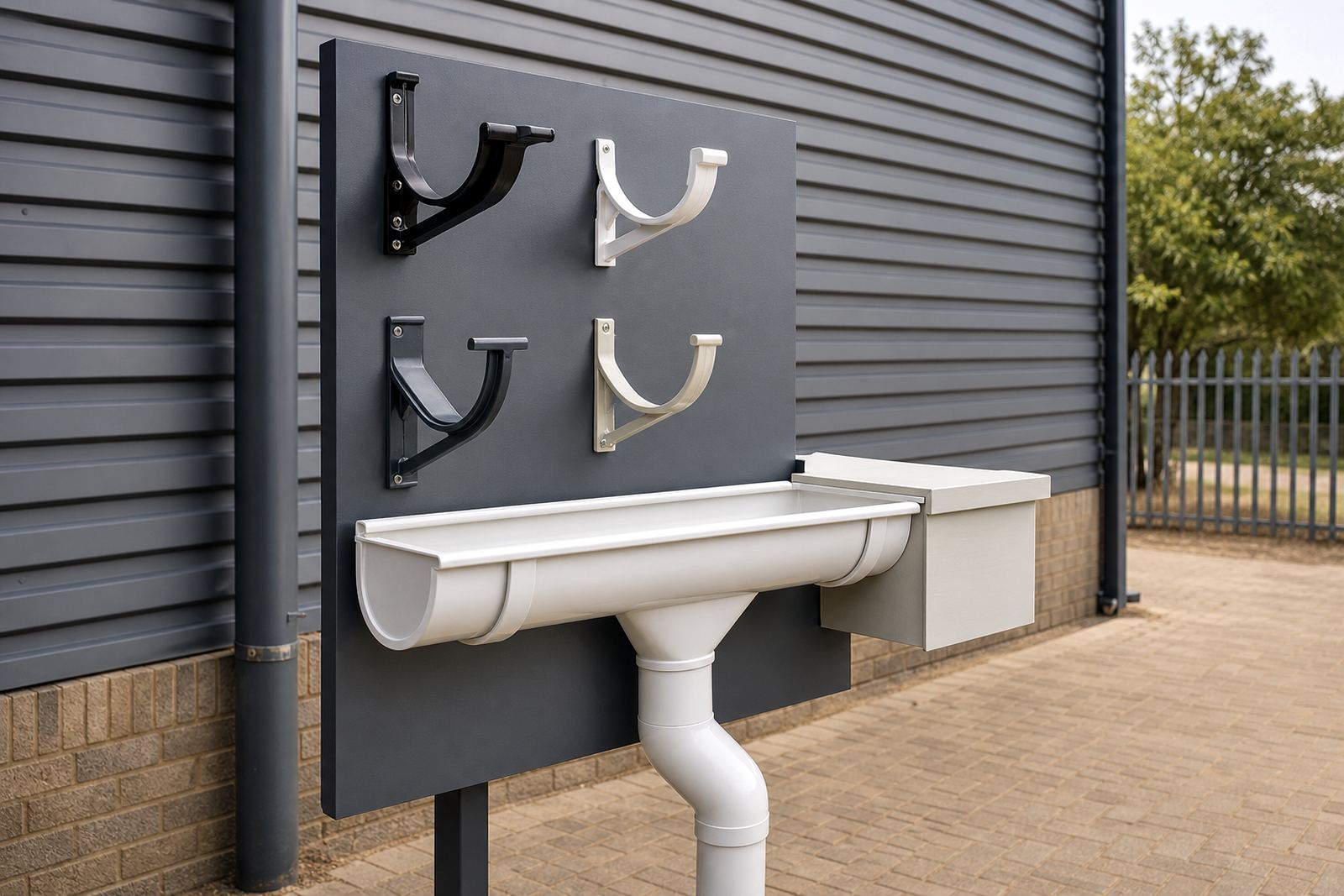
Internal brackets sit inside the gutter profile and are often used where a neat front edge is preferred. They work well on straight runs and on many residential rooflines where the gutter is meant to sit close to the board without drawing attention to the fixing points.
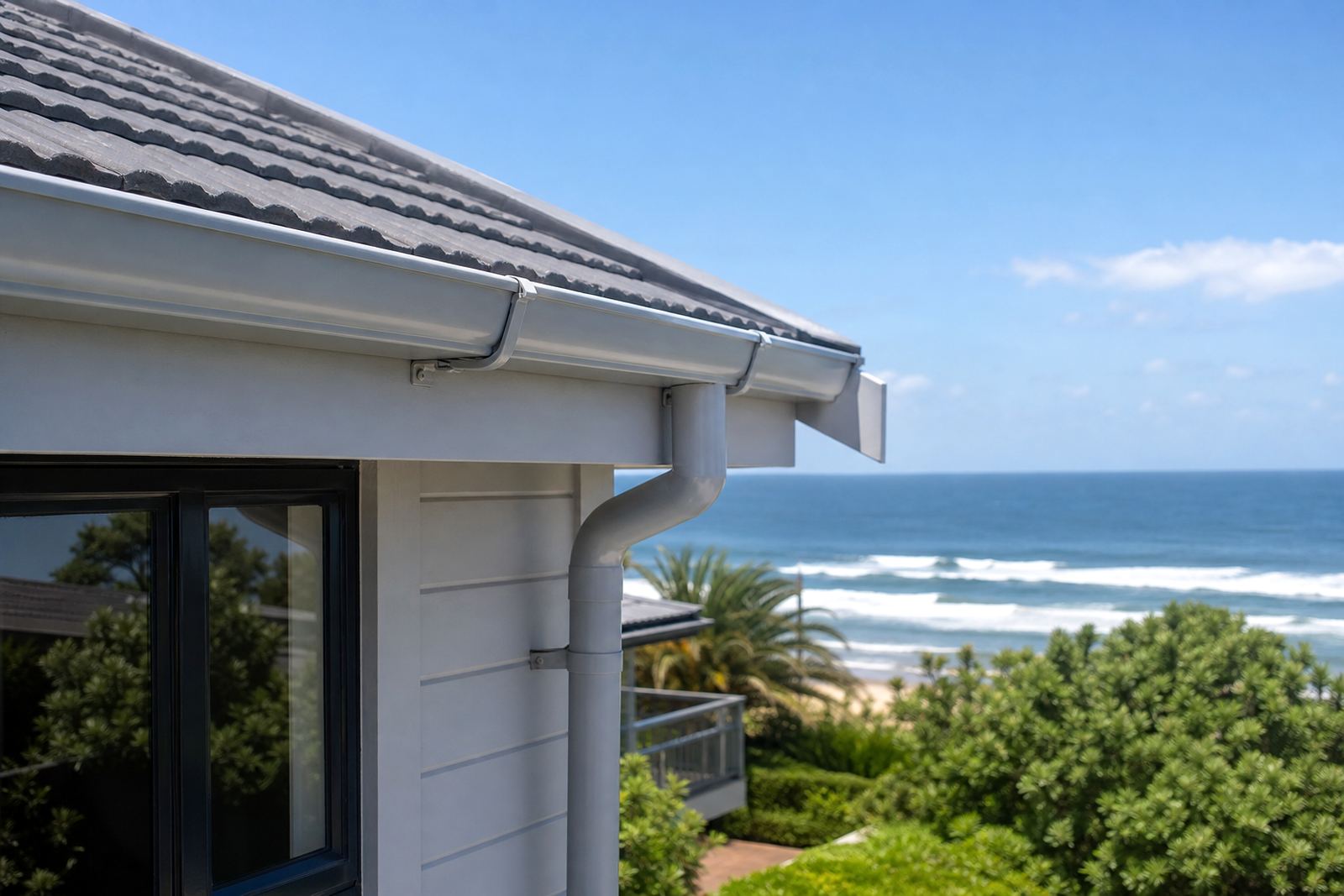
These brackets are useful when the fascia line is even and the installer wants regular support along the run. They are usually spaced according to gutter size, local exposure and the weight the line will carry during heavy rain. In windy coastal areas like Durban or Cape Town, tighter spacing can help keep the run steady.
- Best for neat appearance on standard straight runs
- Works well where the fascia is sound and level
- Needs consistent spacing to avoid sagging between fixings
External brackets when the front edge needs extra support
External brackets fix to the outside of the gutter and give strong visible support. They suit situations where the gutter line needs a bit more holding power, such as longer runs, heavier rainfall areas, or older roof edges that need firmer support near the face of the gutter.
They also make inspection easier because the fixing points are visible. That helps on maintenance visits where a loose bracket, bent arm or blocked section must be spotted quickly. If the gutter is carrying debris from nearby trees, external support can be a practical choice for keeping the line stable.
When matching an external bracket, the installer should check the gutter profile depth, the board thickness and the fall to the outlet. A bracket that sits too low or too high can throw out the line and make joint sealing harder.
Rafter brackets for roofs without a reliable fascia board
Rafter brackets are fixed back to the rafter ends or other structural points instead of relying only on the fascia board. They are useful where the board is weak, damaged by moisture or simply not the right support for the gutter run. In roof replacement work, they often solve alignment problems that show up after old timber has moved.
Because the fixing point is structural, the installer must get the spacing and alignment right from the start. A bracket line that is off by even a little can create a wavy gutter run and uneven falls. On corrugated or tiled roofs, careful marking helps the gutter sit parallel to the roof edge.
- Useful where fascia boards are worn or unstable
- Helps carry the gutter from the roof structure itself
- Needs accurate marking before drilling or fastening
Rise-and-fall brackets for awkward levels and special fixes
Rise-and-fall brackets are adjustable, so they can lift or lower the gutter line to meet a tricky roof edge or to create the right fall towards a downpipe. They are handy where the roofline is uneven, where old fixing holes no longer line up, or where a repair needs the new gutter to land at a different height from the old one.
These brackets need careful setting because the height adjustment changes the flow line. If the fall is too flat, water can sit in the gutter. If it is too steep, water can rush too hard and splash over in heavy rain. The aim is a controlled slope that drains cleanly without leaving ponding points.
For most domestic work, the installer will check the outlet position first, then set the bracket heights along the run. That makes it easier to keep the gutter straight while still giving the water a clear path.
Quick bracket check before materials are supplied
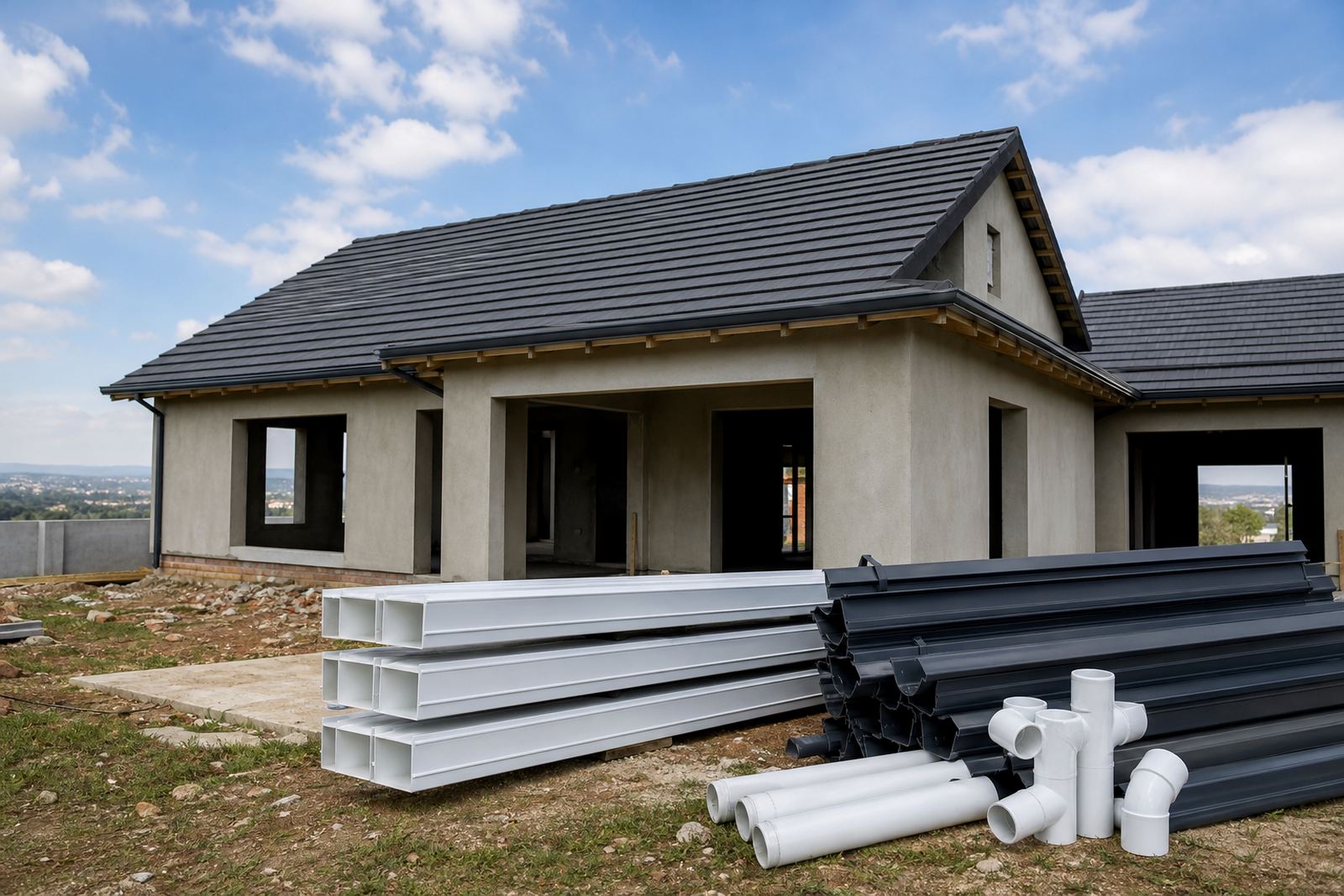
A good material takeoff should include the bracket type, spacing, gutter size, downpipe position and fascia condition. That saves time on site and reduces the chance of missing fittings. It also helps builders and homeowners compare options before the first length is cut.
- Measure the roof edge and count the support points
- Check whether the fascia is straight, rotten or already painted over
- Confirm where the downpipe will land and how far the fall must travel
- Match bracket depth to the gutter profile being used
- Allow for coastal humidity, heat and movement in the materials
On coastal properties, fasteners and support points need regular inspection because salt air and moisture can work on metal fixings over time. In Gauteng, sudden storms can test the spacing and the fall, so it is worth checking that brackets are still holding the line after heavy rain.
Keep the bracket line tidy after installation
Once the gutter is up, maintenance is mostly about keeping the line free of leaves, checking for loose screws and making sure the fall still heads towards the outlet. A small shift at one bracket can cause water to sit in the middle of the run, especially on long sections.
For fascia and gutter work, a simple seasonal check is enough on many homes: look for staining, rust on fixings, lifted ends and movement at joints. On commercial roofs and long runs, more regular inspection makes sense. If the gutter has been hit by ladders, building work or strong wind, the bracket line should be checked again before the next big rain.
Plasteel supplies plastic-steel composite gutter, downpipe and fascia materials for builders and homeowners across Johannesburg, Pretoria, Durban, Cape Town and Polokwane, with support from Kya Sand, Randburg and surrounding supply areas.