
Start With the Roof Before You Pick the Profile
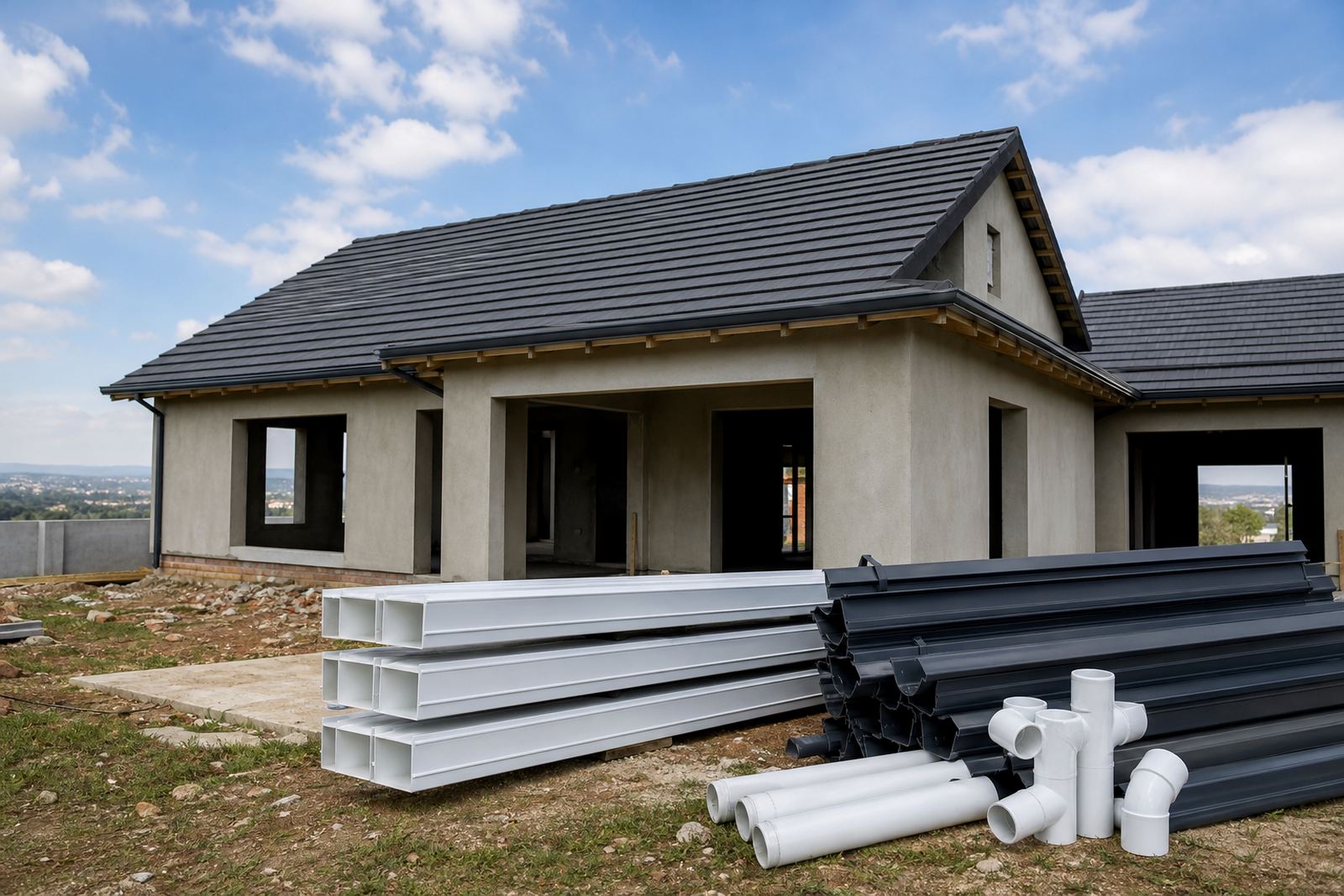
Roof pitch, roof area and rainfall all affect the profile you should choose. A small patio roof in Randburg does not ask the same thing of a gutter as a long commercial eave in Durban, where short heavy downpours can push a system hard. The correct choice is not only about appearance, it is also about how the water behaves once it leaves the roof covering.
As a general rule, wider gutters and larger downpipes are better for long roof runs, steep roofs and areas with high rainfall. Smaller profiles can suit porches, lean-to roofs and neat residential trims, but they need proper falls and clean outlets. Where the roofline is long or broken into several sections, it is worth planning the discharge points before the profile is fixed.
- Check roof length from one outlet to the next.
- Look at the roof pitch and how quickly water runs off.
- Allow for heavy rain, leaves and dust build-up.
- Match the gutter profile to the downpipe size and position.
Half Round Profiles and Why They Stay Popular
Half round gutters have a curved bowl shape and a clean, familiar look. They suit many homes because they sit softly against fascia boards and do not draw too much attention from the roofline. The curved form also helps water move smoothly, which can reduce debris sitting in corners.
Cleaning is usually straightforward because there are no sharp internal angles for dirt to settle in. In coastal towns like Cape Town or Durban, where wind-blown grit and organic debris can mix with salt in the air, that simple shape can help maintenance. Half round profiles still need correct falls and well placed brackets, because a neat profile will not fix poor slope or undersized outlets.
- Good for homes that need a balanced, classic appearance.
- Useful where regular cleaning is part of the maintenance plan.
- Works well with standard fascia details and most roof styles.
- Needs proper support on long runs to prevent sagging.
Square Line Profiles for a Crisp Roof Edge
Square line gutters give a sharper, more modern edge. They often suit newer homes, office units and light industrial buildings where straight lines matter. The flatter sides can make the roof edge look tidy and strong, especially when paired with matching fascia boards.
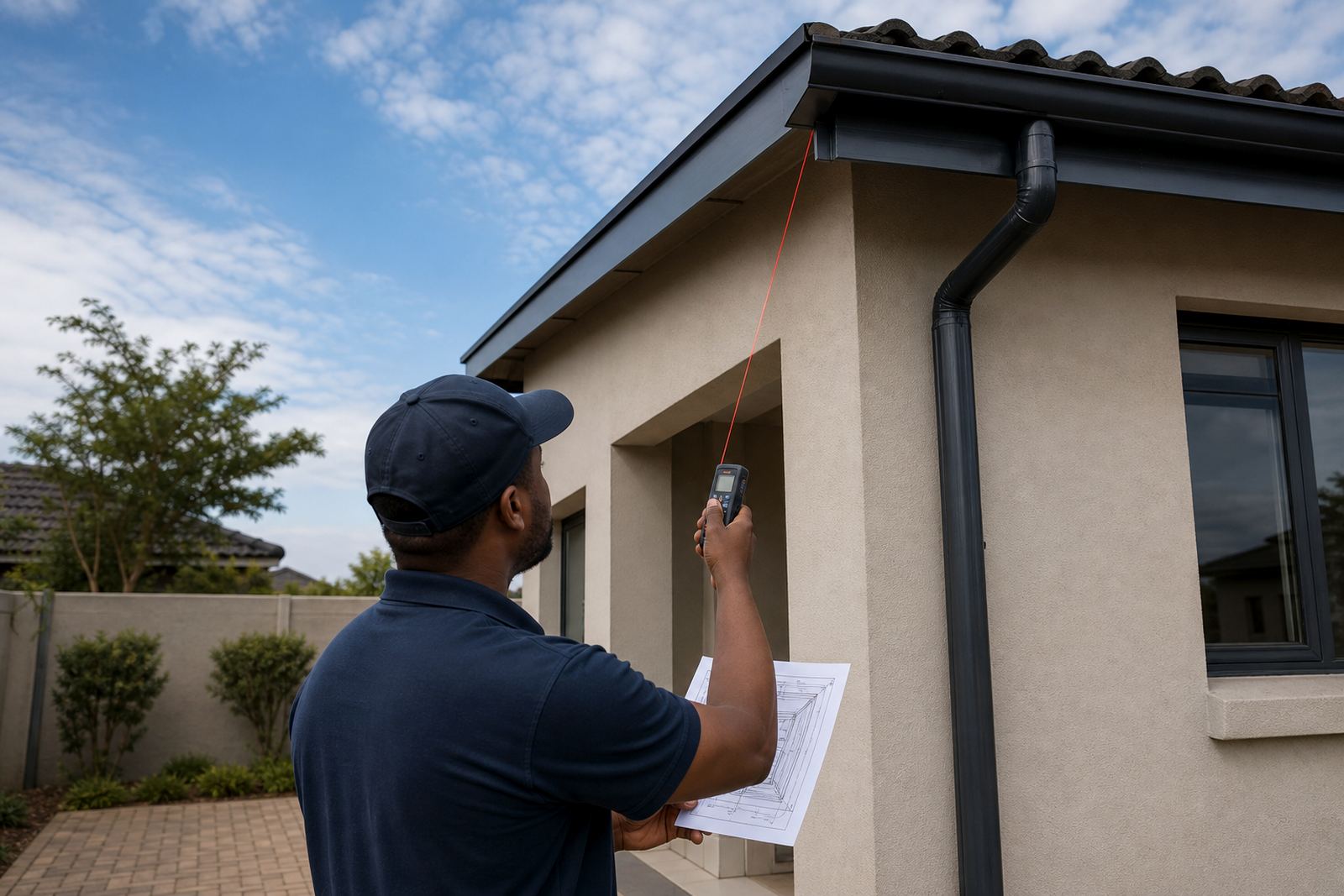
From a practical side, square line profiles can carry a useful volume of water, but the corners need attention. Debris can settle in the base if the gutter has no fall or if outlet placement is poor. For that reason, builders should be precise with measuring and takeoff before ordering materials. A square profile may look minimal, but it still needs the same discipline on brackets, joins and outlet spacing as any other type.
- Fits contemporary homes and commercial facades.
- Can handle good flow when the size is matched correctly.
- Needs careful cleaning because corners can collect dirt.
- Best fitted with consistent spacing and accurate falls.
Box and Concealed Looks for Bigger Water Loads
Box profiles are often chosen where water carrying needs are higher or where the gutter is meant to sit neatly behind a fascia line. These profiles can suit long roof edges, larger homes and some commercial projects where the look must stay tidy while the system still moves a fair amount of water. The shape is practical, but it must be sized properly to avoid overflow at peak rain.
In places with strong summer storms, such as Pretoria and parts of Johannesburg, a box profile can be a sensible option when the roof area is substantial. The key is not only the width of the gutter, but also the outlet size, the number of downpipes and the fall along the run. A bigger profile will still struggle if the water has to travel too far before reaching an outlet.
- Suitable for larger roof areas and heavier rainfall events.
- Good where a clean fascia line is important.
- Needs enough outlet points so water does not back up.
- Should be checked against roof size, not only looks.
Fascia and Bracket Details That Keep the Line True
The gutter profile works together with the fascia board and brackets. If the fascia is straight and fixed firmly, the gutter sits properly and the fall can be set accurately. If the support line is uneven, even a good profile may hold water in low points or pull away over time. That is why replacement work at roof edge level should be handled by competent people working safely at height.
Bracket spacing matters as much as the shape. Long runs need support close enough to prevent bowing, especially where the gutter will carry water over a wide section. The profile also needs enough depth for the chosen outlet and downpipe arrangement. When gutters are fitted on older homes, a replacement board can help restore the line before new materials are installed.
- Use straight, secure fascia support before fitting the gutter.
- Keep bracket spacing consistent along the run.
- Check the outlet position before final fixing.
- Confirm that corners and joins are sealed and aligned.
A Practical Way to Choose the Right Shape
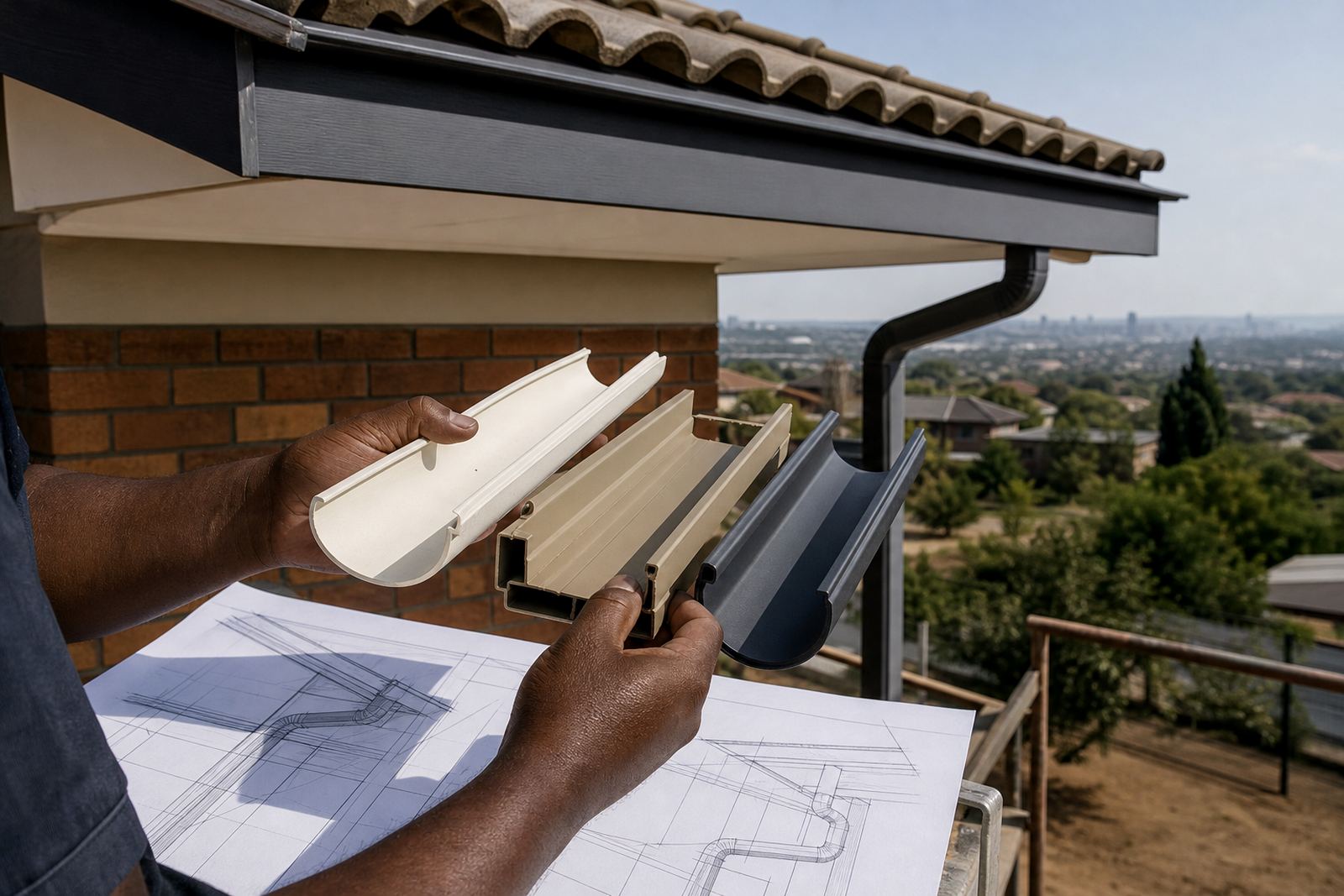
If you are comparing profiles for a new build or a roofline replacement, start with the job in front of you. A neat home in Polokwane with a short roof edge may suit a smaller profile, while a long commercial run in Midrand may need a larger option with more outlets. The right answer depends on rainfall, roof size, maintenance access and the finish you want to see from the street.
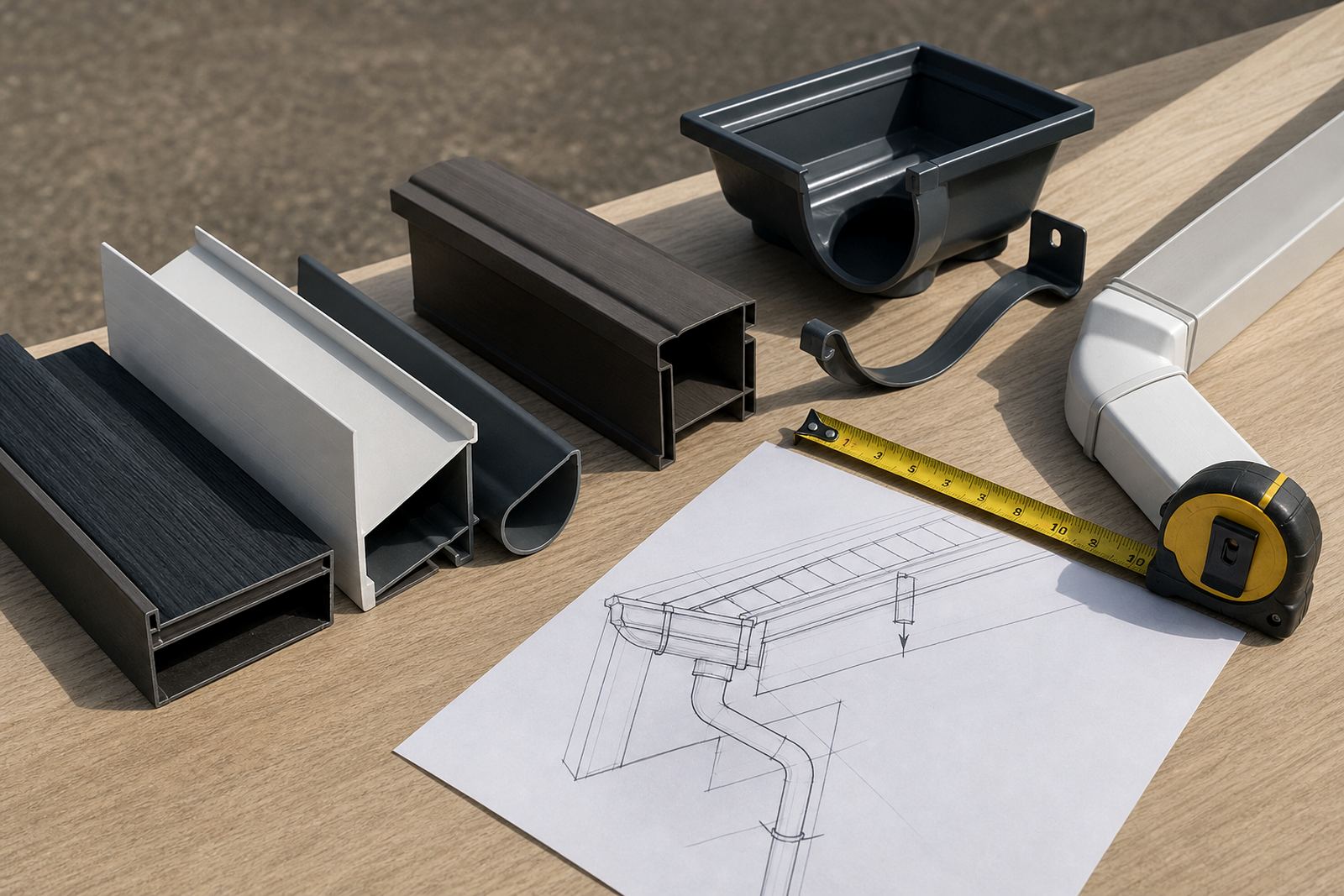
A useful check is to walk the roofline on paper first. Mark the high points, the likely downpipe positions and any corners that may slow the water. Then compare the profile choices for appearance and practical capacity. If leaves, dust or coastal grit will be a regular issue, go for a shape that is easy to inspect and clean.
- Measure the roof run and note each outlet point.
- Choose a profile that suits the building style.
- Allow for cleaning access from the ground or a safe access method.
- Match the gutter to the fascia and downpipe size as one system.
Maintenance That Keeps Any Profile Working
Whatever shape you choose, regular checks will help the system last. Remove leaves, wash out silt and look for signs of standing water after rain. If you see staining on the fascia, dripping at joins or overflow marks below the gutter, that usually points to a fall issue, blockage or outlet size problem. In humid or salty coastal conditions, brackets and joints should be checked more often because build-up happens faster.
For homeowners, simple seasonal cleaning goes a long way. For builders and property managers, a maintenance visit can catch early issues before they turn into repair work. Good profile choice, correct sizing and routine inspection are what keep gutters doing their job through summer storms and dry dust seasons alike.
- Clear leaves and silt before the rainy season.
- Check for sagging sections and loose brackets.
- Inspect corners, outlets and downpipe connections.
- Repair small leaks before water reaches the wall or ceiling line.