Where warehouse roof drainage gets tested
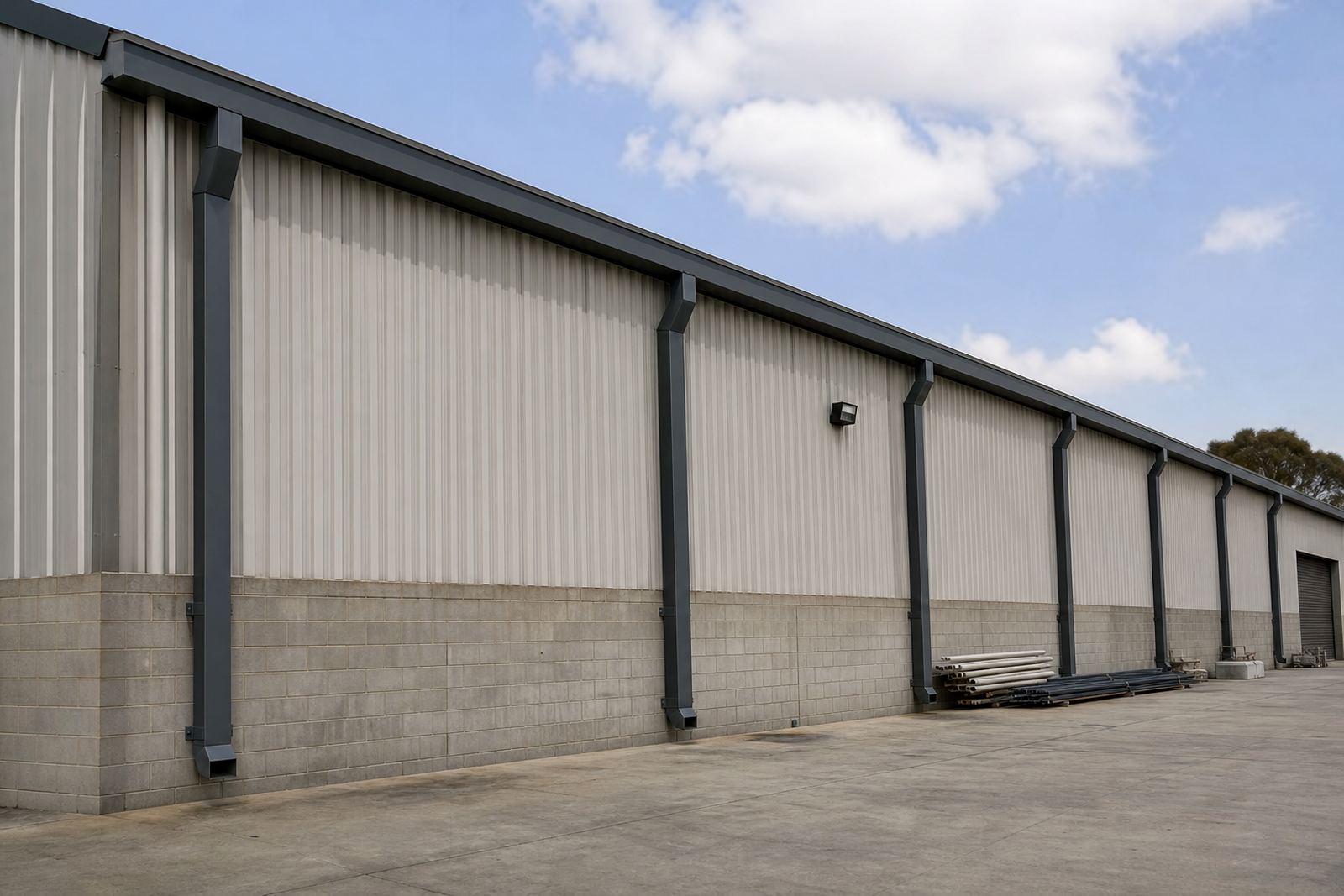
Warehouses usually have broad roof sheets, long eaves and fewer breaks in the roofline, so rainwater can build up fast if the gutter size or outlet spacing is wrong. In heavy summer storms, especially in Gauteng, KwaZulu-Natal and coastal areas like Cape Town and Durban, the roof edge needs enough flow capacity to move water away before it backs up under the sheeting.
For this kind of work, the gutter profile, downpipe size and fascia board layout all need to match the roof length and the expected water load. A small shed can get away with light-duty drainage, but a distribution centre or storage warehouse often needs deeper gutters, more outlets and stronger fixing points along the full run.
Typical components on a warehouse roofline
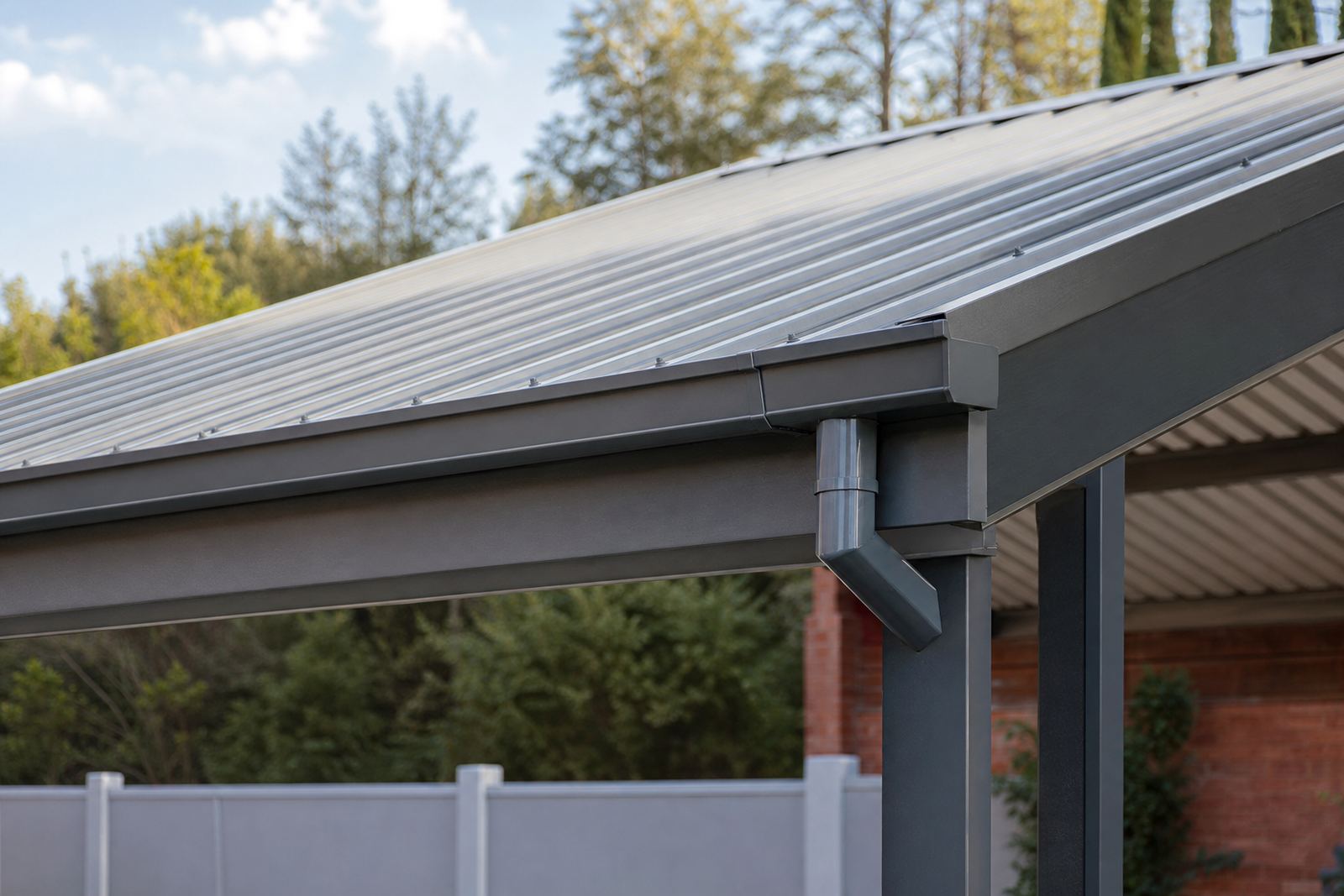
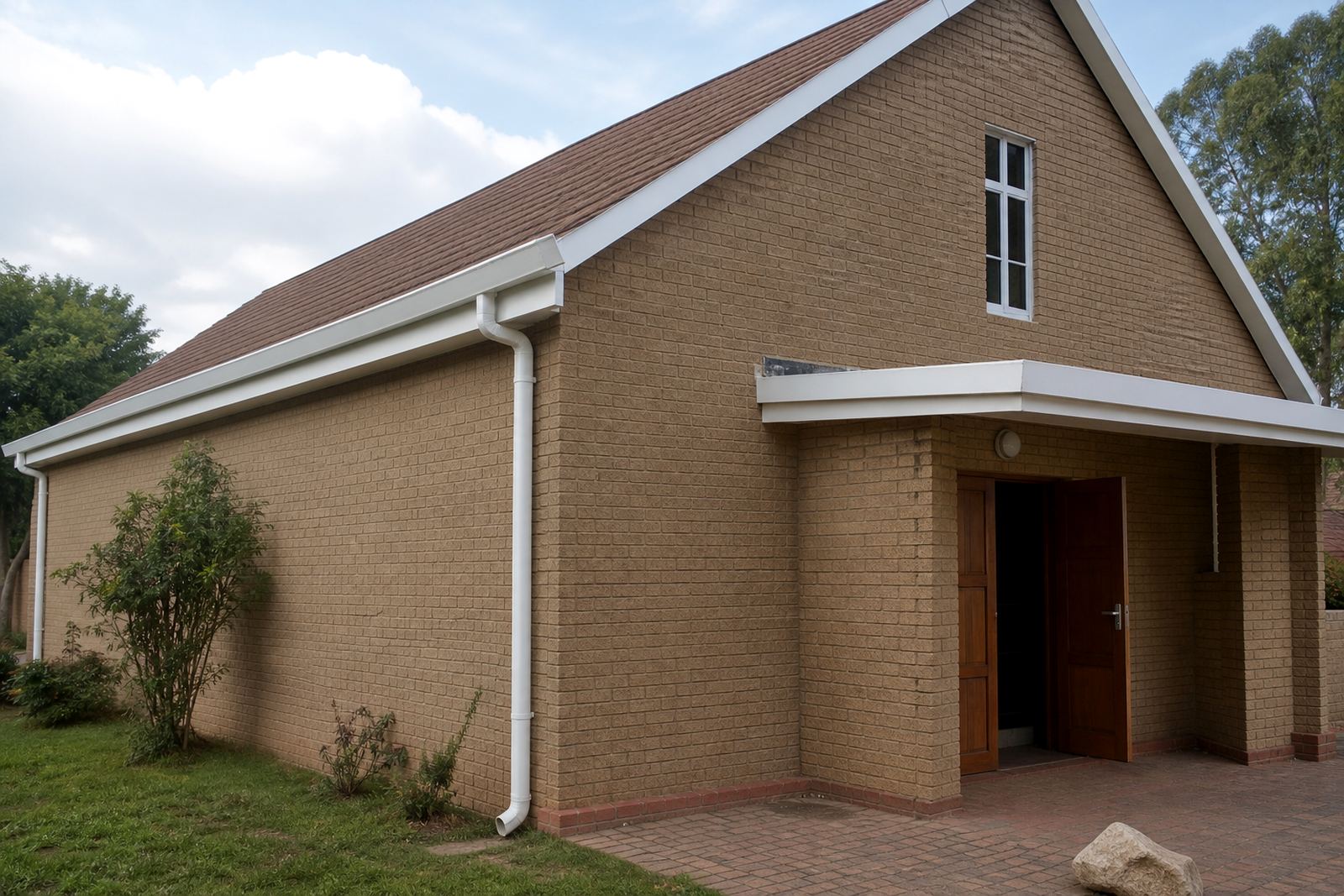
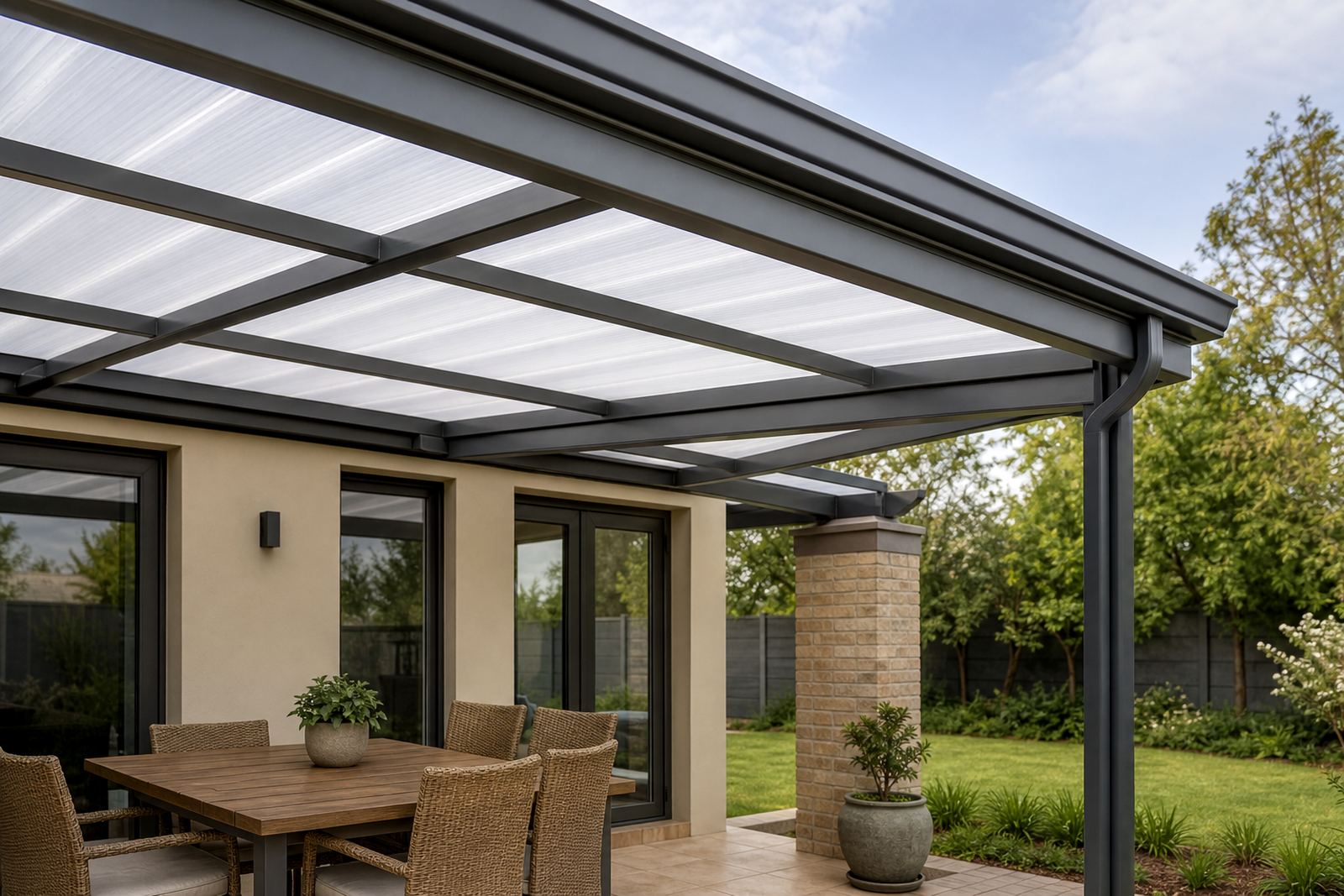
Most warehouse drainage jobs use a matching set of parts rather than mixed pieces from different systems. Plastic-steel composite gutters are fitted with brackets at regular centres, downpipes sized for the roof area, stop ends, joiners, outlets and fascia boards that give the gutter a straight fixing line.
- Deeper gutters for longer roof edges and larger catchment areas
- Downpipes sized to suit the flow, not just the look of the building
- Brackets fixed evenly so the gutter keeps its line under water load
- Fascia boards that close off the roof edge and support the gutter line
- Outlet positions planned where water can discharge without overshooting
On large warehouses, the detail at the corners and around expansion points matters as much as the straight runs. If the run is too long without enough outlets, the gutter can hold water and settle out of level over time.
Planning falls, outlet spacing and bracket positions
A warehouse gutter should not be laid dead flat for long runs. It needs a controlled fall toward the outlets so water keeps moving, but the slope must stay even enough that the line looks clean and the water does not gather in pockets. On long buildings, outlet spacing is usually planned before installation, not after the roof is already up.
Brackets are fixed more closely where the gutter carries more load, near joins, corners and outlet points. For taller buildings and wide spans, competent installers also check access equipment, working-at-height controls and safe handling of long lengths before any fixing starts.
- Measure the full roof edge, not only the visible straight section
- Confirm where water can discharge safely away from entrances and loading areas
- Allow for expansion and movement on long rooflines
- Check that downpipes will not clash with roller doors, signage or yard traffic
- Use the correct fixings for the substrate and the fascia support behind it
Common mistakes on industrial and storage buildings
The biggest problem on warehouses is treating the roof like a small house roof. That can leave too few outlets, undersized downpipes and gutter runs that overflow during a strong storm. Another common issue is poor fascia support, where the gutter line has nothing solid to hold against and starts dipping after the first wet season.
Blocked outlets are also common on sites with dust, leaf litter from nearby trees or packaging debris caught near the eaves. In humid coastal towns, regular cleaning matters because salt air and fine grit can speed up wear on fixings and joints if they are left unchecked.
- Using short downpipes where a larger diameter is needed
- Skipping the fall because the run looks straight enough from the ground
- Placing brackets too far apart on long lengths
- Ignoring corners, sumps and outlet crowding
- Leaving maintenance until the gutter has already overflowed
Budget ranges for warehouse gutter work
Warehouse drainage budgets vary widely because roof size, height, access, outlet count and the amount of replacement work all change the price. As a working guide, smaller warehouse sections or simple repair jobs can start around R8 000 to R18 000, while longer roof runs with new gutters, fascia boards and downpipes often sit in the R20 000 to R60 000 range.
Large industrial roofs, complex rooflines or full roofline replacement projects can move above that, especially where access equipment, multiple downpipe drops or after-hours site coordination are needed. The most accurate budget comes after site measuring and a material takeoff, because warehouse roofs can look standard from the yard but vary a lot along the eaves.
Maintenance that keeps the flow moving
Warehouse gutters work best when they are checked before the rain season and after any heavy storm. Dust, leaves and rooftop debris should be cleared from the gutter and outlet points, and downpipes should be inspected for blockages at the elbow and at ground level. If a section has sagged, shifted or started leaking at a join, it is better to repair that section before the next storm hits.
For owners and builders managing several sites across Johannesburg, Pretoria, Durban, Cape Town and Polokwane, a scheduled maintenance visit can save a lot of trouble later. It also helps to keep a record of the outlet positions and any past repairs, so future work does not repeat the same drainage fault.
How Plasteel supports warehouse projects
Plasteel works with builders, owners and maintenance teams on warehouse roofs that need a practical drainage setup from the start. That can include site measuring, material takeoff, supply of gutters, downpipes and fascia boards, delivery coordination, installation support and leak checks on existing rooflines.
For larger properties, the right setup is usually decided by the roof shape, the fall available and where water can be taken away safely. Our team can assist with planning the parts list for a single warehouse or a group of units on the same industrial site, with supply from Kya Sand, Randburg and deliveries to major centres across South Africa.