
Roof edges that cope with Roodepoort weather
Roodepoort has plenty of roofline stress points: strong afternoon sun, dry winter dust, sudden downpours and the odd stretch of wind that pushes water where it should not go. On larger properties, water can spill off long roof runs and overload a poor gutter layout, while smaller homes often struggle with old joints, sagging brackets or fascia boards that have taken in moisture over time.
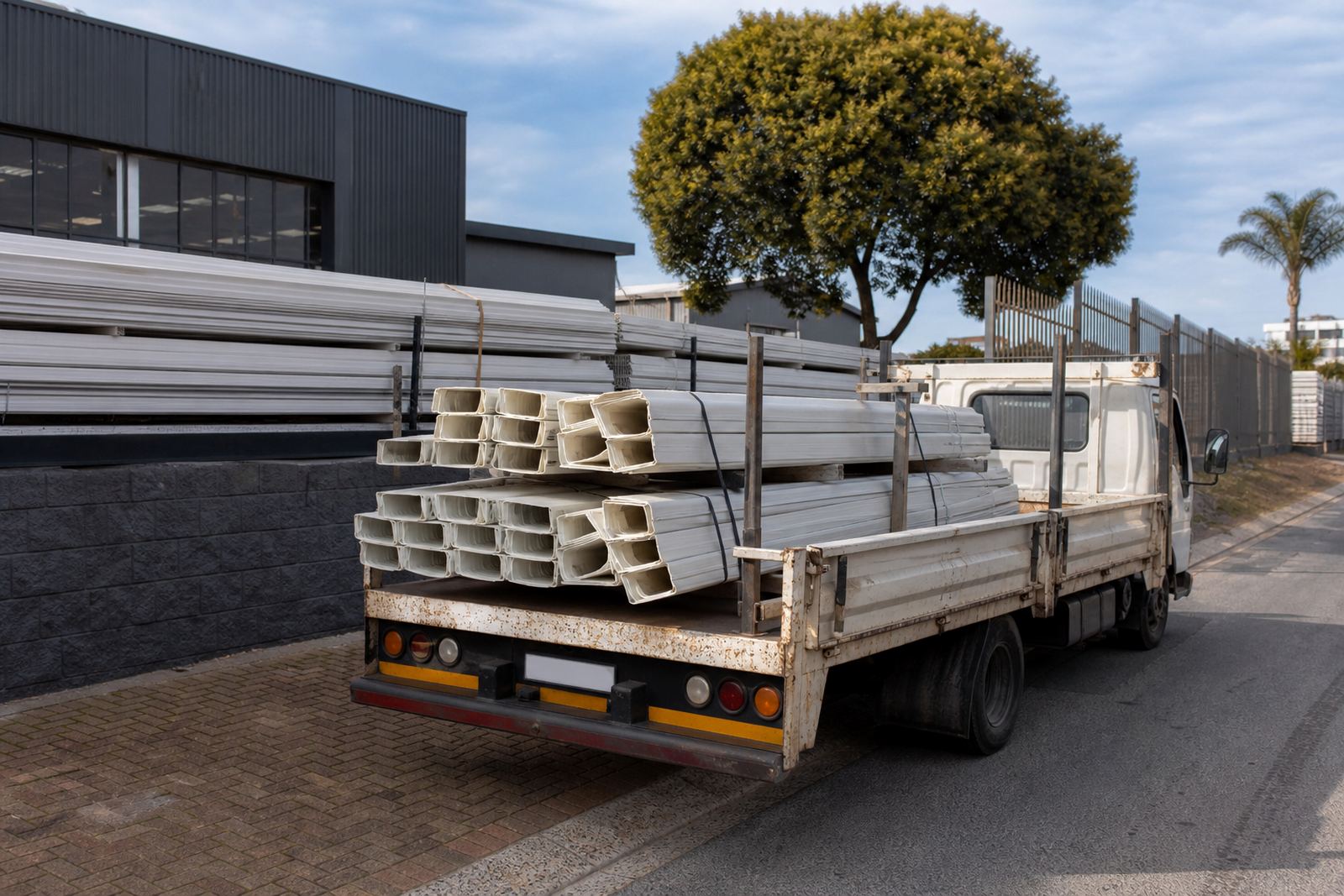
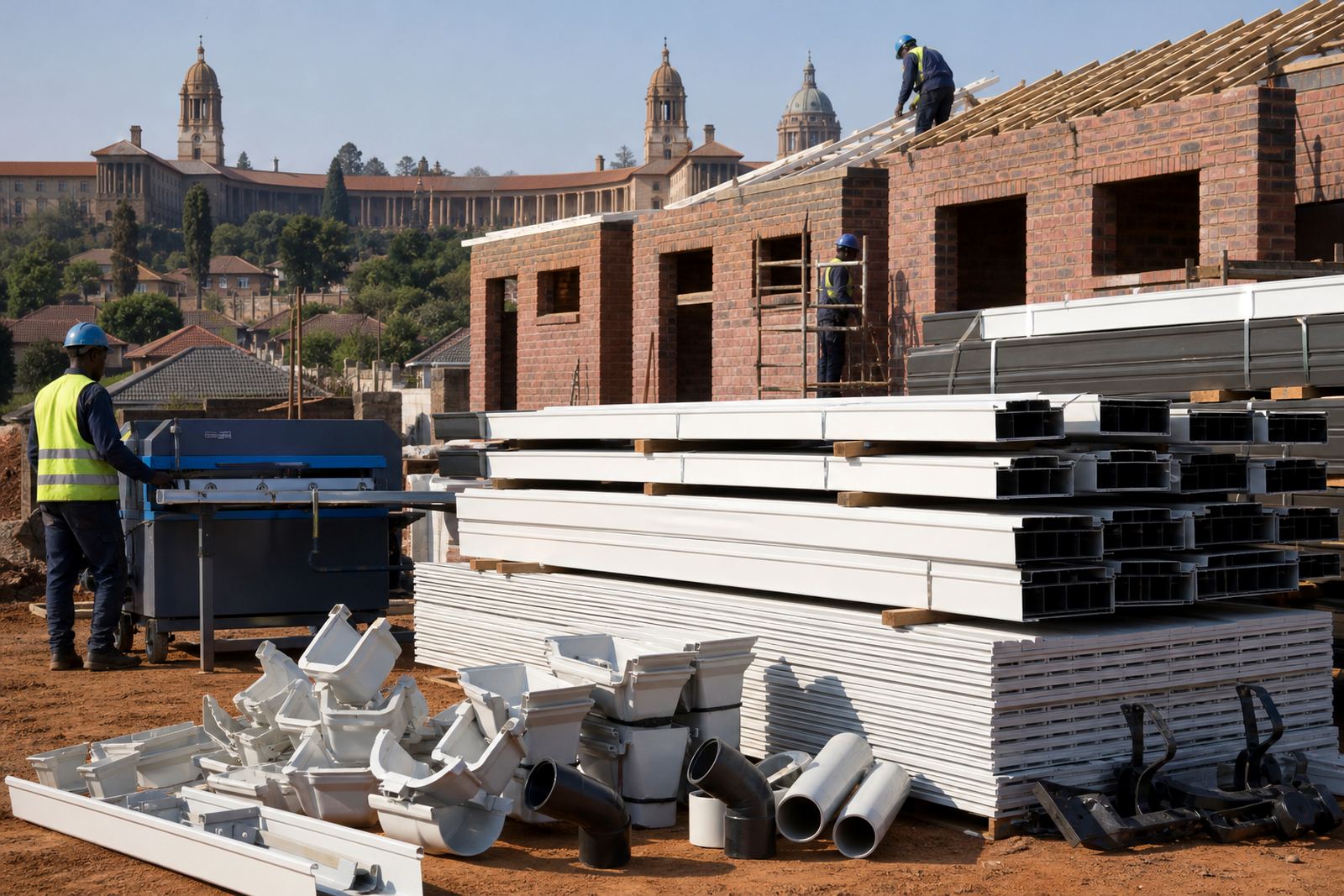
Our Roodepoort supply covers the materials used to keep roof edges neat and moving water away from walls, paving and foundations. That includes gutters, downpipes, stop ends, corners, outlets, brackets and fascia boards in sizes suited to the roof profile and the flow needed. For many homes 125 mm gutter sections and 75 mm downpipes are common, but the right choice depends on roof area, pitch and the amount of run-off. At commercial premises, longer runs and more collection points usually call for a more detailed layout.
Competent installers should always confirm falls and fixings before work begins, because even the best material will misbehave if the run is flat or the brackets are set too far apart. Roofline work at height must be done safely by people who know the trade and use proper access gear.
What Roodepoort orders most often
Roodepoort builders, homeowners and maintenance contractors usually need practical supply items rather than fancy extras. We keep the focus on the parts that make a gutter line work properly and hold its shape through daily use.
- Plastic-steel composite gutters for domestic and light commercial roof edges
- Downpipes for single and multi-storey drainage routes
- Fascia boards for neat roofline support and edge finishing
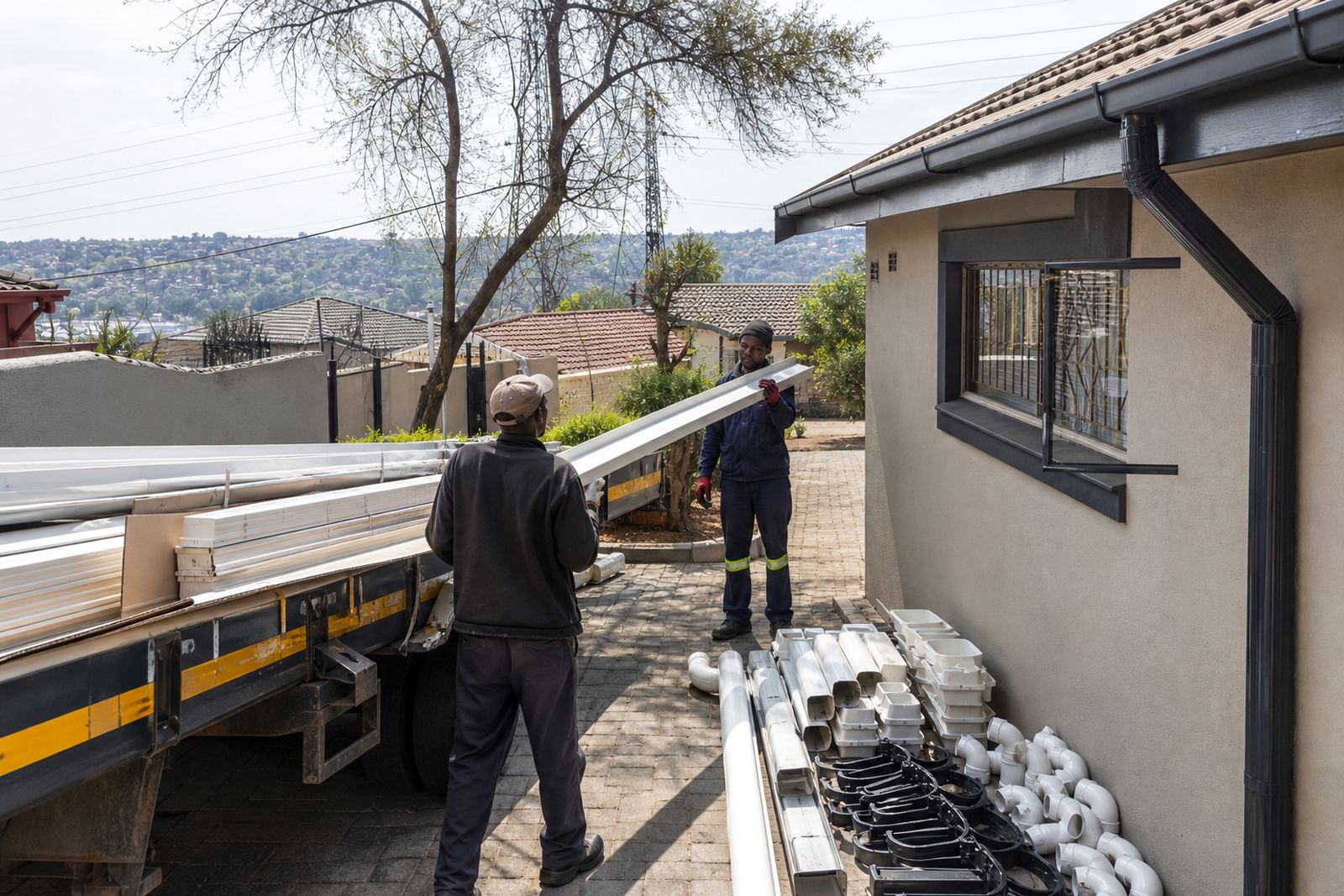
- Brackets, connectors, outlets and stop ends for complete runs
- Corner pieces and joiners for changes in direction around bays and returns
- Accessory items for repairs, extensions and partial roofline replacement
Where a roof has been patched before, we can help match the existing profile and size so the finished line looks tidy and drains properly. On some sites a simple replacement of failed sections is enough, while other jobs need a full run from outlet to ground level. That decision depends on what is already on site, not guesswork.
How we handle supply into Roodepoort
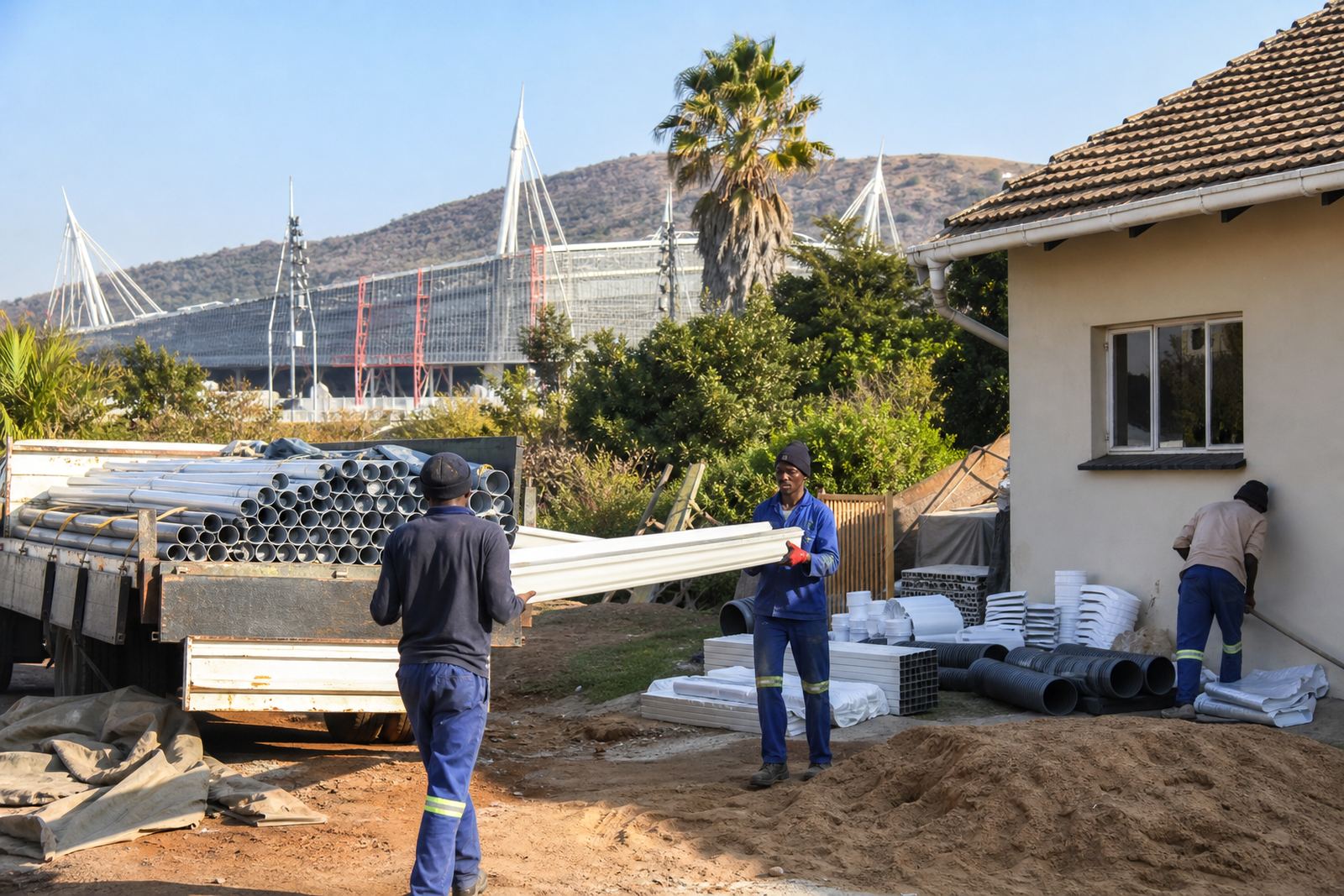
Roodepoort supply is handled from our Kya Sand base in Randburg, with dispatch arranged for builders, property managers and homeowners working on homes, sectional title blocks, retail units and light industrial premises. Some jobs need materials for a quick repair, others need a full takeoff for a bigger roofline replacement. We work from the measurements supplied, or from site measuring where the project needs it.
Deliveries into Roodepoort are usually straightforward, though access can vary between street-front homes, townhouse complexes and commercial yards with limited loading space. If there is a tight delivery window or a property with controlled access, it helps to give clear directions and a contact person for receiving goods. In practice, good planning saves time and avoids damaged stock on arrival.
For builders working across several addresses, we can coordinate split quantities by site, which helps when a roofline is being replaced in phases. The goal is the right lengths, the right fittings and the right order of materials for the job in hand.
Typical local clients and project types
Roodepoort has a mix of older suburban homes, complex housing, schools, churches, offices and small industrial buildings. That mix creates very different gutter needs. A freestanding house in Constantia Kloof may only need a tidy replacement section, while a commercial block near a busier route may need larger runs, more downpipes and stronger support spacing.
We supply for:
- Homeowners replacing cracked or rusted roofline parts
- Builders fitting gutters and fascia boards on new housing
- Body corporates managing maintenance on shared roofs
- Property owners dealing with overflow at corners or valleys
- Maintenance teams sorting out leaks around outlets and joints
In areas with big trees and windblown debris, gutter cleaning and inspection matter just as much as installation. Leaves, grit and bird nesting material can build up fast and change the way water moves along the line. A good fascia board and bracket layout makes maintenance easier, but it does not remove the need to check the system from time to time.
Materials, sizing and fit for purpose
Roof drainage is not a one-size job. The roof pitch, total catchment area and number of outlets all influence the right material sizes. For many residential roofs, the common combination is a standard gutter with 75 mm downpipes. Larger roofs or buildings with broad eaves may need a wider gutter profile and additional downpipes to prevent overflow at heavy rain points.
Plastic-steel composite material is chosen by many clients because it handles daily exposure well and stays practical for maintenance. It is useful where a clean look is wanted along the eaves and where the roofline needs a material that can cope with changing weather. The fascia board also plays a part in holding the line true, so any replacement should check the board condition, bracket spacing and fixings before new parts are fitted.
When planning a run, installers should allow for proper falls towards the outlet, enough support at bracket points and correct alignment at corners and joins. Small setting errors can cause standing water, noise during storms, or water spilling over the front edge. None of that is complicated to avoid, but it does need care on site.
Maintenance that keeps the line working
Roodepoort properties benefit from seasonal maintenance, especially before the summer storm cycle and after winter dust build-up. A gutter line that has been left alone for too long can sag, pull loose at the brackets or start leaking at the joints. Fascia boards should also be checked for signs of softness, rot on timber systems or movement where fasteners have loosened.
Our maintenance visits and leak checks support owners who need a practical follow-up after installation or repair. For many sites the task is straightforward:
- Clear debris from gutters and outlets
- Check that the falls still run to the outlet points
- Inspect brackets for spacing and firmness
- Look for cracked joins, loose corners or damaged downpipe sections
- Replace worn fittings before the next heavy rain
Where a property has repeated overflow at the same spot, the cause is often not the material itself but the slope, outlet size or blocked discharge path. A careful inspection usually shows where the problem starts.
Getting Roodepoort orders moving
Clients in Roodepoort can send enquiries through the contact page form, whether they need materials for a small repair or a larger roofline order. It helps to include the suburb, roof type, approximate lengths, number of downpipes needed and whether the job is for a house, complex or commercial building. If measurements are already available, that makes material takeoff more precise.
When a build or renovation is running to a programme, we can help with supply planning, delivery coordination and advice on the correct components for the roof layout. Our Roodepoort supply area is part of a wider Gauteng network, so orders can be arranged with the practicalities of site access and installation sequence in mind. If the job is urgent, tell us the scope clearly in the form and include the roofline details you already have.
Good roof drainage is mostly about getting the right pieces to site and fitting them properly. Once the line is measured, the materials selected and the falls set correctly, the rest is maintenance and routine care.